

Maharashtra puts eight portable drug-testing machines in government hospital checks
 Images are not validated/verified
The handheld Raman devices screen medicines in one to two minutes; flagged samples go to labs before any action, and doubts over accuracy have been raised.
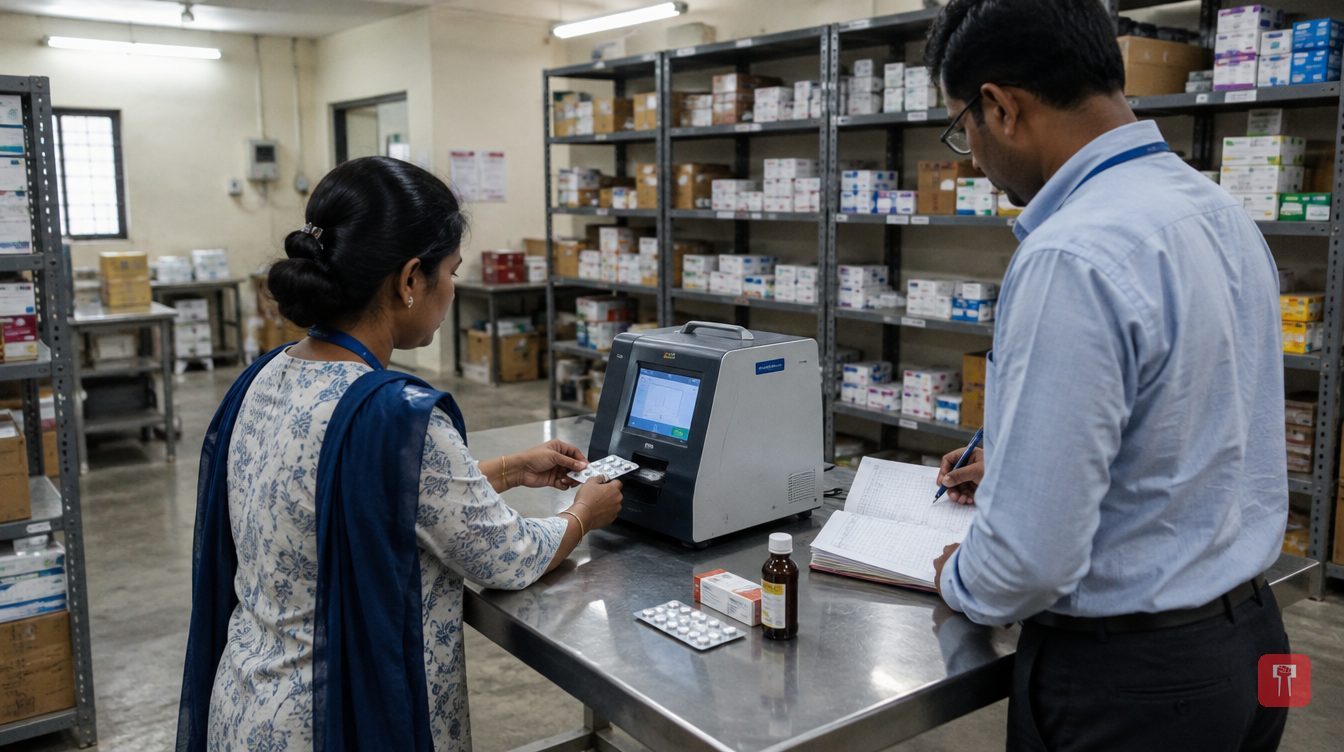
The Maharashtra government has introduced eight portable drug-testing machines to detect any irregularity in the quality of medicines supplied to government hospitals. The devices are based on Raman spectroscopy. They can test a medicine in one to two minutes and, if they show any irregularity in its chemical composition, flag it for further laboratory testing.
Public Health and Family Welfare Minister Prakash Abitkar announced the initiative on Monday, October 26. He said it would strengthen monitoring of medicine quality in public health facilities. The state government has spent a total of Rs 9.6 crore on the machines, which works out to Rs 1.2 crore per machine.
The TruScan Raman devices are made by US company Thermo Fisher Scientific. They analyse the chemical composition of medicines using laser-based Raman spectroscopy. Based on the way light scatters when it is shone on a substance, the technology creates a chemical fingerprint. The data is matched against a reference database holding information on about 5,000 medicines. The machines can test tablets, capsules, liquid medicines and cough syrups. This helps officials identify products that may need further testing.
However, the devices give only a preliminary result. They cannot say conclusively whether a medicine is counterfeit or substandard. Before any regulatory action, a suspect sample will have to undergo laboratory testing. The Maharashtra public health department plans to send flagged samples to 12 laboratories accredited by the National Accreditation Board for Testing and Calibration Laboratories (NABL). Officials expect to receive test reports within about eight days of submitting the samples.
If laboratory results confirm a quality defect or adulteration, action will be taken against the drug company concerned under the applicable laws. In cases of serious violations, the company may also be blacklisted. Confirmed cases will be reported to the Food and Drug Administration (FDA).
The machines have been deployed in Thane, Pune, Nagpur, Solapur, Kolhapur, Chhatrapati Sambhajinagar, Amravati and Latur. The department has trained 16 officials, with two assigned to each machine. Flying squads will carry out random inspections of medicines supplied to district, sub-district and rural hospitals and other government health facilities. Standard operating procedures have reportedly been framed to prevent manipulation and irregularities during testing. The company supplying the equipment will also provide maintenance and technical support.
Questions have also been raised about accuracy and regulatory oversight. Company representatives are said to have put the devices' accuracy at 90 to 98 per cent. Joint Commissioner (Drugs) Ganesh Rokade said Maharashtra's FDA has not received a demonstration of the product and that the department has its own laboratories for testing medicines. Company representatives also acknowledged that data recorded in the machines could possibly be manipulated, which underlines the importance of safeguards and independent verification.
Meanwhile, Abitkar also outlined a plan to recruit 3,300 health professionals by the end of November to address staff shortages. The first phase will cover 1,400 doctors, including 600 specialists and 800 MBBS graduates, who are expected to join in the first week of November. The second phase includes 1,900 BAMS graduates who will be appointed as community health officers by the end of November.

Comments
No comments yet. Be the first.