

Yeola farmers let sheep graze standing cabbage as price falls to Rs 2 a kg
Cabbage growers in Nagde Shivar in Nashik district's Yeola taluka ploughed under their crop after drought and a Rs 2 a kg market rate.
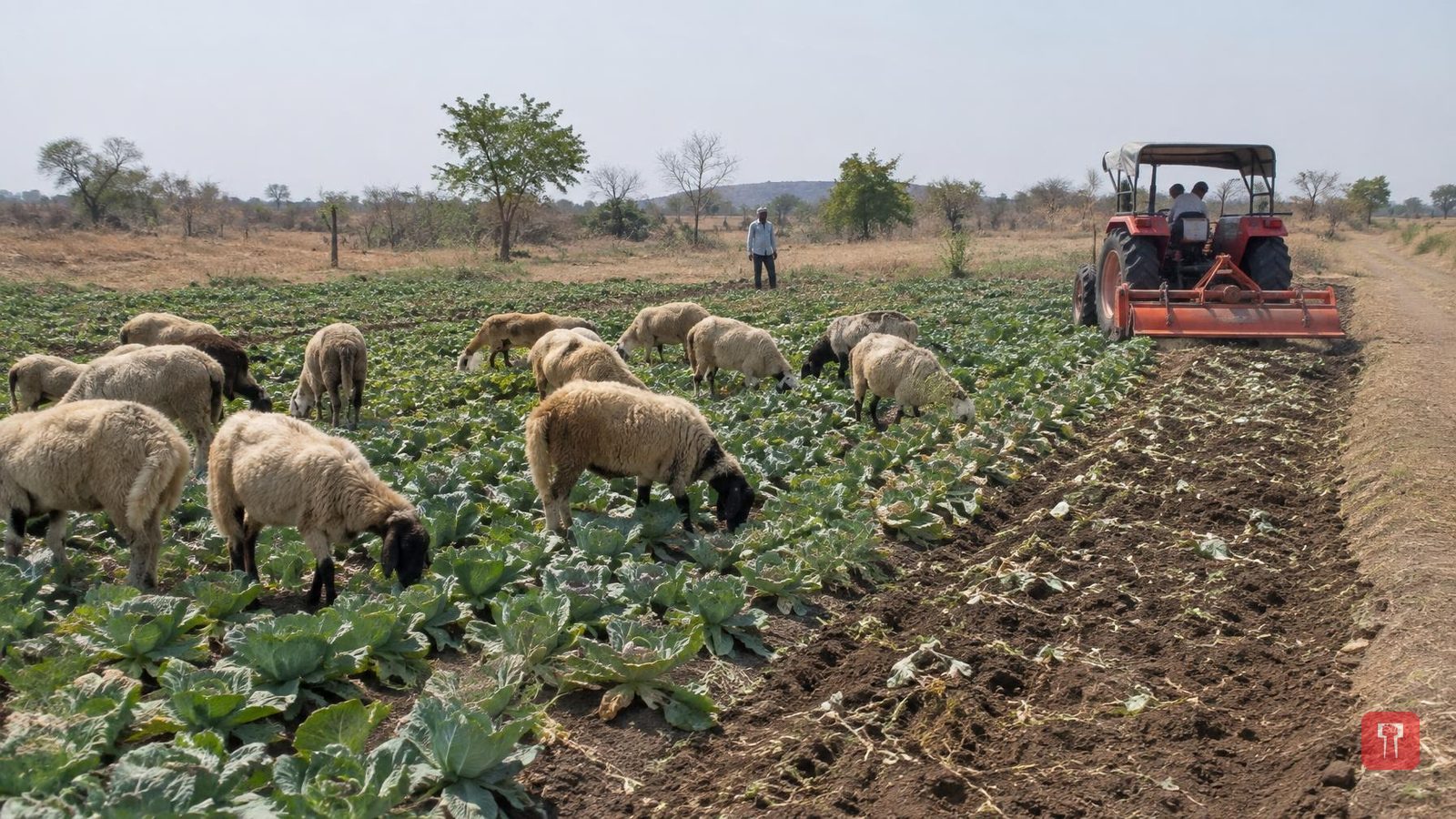
Farmers in Nagde Shivar in Yeola taluka of Nashik district are facing a double blow. Drought-like conditions prevail in the area, and those who planted cabbage have been hit hard by market prices. The mandi is paying only Rs 2 a kg for cabbage, leaving farmers dejected.
At Rs 2 a kg, farmers cannot even recover their costs. Earnings are so low against the cost of cultivation that the situation has become serious. Finally, the farmers let sheep graze in the standing cabbage crop, after which a rotavator was run over the field.
Because of the drought, farmers were already struggling with a severe water shortage. They had planted cabbage with great effort and at their own expense. But the market did not offer the price they had hoped for, and they were disappointed once again. Farmers say it is better to feed the cabbage to animals as fodder than to sell it at Rs 2 a kg.
The state is currently facing a drought, and vegetables grown by farmers are not fetching proper prices. This has put them in serious financial difficulty. On one side there is a water shortage, and on the other, market prices have fallen. Without water it is hard to save the crop, and the vegetables grown with effort have to be sold for next to nothing, making it difficult even to recover the cost of farming.
It is considered necessary for farmers to try some measures and options to get out of this situation and reduce losses. The first is to get vegetables directly to consumers. To break the chain of middlemen, farmers can sell their produce at weekly markets, in housing societies or directly in cities. Customers would get fresh produce and farmers would get a good price.
Farmers in the area can come together to form a farmer producer company (FPC). Selling collectively would save on transport costs and strengthen their bargaining power with traders over prices in the market.
Vegetables are perishable. When the market offers no price, processing them is more profitable than throwing them away. Given the water crisis, farmers should use drip or sprinkler irrigation instead of traditional methods. For information on government subsidies for drought-hit areas, crop insurance and electricity bill concessions, farmers can contact the local agriculture department.
