

World Science Day: Five Indian scientists, from Kalam to Chandrasekhar, who shaped science
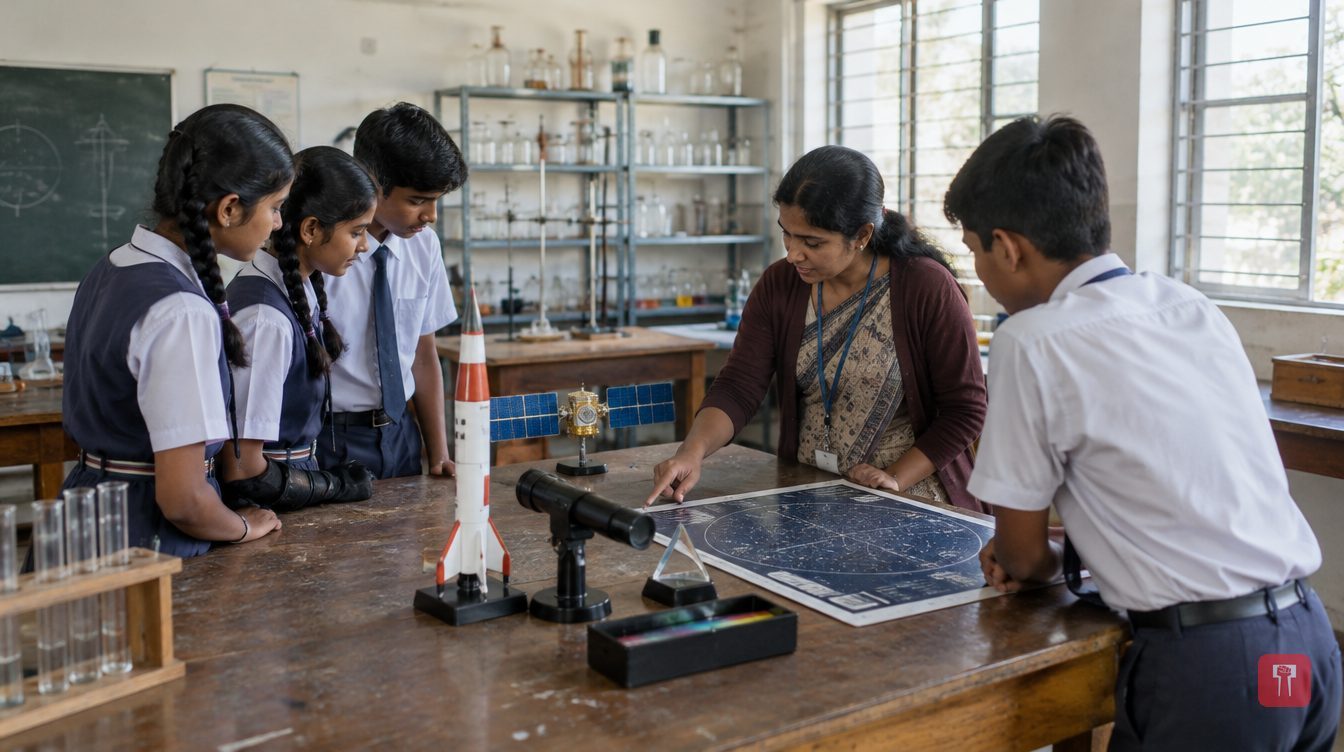 Images are not validated/verified
On World Science Day, a look at five Indian scientists whose research and thinking changed the direction of science in India and the world.
Indian scientists have always played an important role in advancing science. Resources were limited, yet from space to atomic energy and physics they reached heights that have made India's name resonate across the world. On World Science Day, five such scientists are being remembered, whose research and thinking changed the direction not just of the country but of the whole world.
The first name is Dr APJ Abdul Kalam. A former President of India, he was honoured with the Bharat Ratna and is called the "Missile Man" in the country. He joined Indian space research in 1962. Kalam is credited with placing Rohini, India's first indigenous satellite, in Earth's orbit, which brought India into the international space club. He also made a major contribution to building missiles such as Agni and Prithvi with indigenous technology.
The second scientist is Sir C V Raman. He was the first Asian scientist to win the Nobel Prize in Physics. He discovered the Raman Effect on 28 February 1928. For this he received the Nobel Prize in Physics in 1930 and was awarded the Bharat Ratna in 1954. His work in the field of light scattering is considered unmatched.
The third is Dr Homi Jehangir Bhabha, who is called the father of atomic energy. Any account of India's atomic energy programme is incomplete without his contribution. He is described as the architect of India's atomic energy programme. It was because of his vision that India could successfully conduct its first nuclear test in 1974 and become a nuclear-armed nation.
The fourth name is Vikram Ambalal Sarabhai. He is regarded as the father of the Indian space programme, because he laid its foundation in the country. Besides contributing in the fields of nuclear energy and electronics, he set up around 40 institutions related to space and research across the country.
The fifth scientist is Dr Subrahmanyan Chandrasekhar, a nephew of the renowned scientist C V Raman. He received the Nobel Prize in Physics in 1983 for his notable contribution to astrophysics. He worked on white dwarf stars and put forward the theory of the Chandrasekhar Limit, which helped in understanding the mystery of how stars originate.
Reach readers on the ward they actually live in.
Advertise with Prime Time 24Reach readers on the ward they actually live in.
Advertise with Prime Time 24Reach readers on the ward they actually live in.
Advertise with Prime Time 24Choose primetime24.com as a preferred source on Google Google shows more stories from your preferred sources in Top Stories.
Reach readers on the ward they actually live in.
Advertise with Prime Time 24
Comments
No comments yet. Be the first.