

Winter tyre pressure: stick to the PSI the carmaker specifies, do not overinflate
Air pressure drops as temperatures fall, but drivers should keep to the figure on the car's door sticker rather than add extra air.
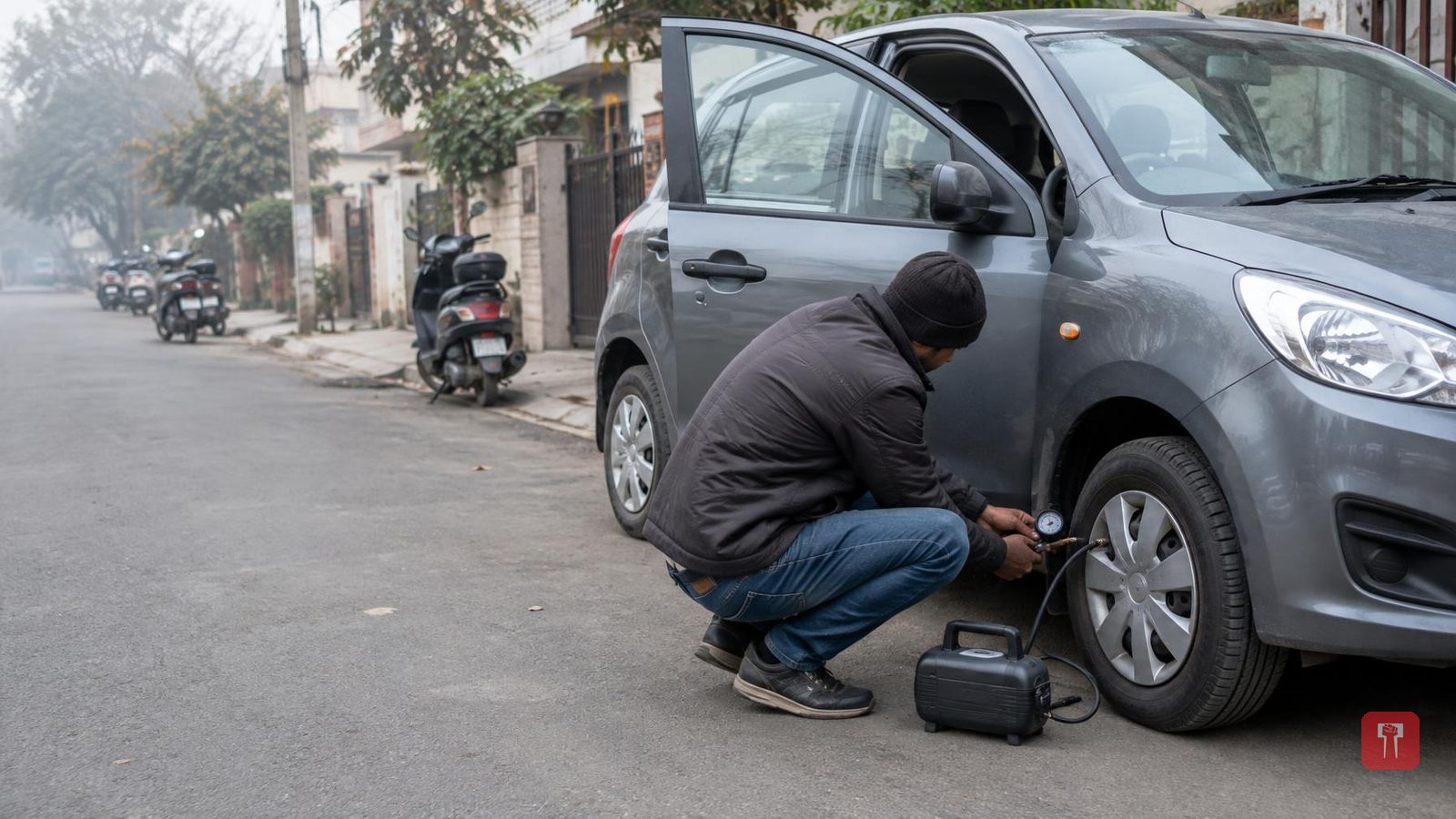 Images are not validated/verified
As the cold sets in, the air in a car's tyres seems to run low, and in the morning the tyres can look slightly flat. Many people do not know why this happens or how much air to fill in winter. Wrong pressure upsets the car's balance, lowers mileage and can raise the risk of accidents, so it is important to know how to look after tyres in the cold.
It is a simple rule of science: when the temperature falls, air pressure falls too. If a tyre holds 32 PSI in summer, it drops on its own to 28-29 PSI in winter. Pressure that seemed right in summer is therefore too low in winter. The manuals of some cars say that for every 7-degree fall in temperature, pressure drops by 1 PSI. This does not apply to all cars, so do not fill air by guesswork.
The PSI printed on the side of the tyre is not the right pressure for your car. It is the maximum pressure for that tyre. The right pressure for the car is set by the manufacturer. It is written on a sticker inside the driver's-side door and is also given in the car's manual. That is where to look when filling air.
For most cars in India, this pressure lies between 30 and 35 PSI, but it differs from car to car. The front and rear tyres may also need different pressures. Follow what the sticker says. For example, if the manufacturer specifies 32 PSI for your car, cold tyres should hold 32 PSI in winter too. There is no need to add extra air because it is cold.
Always check pressure when the tyres are cold. A hot tyre shows a higher reading. Tyres are considered cold if the car has stood in one place for at least 3 hours. Major bodies and companies such as NHTSA and Michelin also advise checking pressure in the morning, before driving. Before a long trip, check all four tyres and the spare. Keep checking from time to time during the journey as well.
Low pressure causes several problems. Control while driving suffers, tyres overheat, wear is uneven on one side and more petrol is used. If tyres are overfilled, the car bounces a lot, rough roads become uncomfortable and the tyre wears out faster in the middle. So do not make the mistake of overinflating because it is cold; just keep the pressure the manufacturer has specified.
If one tyre keeps losing air repeatedly, that is not normal. It may have a puncture or a leaking valve. In that case, have it checked by a good tyre mechanic. In short, pay a little more attention to your tyres in winter, keep the right PSI and drive safely.
