

Why the crow is the bird that touches the shraddha pind, and what if it does not come
In Hindu tradition a crow touching the pind is seen as completing the shraddha, but religious texts do not make the rite depend on it.
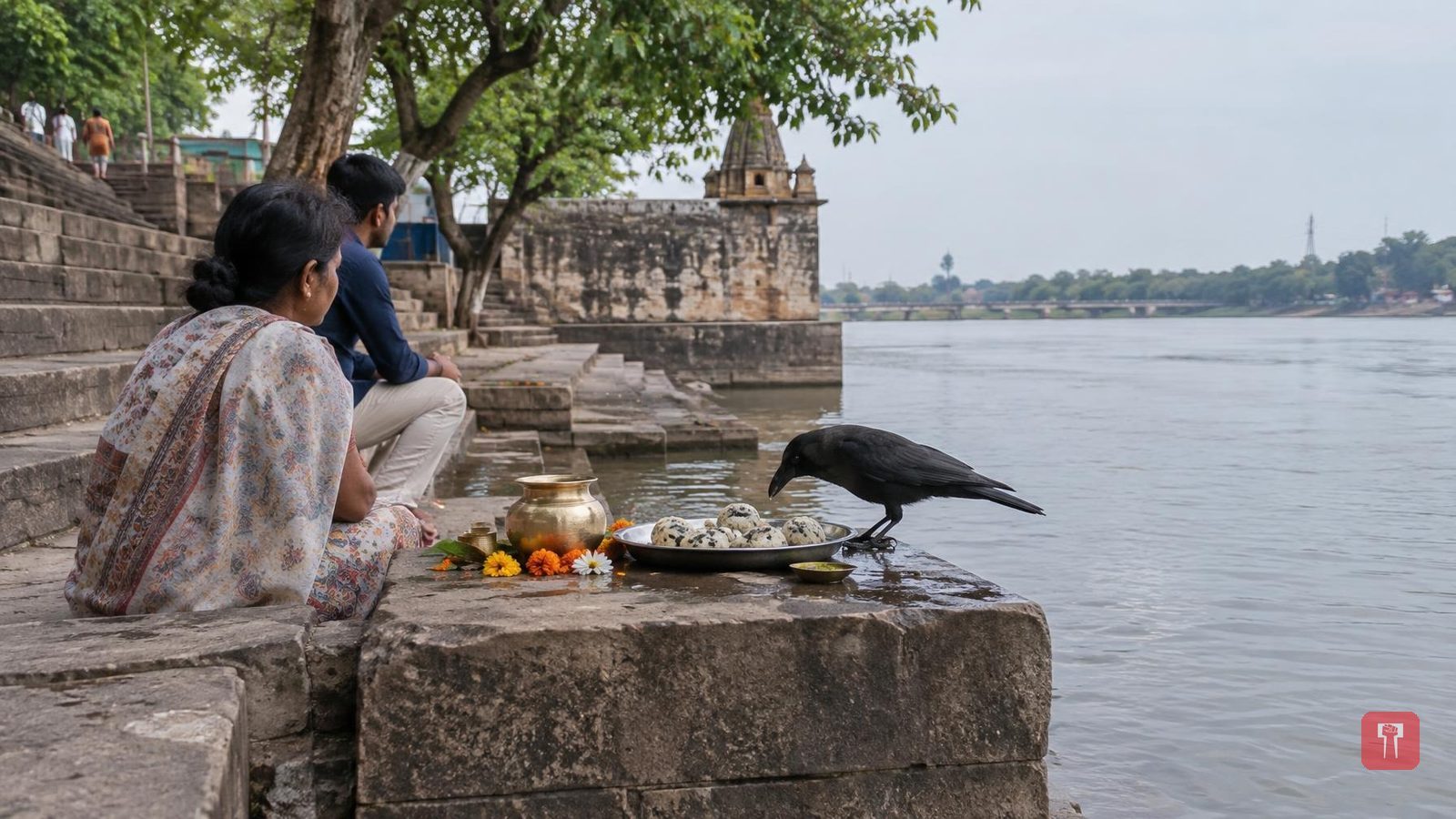
Shraddha and the remembrance of ancestors hold a special place in Hindu tradition. Shraddha is performed every year during Pitru Paksha to express gratitude to forebears. In the rites, everyone's attention is on whether a crow touches the pind. It is a belief handed down through generations that without the crow's touch the shraddha is incomplete and the ancestors do not attain liberation.
Many wonder why the rite requires a crow and not a pigeon, a sparrow, a parrot or some other bird. The answer lies both in religious references and in the behaviour of nature.
In religious and mythological texts, the crow is not regarded as an ordinary bird. It is seen as a link between the world of the gods and the earth. According to Hindu belief, the crow is the messenger of Yamaraj, the god of death. There is a firm belief that during Pitru Paksha the ancestors leave Pitru Lok, come to earth to accept the offering made by the family, and take the food in subtle form through the crow.
A story from the Ramayana is also linked to the tradition. During Lord Ram's exile, Jayant, the son of Indra, took the form of a crow and wounded the feet of Mata Sita with his beak. Lord Ram then loosed the Brahmastra at him. When Jayant repented, Ram granted him a boon: "In the times to come, you (as the crow) will partake of the food of the pind offerings made by humans, and without your touch the ancestors' shraddha will not be complete." It is said that because of this boon the crow gained a special place in rites for ancestors. Mythological tales also mention that some sages took the form of crows to learn of many hidden matters of the future. Because the crow is directly linked with the human soul and the rebirth of ancestors, the bird has acquired a distinct sanctity.
From the standpoint of nature, the crow is an omnivore. It readily eats carrion, food items and leftovers. It plays a large part in sustaining the food chain and keeping surroundings clean, which is why it is called nature's sanitation worker. Crows have sharp eyesight and can smell food from afar. They turn first to an offering or pind left in the open, because human food forms a large part of their diet.
Birds such as pigeons, sparrows and parrots are generally vegetarian or grain-eaters. They do not swoop at once on a pind placed in the open or amid a crowd of people. Crows, however, live in flocks, are clever and adept at swooping on food. So it is by nature that the crow is the first to touch the pind.
Everyone wonders at some point whether the shraddha remains incomplete if the crow does not come. The answer is that there is no categorical one. That a shraddha is wasted if no crow comes is only a popular belief or social convention, and has no strict scriptural basis. According to dharmashastra, the true fulfilment of a shraddha depends on faith and gratitude in the mind, tarpan and pind daan done in the proper manner, the meal and honouring of invited worthy Brahmins, and mantras recited with a pure mind along with remembrance of the ancestors. A crow touching the food may be regarded as a good omen or a coincidence of nature, but if it does not come for some reason, the shraddha is not invalid or incomplete. A rite performed with devotion and according to the rules of the scriptures is considered 100% successful.
Beyond the crow's touch, the matter of serving parents while they are alive is also raised. It is often seen that parents or elders are not looked after properly while living, are not spoken to lovingly, and their basic needs are ignored. After death, however, people rush about once a year, performing shraddha and worrying whether the crow has touched the food, which is a great inconsistency of thought. "Rather than waiting for the crow's touch after death, bringing joy to their faces while they are alive and letting them live with dignity is the true service to ancestors."
On the occasion of an ancestor's memory, birthday or death anniversary, constructive work can be done instead of only ritual. The options mentioned include giving food or clothing in the ancestor's name to the poor, helpless or destitute; giving notebooks and books or financial help to needy students; going to a hospital to help with patients' treatment or taking part in a blood donation camp; and planting and nurturing trees in the ancestors' memory.
The crow touching the pind is an old tradition that connects people with nature and with the memory of ancestors. Rather than dismissing it as mere superstition, it is necessary to understand the harmony between the science behind it, nature and human values.
