

Why Mantrapushpanjali is recited after Ghalin Lotangan in Ganpati puja
During the Ganpati festival, many Maharashtrian households follow the aarti with two prayers whose order and meaning carry a specific significance.
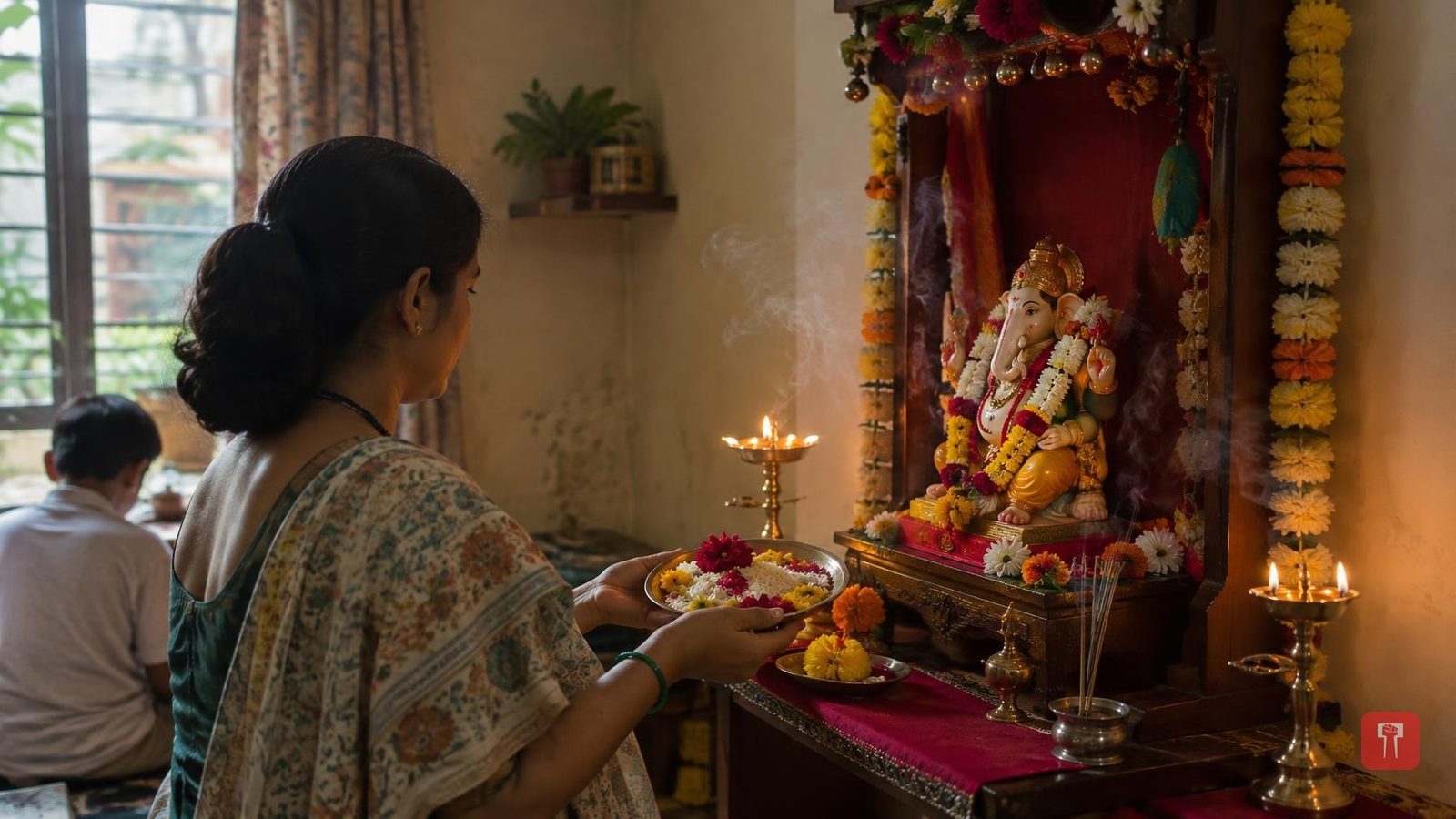
The Ganpati festival season is currently on. In many households in Maharashtra, every morning and evening after the aarti, Ghalin Lotangan is recited first, followed by Mantrapushpanjali, offered with flowers and rice grains in hand. This is not merely a memorised recitation but carries a specific meaning behind the completion of the puja. Through Mantrapushpanjali, the devotee offers flowers to the deity while expressing gratitude and prayer.
The word Mantrapushpanjali is formed from three words: mantra, pushpa and anjali. Mantra means a sacred Vedic chant, pushpa means flower, and anjali means offering with folded or cupped hands. In simple terms, it means offering flowers to the deity while chanting mantras.
The famous opening mantra of Mantrapushpanjali, "Yajnena yajnamayajanta devah," is connected to the Purushasukta of the Rigveda. It expresses the idea that the gods worshipped the supreme being, who is himself in the form of the yajna, through the yajna. This is followed by the mantra "Rajadhirajaya prasahyasahine," which salutes Vaishravana, that is, Kubera, praying for well-being. This shows that Mantrapushpanjali is not praise of a single deity alone but reflects the broader spirit of Vedic prayers.
There is also a sequence to why Mantrapushpanjali is recited only after Ghalin Lotangan. In Ghalin Lotangan, the devotee expresses humility and surrender at the feet of the deity. This is followed by Mantrapushpanjali, in which the flowers and rice grains held in the hand are offered to the deity along with prayer. In some puja traditions, Mantrapushpanjali is considered one of the final rites of the puja. This is why the sequence is to first express devotion and surrender, and only then actually offer the flowers.
The central theme of Mantrapushpanjali is offering and prayer. The flower in hand, regarded as a symbol of devotion, is offered at the feet of the deity. The Vedic mantras contain references to prayers connected with dharma, well-being, prosperity and good governance. The prayer thus expresses personal wishes while also bringing forward a sentiment for the welfare of all.
One important point is that the Mantrapushpanjali recited today is not a single continuous sukta but a compilation of mantras from different texts. According to available information, its mantras are linked to Vedic texts such as the Rigveda, the Taittiriya Aranyaka and the Aitareya Brahmana. This prayer, recited after the aarti, can therefore be seen as a fine confluence of devotion, Vedic tradition and offering.
