

Why devotees tie a shidori for Bappa at the time of Ganesh immersion
In some Maharashtrian homes, Ganesh idols are sent off for immersion with a shidori, a small parcel of food symbolising love and care for the journey.
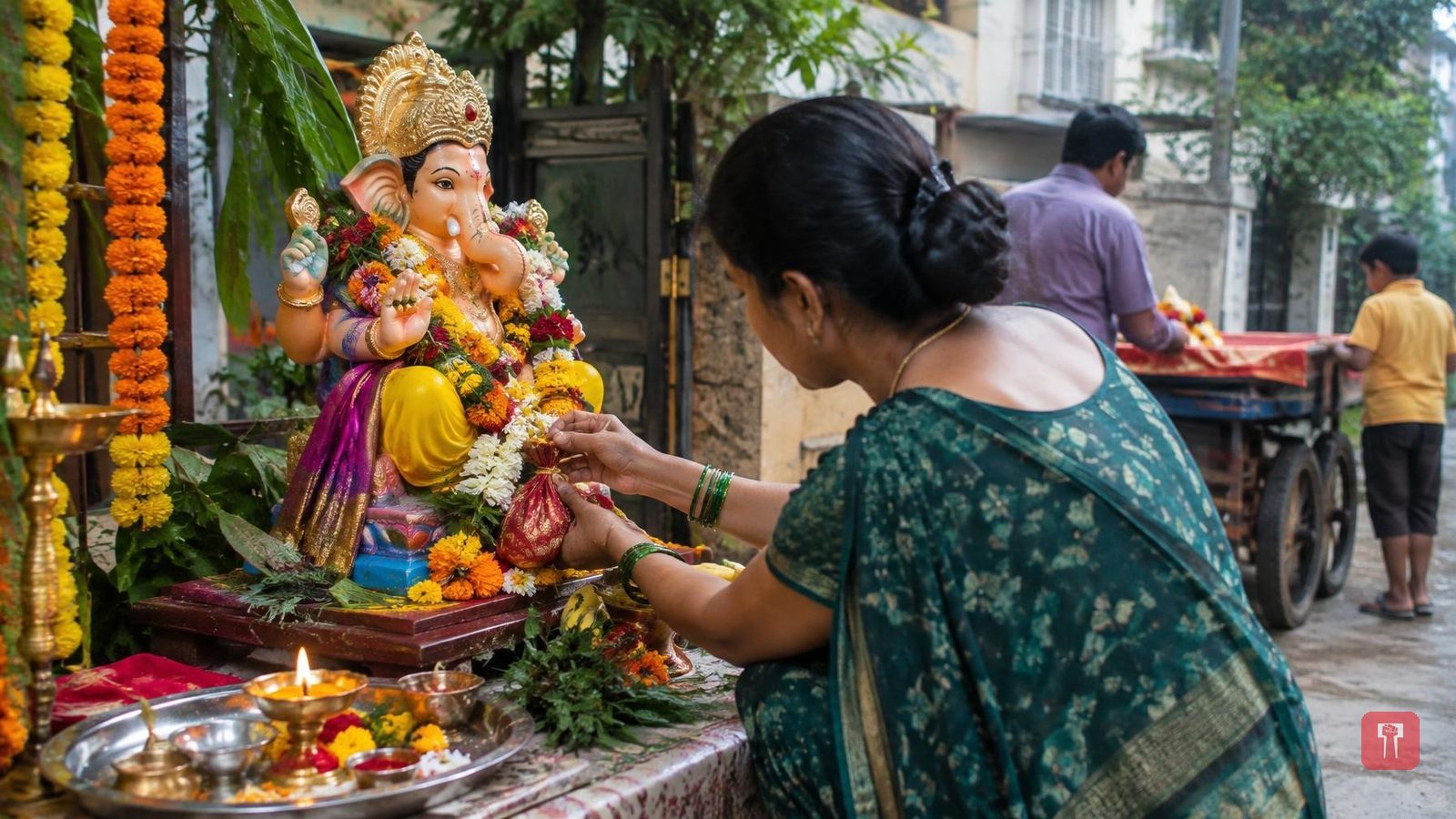
When Ganeshotsav comes around, alongside devotion and excitement there is also the emotional moment of bidding farewell to Bappa. Whether the immersion takes place after a day and a half, five days, or on any other day, it is preceded by aarti, offerings of naivedya and the closing puja. After this, Bappa is bid farewell with chants of "Ganpati Bappa Morya, come back soon next year." But in some families in Maharashtra, this farewell ritual carries another deeply personal tradition: tying a shidori for Ganpati Bappa at the time of immersion.
The word shidori comes from old rural and traditional life. Earlier, when someone set out from home on a long journey, they would be given a small bundle of food to eat on the way. This bundle of food was called a shidori. The idea was that if hunger struck during the journey, the food given by the family could be eaten, and it carried with it the family's love, concern and affection. This same sentiment is linked to the tradition of Ganpati immersion. According to devotees' belief, Bappa, who comes home for Ganeshotsav, returns to his original abode, Kailash, after the immersion. So with the emotional thought that Bappa is now setting out on a journey, food and provisions are given to him in the form of a shidori.
This is not considered a religious principle suggesting that Bappa actually needs food. Rather, the shidori is seen as a symbol of the devotee's sentiment. Just as a member of the family or a beloved guest setting out on a journey is given something to eat for the road, Bappa too is given a shidori at the time of farewell, with the same sense of affection. Many devotees feel that Ganpati is like a member of the family or a beloved guest.
There is no single fixed rule across Maharashtra for what should be kept in the shidori. This tradition can vary by family, village, region and local custom, so the shidori of one household may differ from that of another. In some places curd-rice or curd-poha is kept, while in some families it is customary to include laddoos, jaggery with coconut, poha, lahi or other homemade dishes in the shidori. What matters most here is not the dishes themselves but the sentiment expressed through them.
In Indian culture, the tradition of giving someone setting out on a journey something to eat is quite old. The tradition of giving a shidori is believed to have arisen from the sentiment of treating Ganpati as a member of the family or a beloved guest. Importantly, giving a shidori at the time of Ganpati immersion is not a mandatory religious custom everywhere. That is, there is no universal religious rule that the immersion puja remains incomplete if a shidori is not given. This is a custom followed out of faith and local folk tradition by some families. In households where the tradition of giving a shidori has continued for generations, it is followed with devotion, while some families complete the immersion formally with just the closing puja, aarti and naivedya. So whether or not to give a shidori depends on a family's faith and tradition.
