

Why coconut is offered in the homa on Navratri's Ashtami and Navami, and what the tradition means
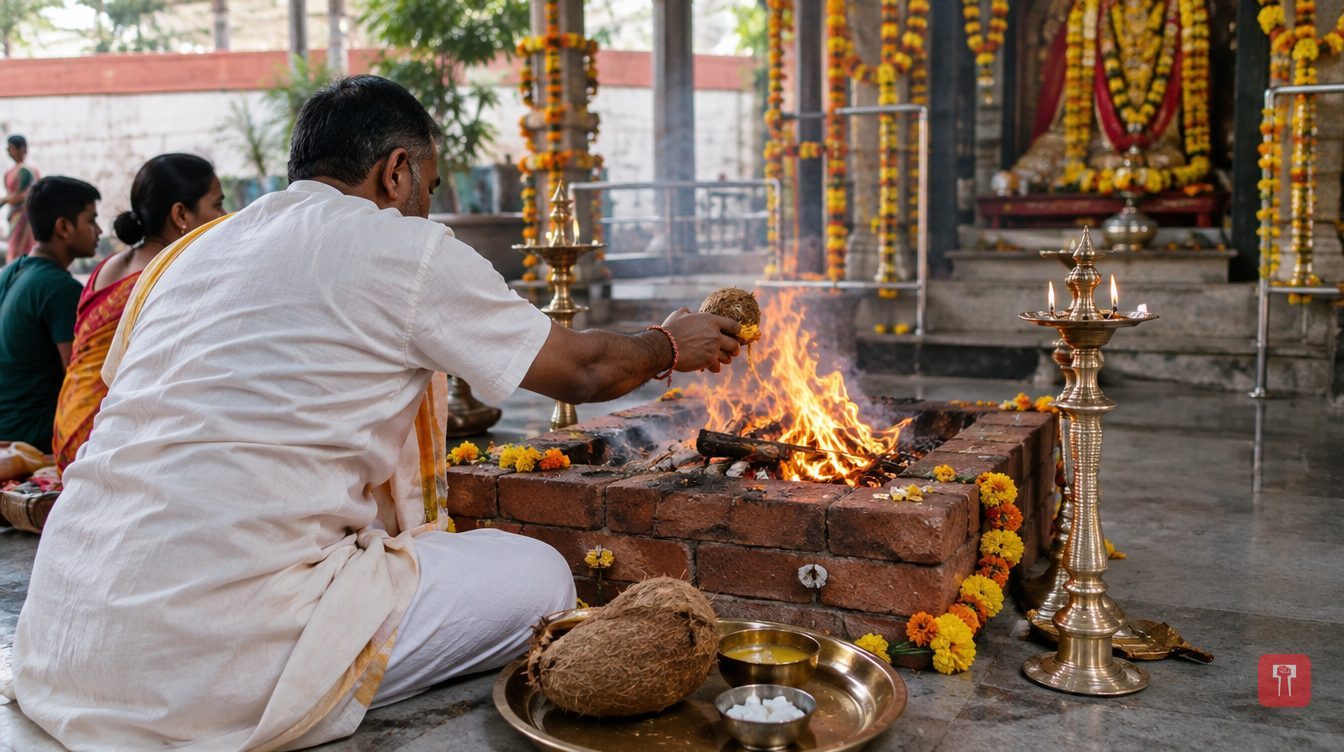
On Mahashtami or Mahanavami, many homes and temples offer a coconut in the havan's final offering, a custom tied to ideas of ego, devotion and completion.
 Images are not validated/verified
Navratri is a festival of worship of Adishakti. Over nine days, devotees offer prayers to the different forms of the goddess, chant mantras, fast, read the Saptashati and perform several religious rites. On Mahashtami or Mahanavami, many homes and temples hold a havan, or homa.
The custom of offering a coconut in this homa is considered special. The last offering made at the end of a homa is called the purnahuti. In many places, coconut, ghee and havan material are offered in this purnahuti.
The question is why a coconut is offered in the goddess's homa, and what spiritual meaning lies behind the custom. Is offering a coconut only a ritual, or does it also carry a symbolic message? The answers are found in Indian religious tradition and the philosophy of devotion and worship.
Coconut holds a very sacred place in Hinduism. It is used at the start of any auspicious undertaking, in worship of deities, in installing the kalash and in yajna rites. The coconut is also called Shriphal.
The structure of the coconut is used to explain human life symbolically. The fibrous outer covering, the hard shell and the white kernel inside are compared, in order, to the outer personality, the covering of ego and the purity of the inner self. This is a religious symbolic meaning. Offering the coconut to the fire means giving up one's ego and taking refuge in the goddess with a pure mind.
In some traditions of Shakti worship, the practice of animal sacrifice is found from earlier times. In some Shaktipeeths and regional religious traditions in particular, a sacrificial rite was performed on Ashtami or Navami. However, this practice did not exist in all goddess temples or all Shakti worship traditions.
Over time, non-violent and sattvik forms of worship gained importance in many places. In such traditions, offering a coconut is regarded as one of the symbolic substitutes for sacrifice. By breaking a coconut or offering it to the goddess, the devotee resolves to give up the evil tendencies of the mind. Here the spiritual meaning of sacrifice is described as conquering faults within oneself such as ego, anger, envy and attachment.
Even so, it cannot be said with certainty that the practice of offering coconut began everywhere in place of animal sacrifice. In different religious traditions, the coconut also has its own importance as an independent sacred and auspicious symbol.
In many families, the tradition of performing a homa on Mahashtami or Mahanavami continues. In some places, rites such as reading the Durga Saptashati, chanting mantras, Chandi homa or Navchandi yajna are performed. In a havan, ghee, samidha and the prescribed havan material are offered to Agni, the fire deity, with mantras. The final offering of the rite is called the purnahuti, which symbolises the conclusion of the yajna and the fulfilment of the resolve.
In some traditions, a coconut is taken for the purnahuti. Ghee, camphor or other havan material may also be offered with it. While making the purnahuti, the devotee prays to the goddess to forgive any shortcoming in the worship and to let the merit of the ritual be for the good of all. In this way the purnahuti is not merely the last offering of the homa, but a heartfelt act of surrendering the entire practice at the goddess's feet.
Both Mahashtami and Mahanavami are of special importance in worship of the goddess. On Mahashtami there is special worship of Goddess Durga, the Durgashtami fast and Kanya Puja, and in some traditions Chandi homa is performed. By worshipping the goddess in her Shakti form, devotees pray for strength to face troubles.
On Mahanavami, the ninth day of Navratri, Goddess Siddhidatri is worshipped. In many traditions, rites on this day include havan, purnahuti, Kanya Puja and the conclusion of the Navratri fast. Some families hold the homa on Ashtami and others on Navami. The choice is made according to local tradition, family custom, the resolve of the worship and the panchang. Both days are considered important for praying for the goddess's grace, and by offering a coconut at the end of the homa, the devotee completes their Navratri worship.
Religious rites are also said to require following the correct method along with faith. Offering a coconut is not only about having a wish fulfilled, but also about removing the faults of the mind and adopting good qualities.
