

Why Abhyang snan with ubtan is part of Narak Chaturdashi: the religious and Ayurvedic reasons
 Images are not validated/verified
Applying ubtan during the Narak Chaturdashi abhyang snan is an old Diwali custom tied to the Narakasura legend, spiritual belief and Ayurvedic advice for the change of season.
Applying ubtan (a herbal body paste) to the body during abhyang snan, the ritual bath, is an ancient tradition during Diwali, especially on the morning of Narak Chaturdashi. The practice is seen as a symbol of purifying the body and mind. Three main reasons are given for it: religious, spiritual and scientific, that is, Ayurvedic.
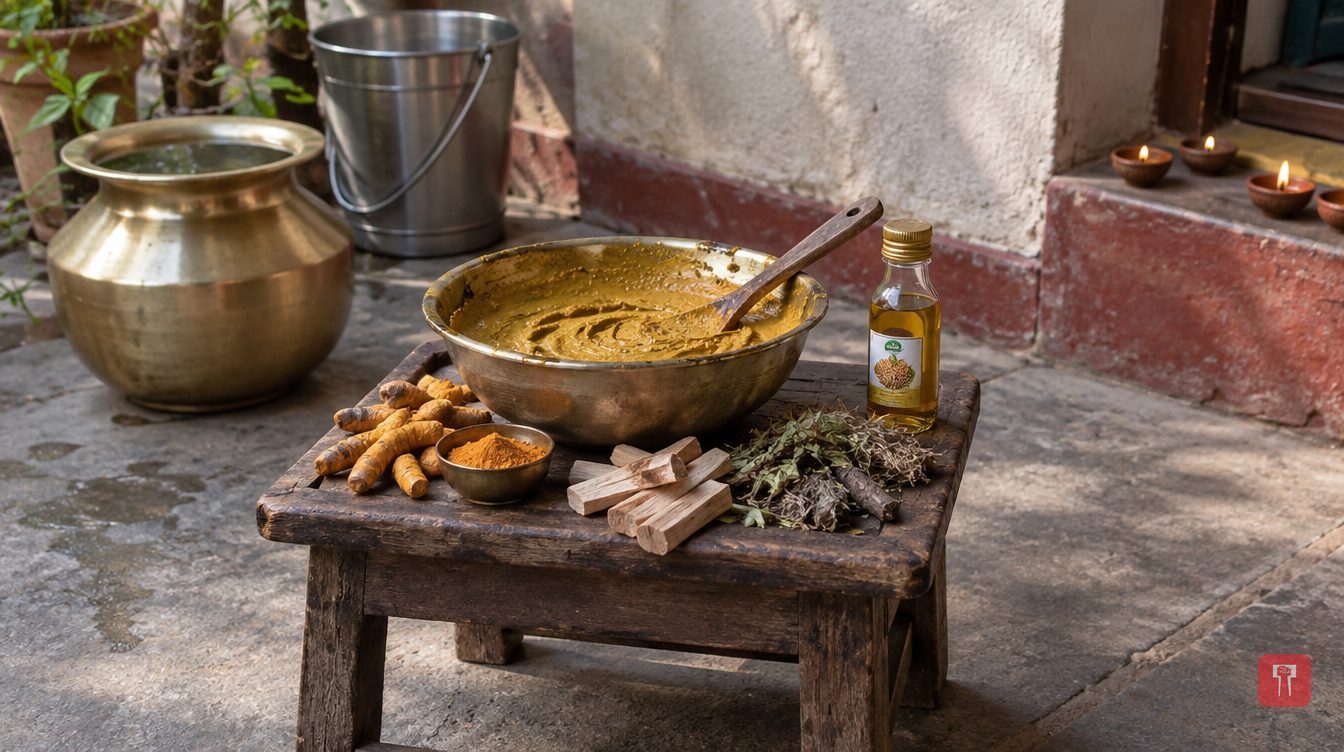
Ubtan is made with natural ingredients such as turmeric, sandalwood, nagarmotha, kachora and vala.
The tradition is believed to have begun with the legend of the slaying of Narakasura in mythological times. According to the Shrimad Bhagavata Purana, Narakasura, the cruel king of Pragjyotishpura, tormented gods and humans. He had imprisoned 16,000 women. On Kartik Krishna Chaturdashi, Lord Krishna and Satyabhama killed Narakasura and freed the world from his tyranny.
According to the legend, after killing Narakasura, Krishna's body was stained with blood and he was tired from the battle. To clean him and relieve his fatigue, fragrant oil and ubtan were applied to his body and an auspicious bath was given. To celebrate the victory and their freedom from Narakasura's tyranny, the people lit lamps. This victory and Krishna's auspicious bath are what is called abhyang snan. Since then the tradition has continued as a symbol of the destruction of demonic tendencies and of washing away the negativity within, namely ignorance and laziness.
On the spiritual side, according to the dharmashastra, ubtan is made from sattvic and rajasic plants. It is said that applying it increases the human body's capacity to absorb sattvic waves and chaitanya particles from the universe. The spiritual understanding also holds that bathing after rubbing in oil and ubtan helps remove disturbing vibrations around the body.
From the scientific and Ayurvedic point of view, Diwali comes as the Sharad season ends and the Hemant season, the cold days, begins. This change in weather has a major effect on the body. In the cold the air turns dry, which makes the skin rough and lifeless. Natural and medicinal plants in the ubtan, such as turmeric, sandalwood, nagarmotha, kachora and vala, help the skin retain moisture and suppleness.
Before ubtan is applied, lukewarm sesame oil is rubbed on the body, which is called abhyang. Massaging gently with the ubtan afterwards improves blood circulation. This relieves tiredness and brings fresh energy.
Ubtan has also been described as a natural cosmetic used since ancient times. It removes dead skin cells and settled dust, leaving the skin clean and glowing. It is said that applying ubtan is not just a Diwali fancy. It is part of the lifestyle that ancestors began to keep the body healthy and clear the mind of negativity when the season changes.
Reach readers on the ward they actually live in.
Advertise with Prime Time 24Reach readers on the ward they actually live in.
Advertise with Prime Time 24Reach readers on the ward they actually live in.
Advertise with Prime Time 24Reach readers on the ward they actually live in.
Advertise with Prime Time 24
Comments
No comments yet. Be the first.