

When to open a separate savings account for your child: what families need to know
A separate account helps families set aside money for studies, pocket money or gifts, and can teach children basic money habits.
 Images are not validated/verified
Opening a separate savings account in a child's name is useful when parents want to set money aside for education, pocket money, gifts or future expenses. It can also teach children basic money habits. The right time to open one depends less on the child's age than on whether the purpose of the account is clear and it can be managed properly.
Keeping a child's money apart from other household spending makes it easier to track savings and gives the child real experience of handling money. With such an account, families can save specifically for the child's needs, teach budgeting and saving towards a goal, and explain how deposits, withdrawals and interest work. Older children also get supervised experience of digital banking. Gifts, pocket money and education savings stay organised in one place. A separate savings account is especially useful when a regular amount is being put away for a fixed goal.
There is no single age at which every child needs an account. Parents can consider one when the child receives regular pocket money or gifts of money, when a separate education fund is needed, when the child is old enough to understand saving and spending, when you want the child to keep track of their own money, or when long-term savings for the child need to be kept apart from everyday household money.
Under Reserve Bank of India (RBI) guidelines, a minor of any age can hold a deposit account through a natural or legally appointed guardian. Banks may also, under their own policies and safeguards, allow minors above 10 years of age to operate a savings account on their own.
The type of account depends on the child's age and how much independence you want to give. For younger children, there is a guardian-operated account handled by a parent or guardian. For older children, there is a self-operated minor account, which the child runs within the bank's rules. After reaching adulthood, the child operates a regular account independently. Before applying, check the bank's age requirement, balance requirement, transaction limits, debit card facility and digital banking features.
IDFC FIRST Bank currently offers a Minor's Savings Account for children under 18, operated along with a parent or guardian. The bank also offers a self-operated savings account called FIRST Prodigy for Indian resident minors above 10 and under 18. According to the bank's current information, the guardian-operated Minor's Savings Account has no Average Monthly Balance requirement. FIRST Prodigy, on the other hand, requires an Average Monthly Balance of Rs 10,000 and comes with a Visa Platinum Debit Card, along with set transaction limits and other benefits. For families considering opening an account online, the bank offers digital options for its minor accounts, though eligibility, documents and the way the account is operated differ by account type.
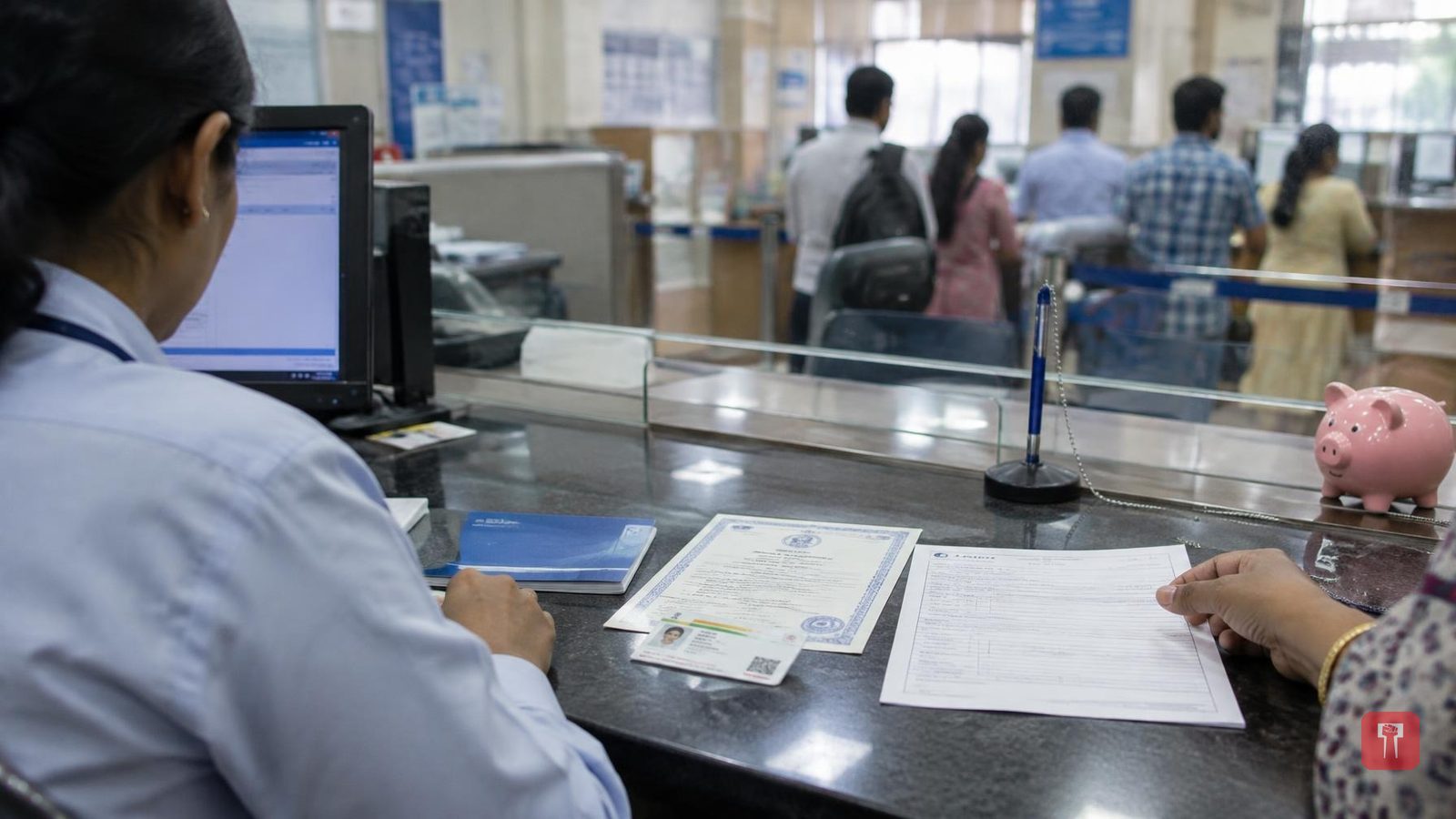
Documents vary from bank to bank, but generally papers for both the child and the guardian should be kept ready. For IDFC FIRST Bank's guardian-operated Minor's Savings Account, the bank asks for the child's birth certificate, Aadhaar or passport, and photograph. The guardian's identity and address proof, photograph and a signed application are also required. Check the latest list of documents before opening an account online, as more papers may be sought depending on the account and banking rules.
A child can be taught to handle the account gradually. Younger children can at first only make deposits and check the balance, while older children can learn to track spending, save for a goal and use approved banking facilities. For children above 10, a self-operated account can offer more practical experience, in line with the bank's rules. When the child turns 18, the account generally has to be converted or regularised with fresh KYC and new operating instructions.
Overall, a separate savings account helps families keep a child's savings organised and lets children learn to handle money responsibly. The best time to open one is when the purpose is clear, whether that is education savings, pocket money or teaching money sense. Before choosing an account, check the bank's age requirement, the guardian arrangement, balance conditions, transaction facilities and documents.
