

Unlicensed purchase of farm produce to invite criminal action, traders warned
 Images are not validated/verified
The administration has begun cracking down on traders, institutions and FPOs buying produce without a licence, even as farmers question what the higher MSP will mean in a drought year.
The administration has begun a crackdown on traders, institutions and farmer producer companies (FPOs) that buy and sell produce without a licence, in violation of the rules. Direct criminal and legal action will be taken against them.
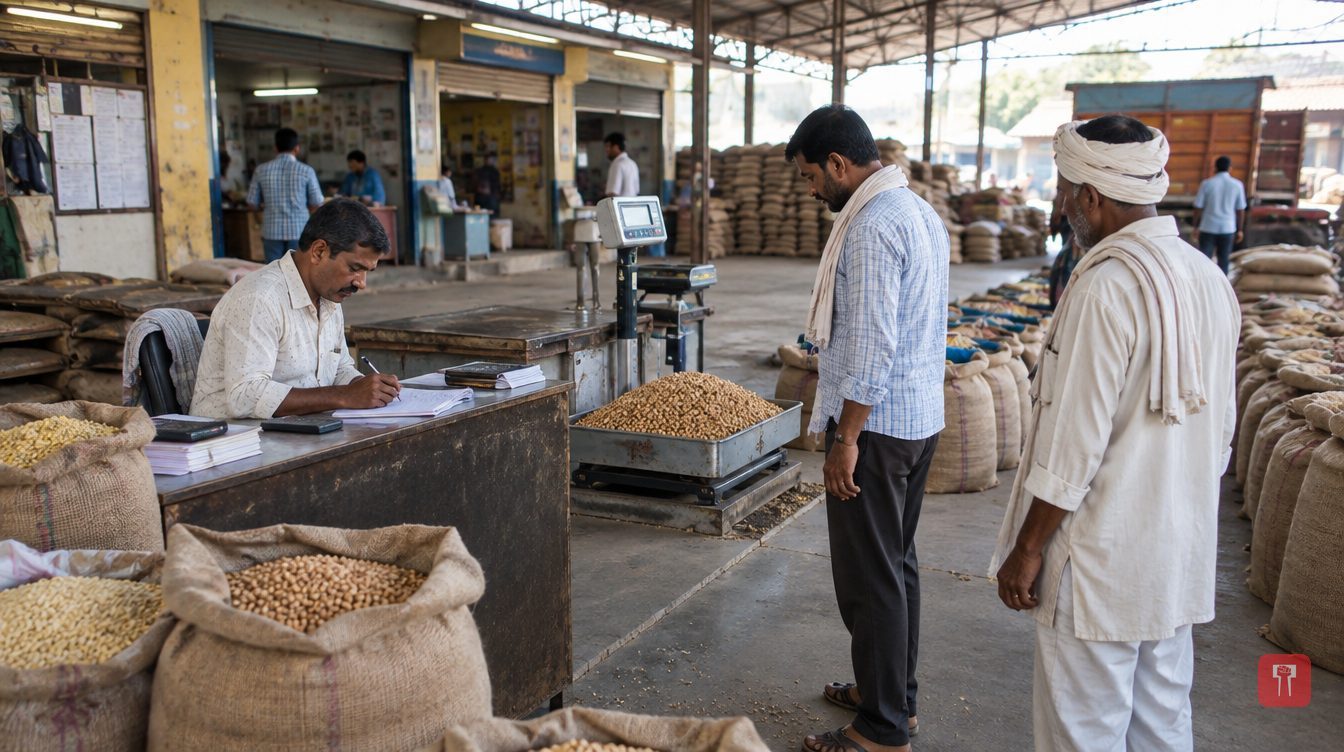
An authorised licence from the agricultural produce market committee or the marketing directorate is now legally mandatory to buy notified and deregulated produce. The rule will be strictly enforced when buying foodgrains and all other produce within the market committee premises or in the area outside it fixed for the purpose. Licences are also required for commission agents' shops, warehouses and processing industries.
Under the provisions of the Maharashtra Agricultural Produce Marketing (Development and Regulation) Act, 1963, doing business without a licence is an offence. The administration says the step has been taken to prevent financial fraud against farmers and to keep a watch on transactions.
The new rule will bring uniformity and transparency to all purchase and sale deals. If a dispute arises between a farmer and a trader, it will be easier to get legal protection, and the government will hold an authorised record of every deal. To obtain a licence, businesses must submit an application in the prescribed form, the required documents and the prescribed fee to the market committee. Different types of licence and rules apply to traders, commission agents and processors, depending on the type of business.
Licensed traders buying produce from farmers must also give them a "pakki raseed" (formal receipt) on the spot, as the law requires. It must clearly state the weight, quality and rate of the produce. Strict punitive action will be taken against those who do not issue a receipt or who strike deals directly among themselves, which has caused panic among those operating without a licence.
Meanwhile, the Centre has announced an increase in the minimum support price (MSP) for six main crops for the coming rabi season: wheat, gram, lentil, mustard, safflower and barley. But the rains have failed this year, drought-like conditions prevail, there is a shortage of irrigation water and soil moisture has fallen. The question being asked is how much farmers will really gain from the higher MSP.
The water shortage poses a major threat to rabi sowing itself. If drinking water has to be given priority, getting water for farming will be difficult. Many farmers without irrigation are unsure whether to sow at all. If yields fall, arrivals in the market will drop and open-market traders may pay more than the MSP, but there is no guarantee of this. Amid the drought and rising costs, the MSP increase is proving to be only a "nominal consolation" for farmers.
Farmers had pinned hopes on the rabi crop after their kharif losses. But the MSP of wheat has been raised by only Rs 25 per quintal and that of gram by Rs 83. This means that if an acre yields five quintals of gram, the farmer will get only Rs 415 more. Meanwhile, the cost of ploughing, seed, fertiliser and labour has risen considerably. The concern is whether this marginal increase will cover the cost of production.
Reach readers on the ward they actually live in.
Advertise with Prime Time 24Reach readers on the ward they actually live in.
Advertise with Prime Time 24Reach readers on the ward they actually live in.
Advertise with Prime Time 24
Comments
No comments yet. Be the first.