

Nagpur agriculture department urges farmers to conserve water for rabi as rain falls short
With deficient rain and El Nino causing drought-like conditions, farmers are advised to pick low-water crops and use micro-irrigation.
 Images are not validated/verified
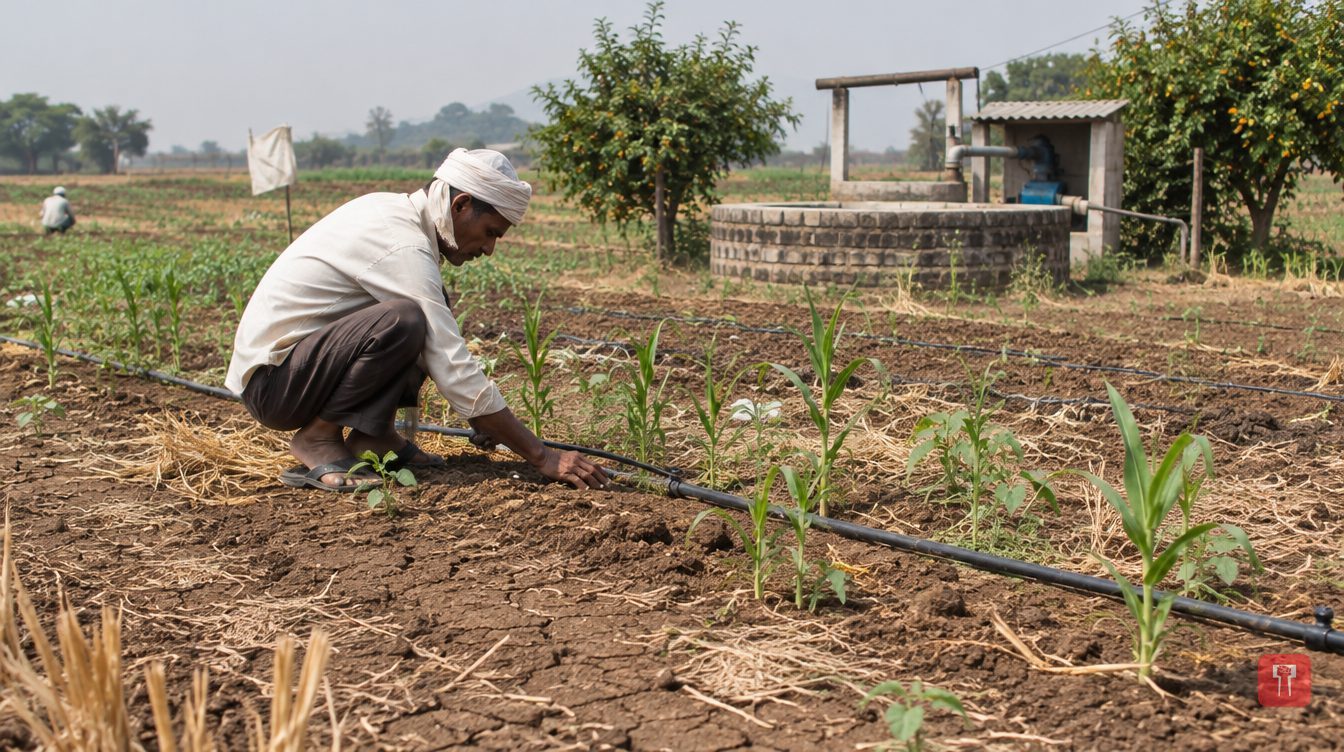
Rainfall has been low in Nagpur and the effect of El Nino has created drought-like conditions. In view of this, the Nagpur agriculture department has appealed to farmers to use water judiciously and properly in the rabi season.
District Superintending Agriculture Officer Dr Archana Kad has urged farmers to keep three things in mind before sowing: how much water is available for the field, what type of soil it has and what the local weather conditions are. The choice of crop should be made accordingly.
The department's advice is to give first priority to crops that ripen with less water. These include gram, safflower, linseed, sesame, jowar, bajra, maize and sunflower. Farmers have also been asked to plan well for nutritious chia and fodder crops for livestock.
Crops such as wheat need more water. The department has said the area under such crops should be kept to what the available water source can sustain.
The department has also given several pointers on irrigation and water management. Before sowing, farmers should properly assess the moisture in the field along with the water level in wells and borewells. If water availability is not assured, they should avoid planting water-intensive crops on a large scale.
Farmers have been asked to make maximum use of micro-irrigation systems such as drip and sprinkler. To retain moisture in the field, they should also carry out weeding, hoeing and inter-cultivation on time.
For orange orchards, the department advises the use of mulching to retain moisture.
In Vidarbha, fields fall vacant after paddy harvest. Growing rabi jowar in those fields, using the residual moisture, has been described as an excellent option. It yields grain and also provides nutritious dry fodder for cattle.
The department said it is extremely important for farmers to take these guidelines from agriculture experts and the district administration seriously. In this difficult time, agricultural production can be protected and possible economic losses avoided only by adopting sound water management and scientific methods.

Comments
No comments yet. Be the first.