

UK government urges every household to keep three days of water and food under Be Ready campaign
The UK has asked residents to store at least 72 hours of drinking water, long-life food and essentials at home as part of a new national emergency preparedness campaign.
 Images are not validated/verified
The British government has formally appealed to all residents to keep at home, for at least three days or 72 hours, drinking water, long-life grain and food, and other essentials. The UK administration recently launched a national emergency preparedness campaign called "Be Ready".
The campaign aims to ensure that if a sudden crisis strikes, people have enough food and water and stay safe. Residents have been asked to prepare for situations such as a sudden power cut, a loss of internet service, a disruption to the water supply and natural disasters.
The administration says changing weather and rising geopolitical tension around the world have been causing emergencies of many kinds. According to the British administration, severe winter storms, summer droughts and wildfires have a major impact on everyday basic services. When electricity, water and mobile networks suddenly fail, people's lives are thrown into disarray. Local rescue teams and emergency services then come under heavy pressure. If people can rely on themselves for essentials for 72 hours, it becomes easier for government agencies to reach the elderly and the sick, who are worst affected.
Excessive dependence on modern technology has also become a major challenge, not just disasters on the ground. According to information provided by the British defence minister and security officials, attacks by hostile countries on digital and cyber infrastructure are a real and present threat. If a cyber attack knocked out the banking system, supermarket card machines or ATM services, people without cash would be unable to buy goods. A security flaw in the PHP programming software recently put thousands of websites at risk. Such incidents have made the government aware of how quickly threats can arise in the digital world.
The government's official guideline, the Official Emergency Checklist, advises people to build up supplies gradually and without panic. There is no need to do it through panic buying in a single day. The items can be gathered a little at a time while buying regular groceries.
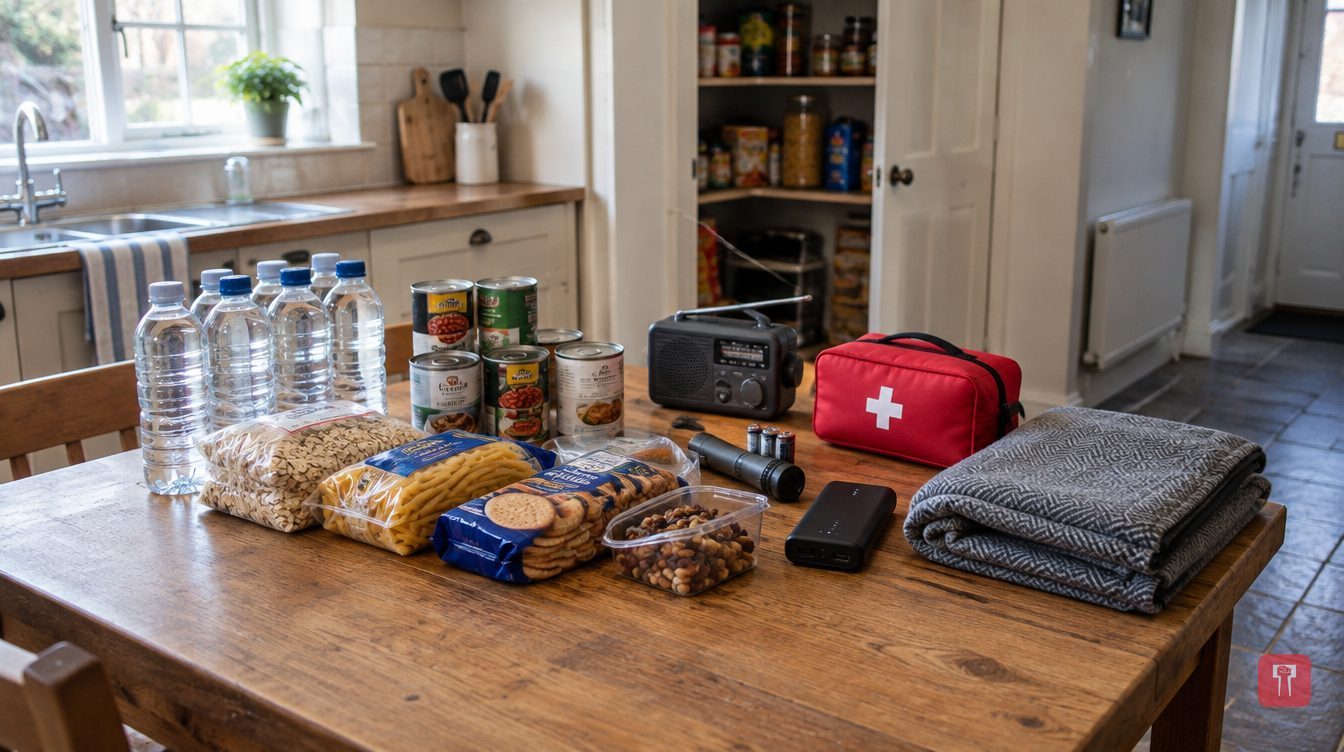
According to the government list, drinking water should be stored at a minimum of 3 litres per person per day, or 9 litres for 3 days. Additional water may be needed for cooking and cleaning. Non-perishable food includes tinned vegetables, meat and fish, dried fruit, biscuits and items that need no cooking. For light and warmth, the list asks for torches, spare batteries, warm clothing, blankets and sleeping bags.
Instead of a TV or internet that runs on electricity, people are advised to keep a battery-powered or wind-up FM radio and a fully charged power bank. For health and hygiene, the list names a first aid box, regular medicines, hand sanitiser and wet wipes. People should also keep some cash for use if ATMs or online payments stop working, along with photocopies of important documents and proof of identity. Milk powder and nappies for small children, and food and water for pets, are also on the list.
Is this the first time such advice has been given in the UK? Preparing people for emergencies is not new in Europe. In European countries such as France, Ireland and the Netherlands, people are already advised to keep a 72-hour emergency kit. The European Union (EU) has also issued a 72-hour emergency guideline for people in all its member states. According to the UK's security ministry, the step has been taken under the "Resilience Action Plan" to strengthen the country's internal security further and stay in step with European standards.
Is the government preparing the public for war? After the campaign was announced, there was some fear among people. The administration has clarified, however, that this does not at all mean the country stands on the brink of war. It is only a precautionary step to deal with natural disasters, changing weather and sudden failures in modern technology. Crises do not announce themselves, so if people prepare in advance, mishaps can be averted and the whole country can be made safer. That is the main purpose of the campaign.

Comments
No comments yet. Be the first.