

Turbidity in Ulhas river hits water supply in Badlapur, Ambernath
Rising turbidity in the Ulhas river has cut water supply to Badlapur and Ambernath by around 30 MLD, officials say.
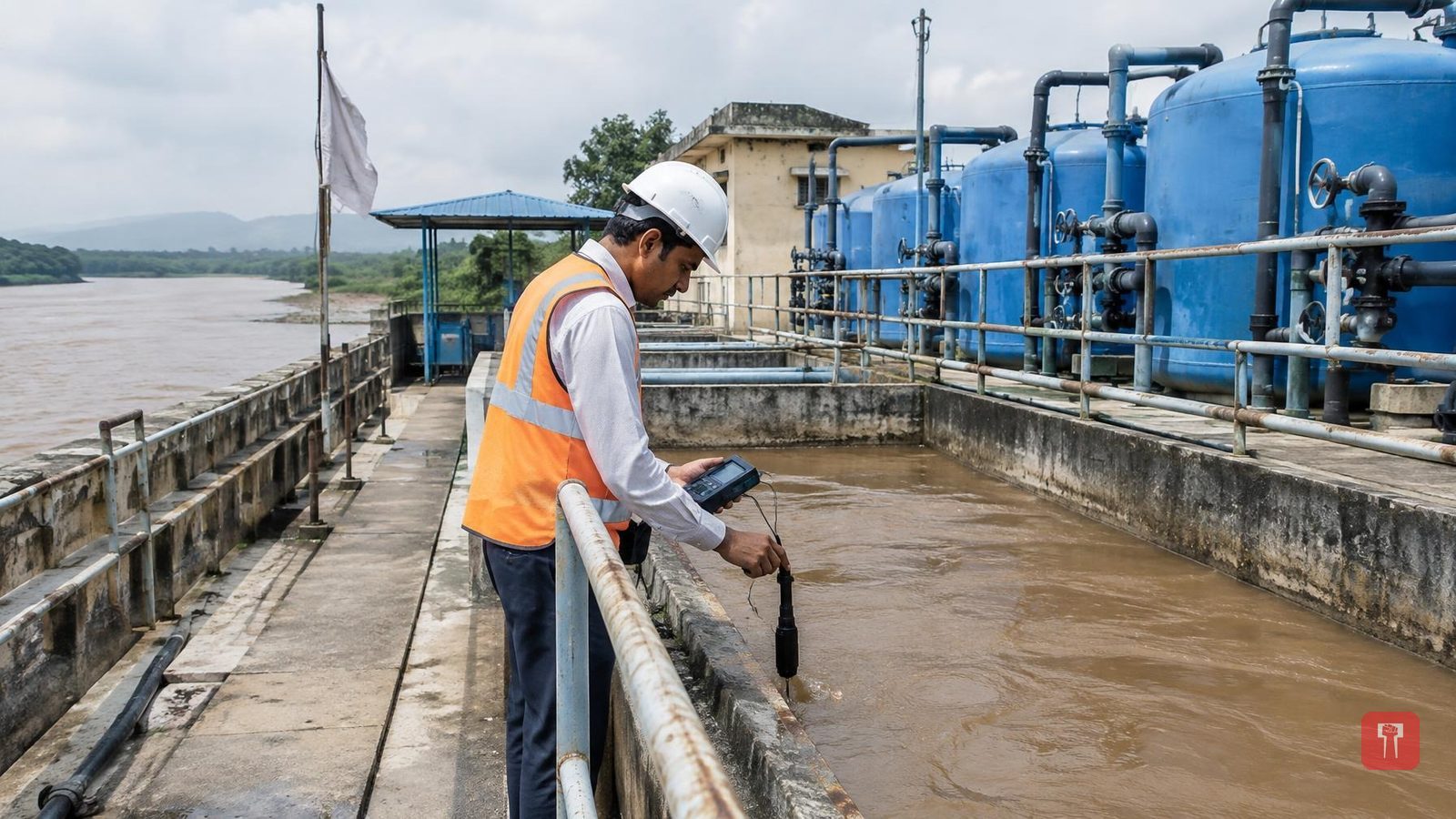
Turbidity in the Ulhas river has increased sharply over the past few days, turning the water darker and bringing heavy amounts of silt. This has made it difficult to draw and treat the water, and residents in several areas have complained of dirty water coming from taps. The Maharashtra Jeevan Pradhikaran has appealed to citizens to filter and boil water before drinking it.
Sub-divisional engineer Suresh Khadri of the Maharashtra Jeevan Pradhikaran inspected the water purification centre at the barrage on the Ulhas river on Saturday. Testing with a turbidity measuring machine found the water at 370 NTU, or Nephelometric Turbidity Units. During the monsoon, silt settled on the riverbed typically rises, and turbidity levels usually stay between 150 and 200 NTU.
This time, however, turbidity has crossed that limit and is reported to be the highest in the past ten years, disrupting the drawing and purification of water. So much silt is present that filters have had to be shut down every three hours. Pressure filters are also not working properly, reducing the capacity to filter water.
The Ulhas river originates in the hills of Matheran and flows through Karjat and Vangani before passing through the Badlapur area, which depends on the river as its main source of water. The Maharashtra Jeevan Pradhikaran says the rise in turbidity is likely linked to hill-cutting or other excavation work along the riverbanks in Karjat taluka. It is believed that soil and fine particles from the excavation have washed into the river with rainwater, making it dirtier.
The combined water requirement of Badlapur and Ambernath is around 140 MLD, but due to the rise in turbidity in the Ulhas river, only 105 to 110 MLD is currently being supplied. Complaints of dirty tap water persist in some areas as turbidity has not fully subsided. Maharashtra Jeevan Pradhikaran officials said that if the situation continues, they may consider supplying water on alternate days if necessary.
