

Tulsi Vivah on November 21, main muhurat from 5.25 pm to 7.49 pm
 Images are not validated/verified
Tulsi Vivah falls on Saturday, November 21, on Kartik Shukla Dwadashi, with the main marriage muhurat between 5.25 pm and 7.49 pm.
The month of Kartik holds special religious significance in the Hindu tradition. Tulsi Vivah, celebrated in this month, is regarded as marking the start of the wedding muhurats. Every year, on Kartik Shukla Dwadashi, Mother Tulsi is married with great devotion to Shaligram, the form of Lord Vishnu. In many places the auspicious festival is celebrated with enthusiasm for five days, from Devuthani Ekadashi to Kartik Purnima.
According to the Panchang, Tulsi Vivah this year, 2026, falls on Saturday, November 21, on the Kartik Shukla Dwadashi tithi. On this day Shaligram and Mother Tulsi will be wed.
It is religiously believed that performing Tulsi Vivah brings merit equal to that of kanyadaan. The observance is held to be highly fruitful for families facing domestic discord or obstacles in married life. It is believed to bring happiness, peace and prosperity to the home.
The auspicious timings for the puja are as follows. The main marriage muhurat will be from 5.25 pm to 7.49 pm. The Brahma muhurat is from 4.40 am to 5.30 am. The Abhijit muhurat will be from 11.42 am to 12.28 pm.
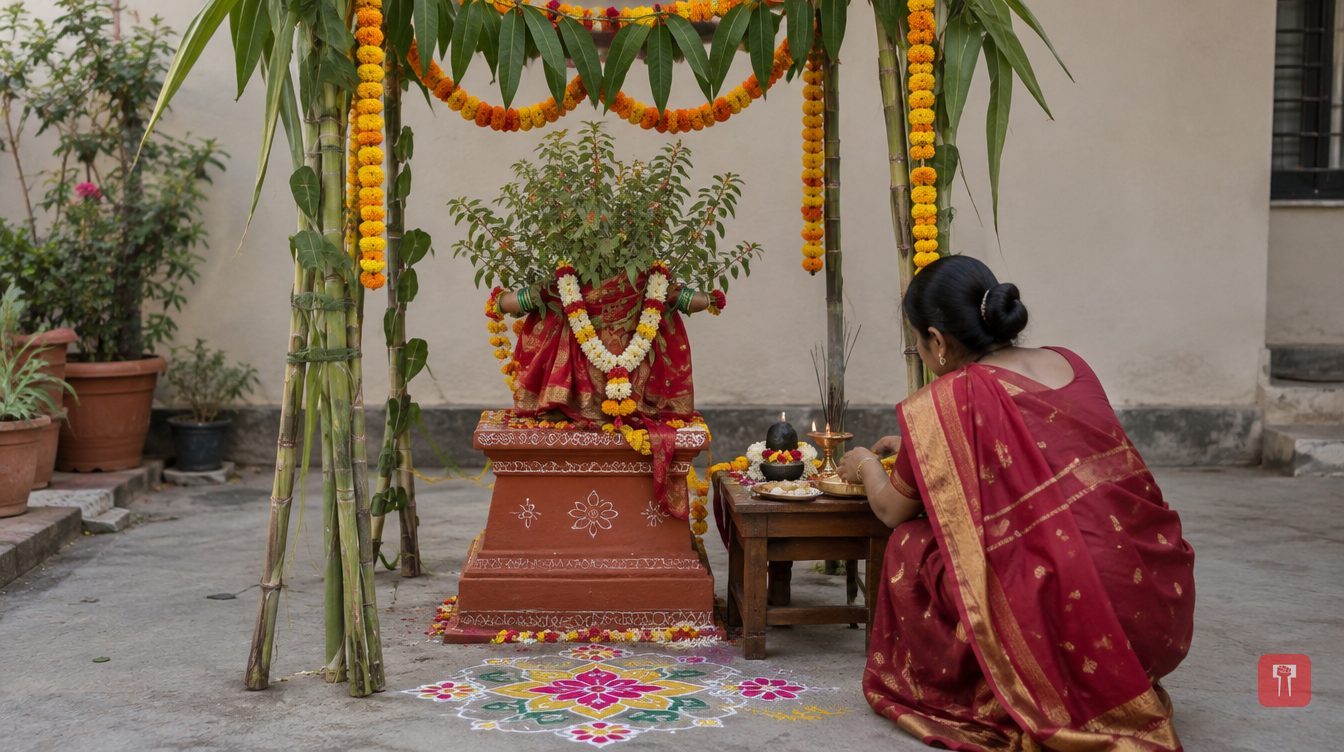
To perform Tulsi Vivah at home in the traditional way, the Tulsi Vrindavan is first washed clean and coated with geru, and a rangoli is drawn in front of it. Turmeric and kumkum are applied to the Tulsi plant. The mandap is decorated by tying sugarcane, marigold flowers and mango-leaf toran around the Vrindavan.
Mother Tulsi is adorned like a new bride. The plant is draped in a new red or yellow cloth. It is decorated like a bride with a garland of flowers, green bangles, kumkum and all the ornaments of a married woman.
An idol of Lord Shaligram or Balkrishna is placed on a clean wooden stool near the Tulsi Vrindavan. The deities are dressed in yellow pitambar and offered sandalwood paste and flowers.
Panchopachar puja is then performed. Turmeric, kumkum, akshat, fragrant flowers, incense and a lamp are offered to Mother Tulsi and Lord Vishnu, and devotees pray sincerely for the well-being and prosperity of the family.
Mangalashtak verses are then recited in the traditional manner, with an antarpat held between Tulsi and Shaligram. When the Mangalashtak is complete, akshat is showered and the divine wedding is concluded, with the seven pheras completed as per tradition.
After the wedding, everyone together performs the aarti of Mother Tulsi and Lord Vishnu. Sweets are offered to the deity and prasad is distributed among those present.
Reach readers on the ward they actually live in.
Advertise with Prime Time 24Reach readers on the ward they actually live in.
Advertise with Prime Time 24Reach readers on the ward they actually live in.
Advertise with Prime Time 24Choose primetime24.com as a preferred source on Google Google shows more stories from your preferred sources in Top Stories.
Reach readers on the ward they actually live in.
Advertise with Prime Time 24
Comments
No comments yet. Be the first.