

The customs and beliefs behind rituals like oti, aher, dukhwata, garva, pardi and van
Maharashtrian families still observe rituals such as oti bharna, aher, dukhwata, garva, pardi and van at weddings, festivals and times of joy and grief.
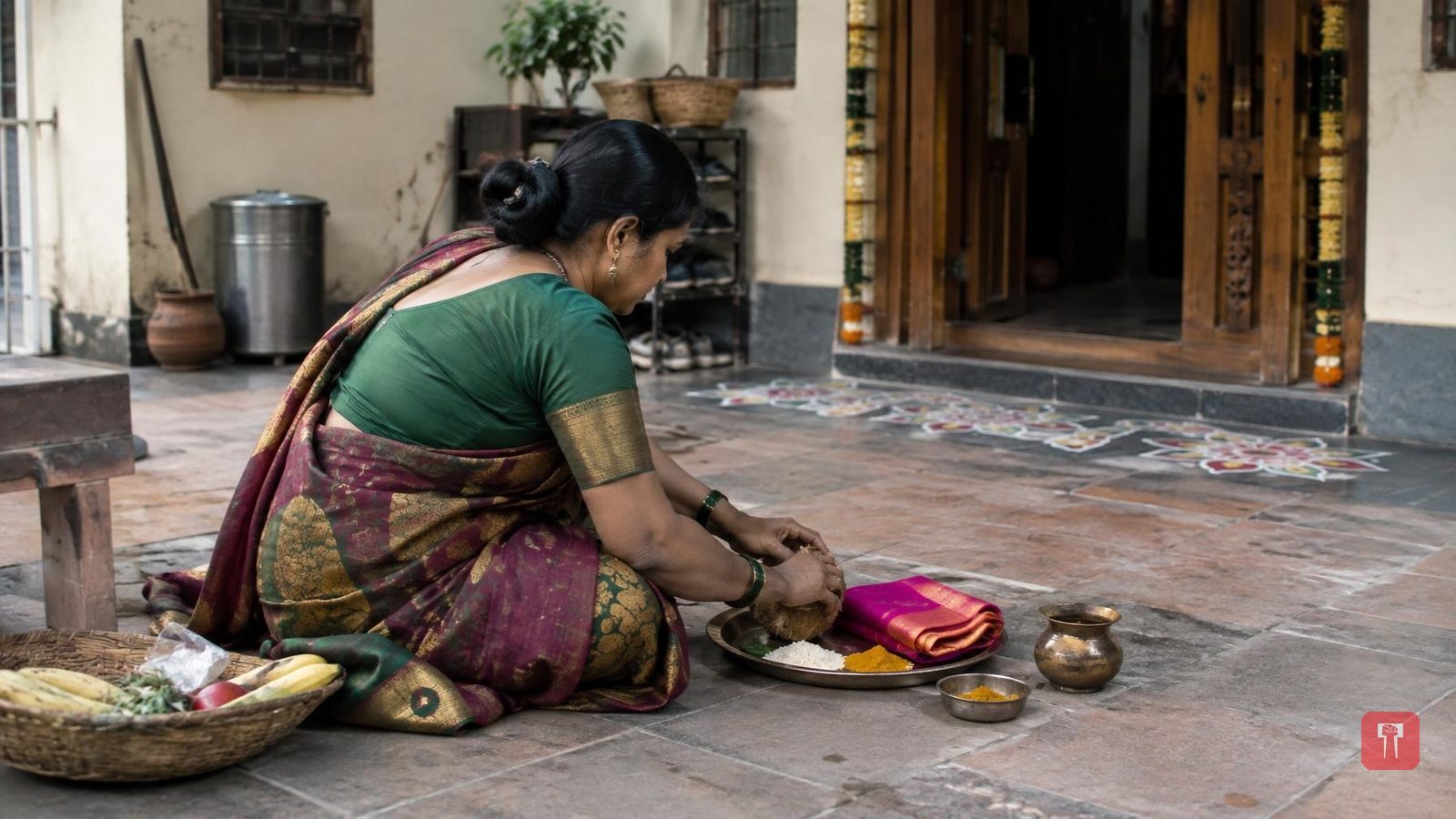
In many families in Maharashtra, certain customs are still observed at weddings, festivals, celebrations and moments of joy and sorrow. Filling the oti, giving aher, offering dukhwata, bringing garva, leaving a pardi and giving van are rituals that reflect not just religious faith but also the spirit of maintaining relationships, preserving tradition, showing respect and standing by family in difficult times. These customs have no single fixed rule; the way they are observed changes according to village, region, caste community and family tradition.
Oti bharna is considered a ritual especially linked to honouring married women. The oti includes rice, a knot of turmeric, coconut, fruit, a piece of cloth or grain, and in some places a monetary offering as well. In many families, a married daughter fills her mother's oti during Adhik Maas, the extra lunar month. Women also hold a haldi-kunku gathering at home on Fridays in the month of Shravan and fill the oti as part of it. The ritual remains common today, from small haldi-kunku gatherings to large weddings. In many places, married women are given a full oti of coconut, cloth, rice or wheat, and flower garlands for their hair, with the coconut considered auspicious for having children. In some places, unmarried and widowed women are given a piece of cloth and rice or wheat. In the Sangli, Satara and Kolhapur areas of western Maharashtra, even grape orchards are given an oti: five or seven married women apply haldi-kunku to five grapevines and dress one vine in a sari, after which bunches of ripe grapes are placed in each woman's oti. In several parts of Maharashtra, rivers are also given an oti, with the river dressed in a sari and haldi-kunku applied to it.
Honouring a relative or close acquaintance on a happy occasion by giving a gift, cash or something useful is called aher. At weddings, aher is given in many places to the bride and groom, their parents or close relatives. In Maharashtra, women are given a sari as aher and men are given a towel, a cap or clothes. In some places men are also given a shawl and coconut, known as shaal-shrifal. In many places there is also a tradition of honouring someone by tying a turban on them. Cash is customarily given in a sealed envelope. With changing times, the form of aher has also shifted towards gifts, where the warmth and respect in the relationship matter more than the value of the item. In some parts of Maharashtra, even a newly built borewell or well is given a sari as aher.
Dukhwata is the way of expressing condolence to a family after a death in the household of a relative, friend or neighbour. The social sentiment behind it is to visit the bereaved family, give them courage, pay silent tribute, and help where possible in a time of need. Because of the grief in the household, and in some places because of established custom, no cooking is done in that home for a few days and no celebration is held there. In many villages, relatives or friends still go to the bereaved family's home carrying food, tea and other refreshments. In some villages of western Maharashtra, it remains customary for neighbours and relatives to cook food at their own homes every morning and evening for thirteen to fifteen days and take it to the bereaved family, sitting and eating together with them to offer courage. In many villages this remains a distinctive tradition of affection and consolation, one that is fading in the busier life of cities.
The ritual known as garva laana or garva le jaana, once common in rural Maharashtra, means bringing coolness to the atmosphere, the body and the mind, as the word itself suggests. In many places, garva is carried on auspicious occasions. Before a wedding, there is a custom of the bride's side giving garva to the groom's side and the groom's side giving garva to the bride's side. Wedding garva mostly consists of cooling foods such as curd-rice, banana, ambil and items made from moong, and even today it includes several such items. Besides weddings, the custom of carrying garva is also widely followed for the bhoomi puja of a house, the water puja of a borewell or well, the chowkat puja and vastu shanti, where ambil, fruit, puran poli and curd-rice are carried. It is believed that for the puja held when a house is built, garva must be brought by a sister or paternal aunt, and while performing vastu shanti, curd-rice is sprinkled around the vastu, which is believed to calm it and prevent any trouble.
The ritual of leaving a pardi is also seen more in rural areas. This pardi is left near sources of water such as a well, stream, river, pond, a farm pond or a borewell. Dried stalks of wheat or jowar, or the dry stubble on which the grain grows, are tied with string into five or seven corners. On this are placed an offering of puran poli, seven bananas, seven areca nuts, seven cloves, seven knots of turmeric, seven lamps and seven small bundles of wheat as prasad. It is believed that water sources are home to seven asara, or seven goddesses, and the pardi is left to please these goddesses and to prevent any loss of life at that water source. The pardi is left in a river or well, and in some places the offering placed on it is also eaten as prasad. A coconut is also broken at the water source. In some places there is also a tradition of leaving a pardi to ward off illness, and according to some beliefs only men may leave this pardi at the water source.
The custom of giving van is followed especially among married and newly married women during haldi-kunku, Makar Sankranti or other religious occasions. Fruit, grain, items associated with a married woman's status, or useful items are exchanged as a way of wishing each other well. During Adhik Maas, a Brahmin is given anarse, niranjan, batashe and similar items on a plate. At Makar Sankranti, the son-in-law is in particular given gifts of silver or gold, including sesame and jaggery in a silver bowl, while the daughter-in-law is given jewellery-shaped sweets made of halwa. In some traditions, van is given by holding out the end of a sari as a token gesture. There is also a custom of giving the son-in-law gold-coloured aapta leaves as van on Dussehra.
Given all these customs, it is worth remembering that these practices are part of faith and culture, and it is not necessary that every household in every region follows them in exactly the same way. These rituals are observed keeping in mind family tradition, local custom and the occasion.
