

Supreme Court tells states to seize vehicles with unpaid e-challans, freeze services
The Supreme Court has asked all states and Union territories to take tough steps to recover unpaid traffic e-challan fines, including seizing vehicles.
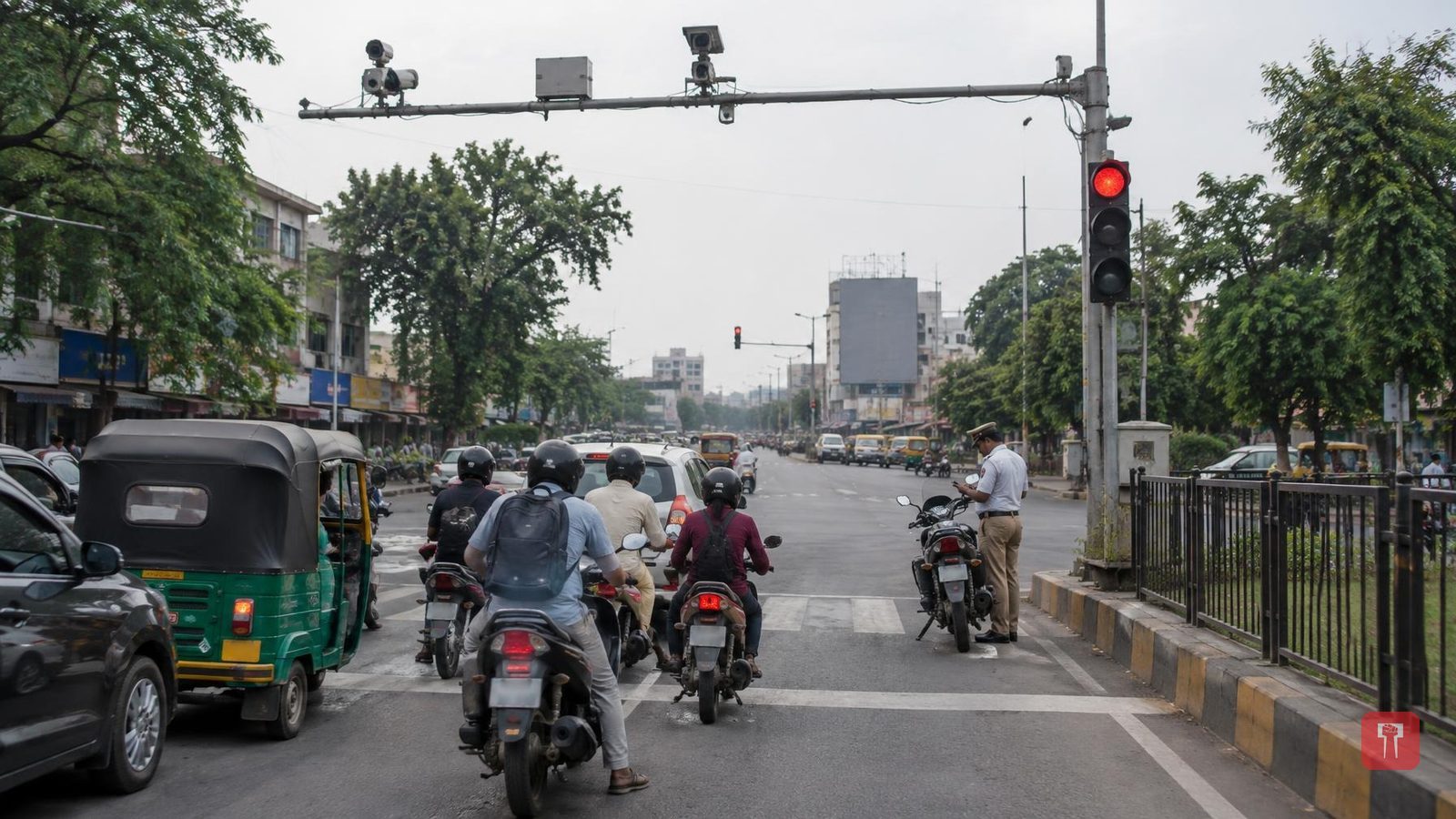
Fines on e-challans issued for traffic violations have largely gone unrecovered. The Supreme Court has asked all states and Union territories to take tough steps to recover these dues. Motorists across the country could be hit directly.
The court made it clear that issuing a large number of e-challans is of no use unless the fines imposed are actually recovered. According to information placed before the court, about Rs 49,194.05 crore of the e-challans issued across the country is yet to be recovered. About Rs 26,175.05 crore was said to have been recovered. The court underlined that how to recover the remaining fines is a big question.
At present, cases of unpaid e-challans are sent to the courts concerned. The court also noted that this method is not enough as the number of cases keeps growing.
States and Union territories have been directed to take the necessary action under the rules to seize a vehicle if an unpaid e-challan is found against it during checking. They have also been asked to freeze several online services linked to the vehicle until the fine is paid in full.
The order says renewal of the Registration Certificate (RC) of a vehicle with an unpaid e-challan should be stopped. Requests for a duplicate RC or a change in the owner's address will not be processed without payment of the fine. Such vehicles have also been asked to be blacklisted on the Parivahan Portal. This could make it difficult to transfer or sell such a vehicle.
The court has made it clear that a Fitness Certificate should not be issued to vehicles with unpaid fines. It has also directed that no centre should issue a Pollution Under Control (PUC) Certificate until the full fine is paid.
The court's stand is also strict on drivers who repeatedly break rules. It has said renewal of such drivers' driving licences should be withheld and, if needed, the existing licence suspended.
The court also asked the states, Union territories, NHAI and other bodies that own roads to strengthen electronic enforcement. The emphasis is on building a system that uses AI to detect violations and issue e-challans in accordance with the law. They have also been asked to take steps towards linking related traffic systems, including Vehicle-4, Sarathi, e-Challan, e-DAR and i-RAD.
The Ministry of Road Transport and Highways (MoRTH) has been asked to create a public online dashboard. It is to carry details of electronic monitoring state-wise and for each national highway corridor. These will include the number of devices available, whether they are working, violations recorded and e-challans issued. The dashboard is to be updated at least once a month.
Finally, the court cautioned officials to implement the directions in practice. It said the orders must not remain on paper and must be put into effect on the ground.
