

Supreme Court: 24-hour clock for producing accused starts the moment police take custody
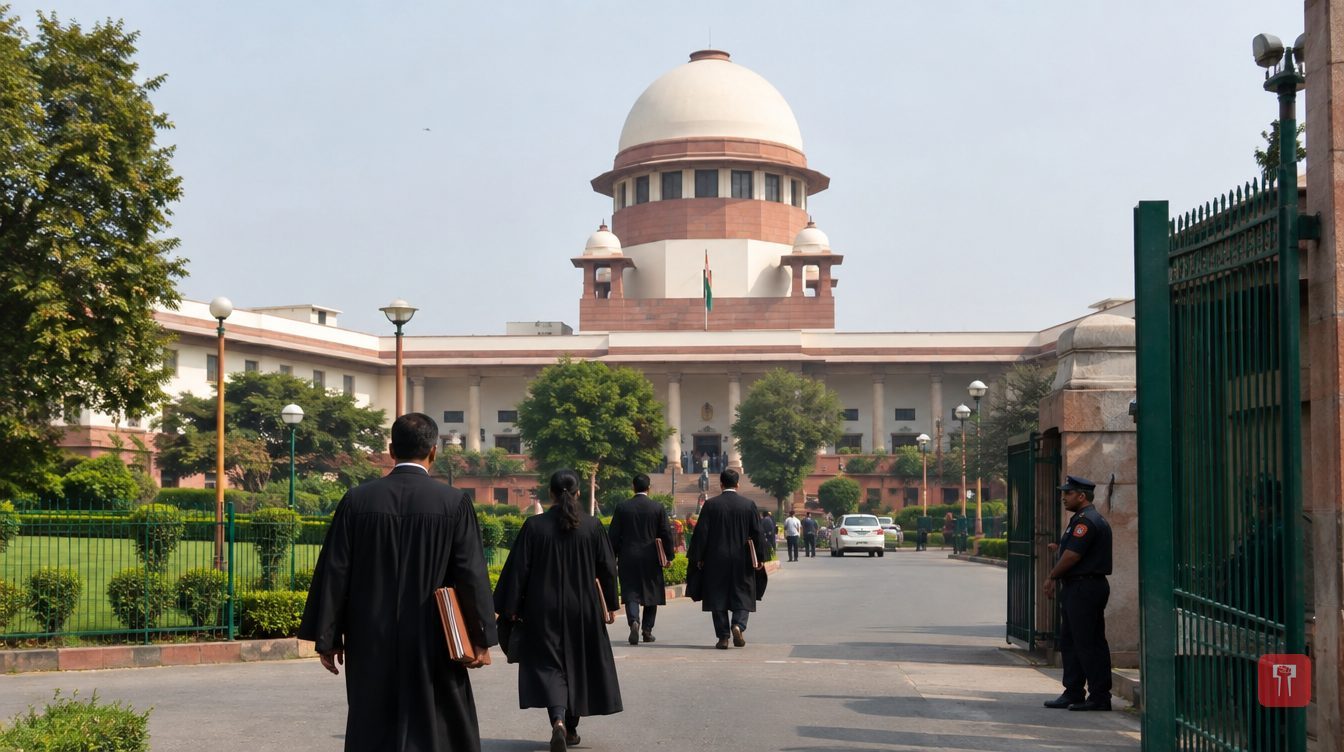 Images are not validated/verified
The Supreme Court has held that the 24-hour limit for producing an accused before a magistrate runs from the time of detention, not from when a formal arrest is shown.
The Supreme Court has clarified in an important ruling that the 24-hour period for producing an accused before a judge or magistrate begins at the moment the person is taken into custody. The count does not begin from the time a formal arrest is shown.
The court said arrest and detention both restrict a person's liberty in the same way. The 24 hours will therefore be counted from the moment police take someone into their control.
The court also criticised the stand taken by some High Courts, which had treated detention and formal arrest as two separate legal situations and distinguished between them.
The case arises from an order of the Tripura High Court. Four people were taken into custody on September 29, 2025, but were shown as arrested on September 30. The High Court had rejected the plea raised on this ground.
The Supreme Court said an officer who takes a person into custody does not meet the requirement merely by observing the mandatory 24-hour limit under Article 22(2). The officer must also ensure that, under Section 58 of the Code of Criminal Procedure and given the circumstances of the case, the period of custody does not run beyond a "reasonable time" even within the 24 hours.
The court also set out the magistrate's responsibility. When a person is produced before the magistrate, it is the magistrate's duty to record the correct date and time of detention. The magistrate must also check whether the 24-hour limit has been observed, counted from the time of detention. If the limit has been breached, the person should be released immediately.
The rights of a person under arrest or detention begin with the 24-hour rule. Under Article 22, an arrested person must be produced before a magistrate within 24 hours.
The second right is to know the reason for the arrest. The Supreme Court has said in several rulings that the grounds of arrest must be given in writing. Last month, the court expressed the view that an arrest made in breach of the safeguards of Article 22 would be held unconstitutional.
The third right concerns a lawyer. A person has the right to meet a lawyer of their choice and take their help. Those who cannot afford a lawyer get free legal aid. Under Section 38 of the BNSS, a lawyer is permitted to be present during questioning, though not throughout the entire questioning.
There is a separate provision for women. Under Section 43(5) of the BNSS, a woman cannot be arrested after sunset and before sunrise. In special circumstances, prior permission of a judicial magistrate is required.
The D.K. Basu guidelines (1997) apply to both arrest and detention. The police officer's name tag must be clearly visible. The arrest memo must be prepared in the presence of a witness. Injuries must be recorded and the family informed. The court has said these are not mere suggestions, and failure to follow them can invite departmental action or contempt proceedings.
Reach readers on the ward they actually live in.
Advertise with Prime Time 24Reach readers on the ward they actually live in.
Advertise with Prime Time 24Reach readers on the ward they actually live in.
Advertise with Prime Time 24Reach readers on the ward they actually live in.
Advertise with Prime Time 24
Comments
No comments yet. Be the first.