

Sri Lanka drought: Buddhist monks fly over parched land, sprinkle holy water for rain
Amid Sri Lanka's worst water crisis in decades, the air force flew monks over drought-hit areas to chant prayers and sprinkle holy water for rain
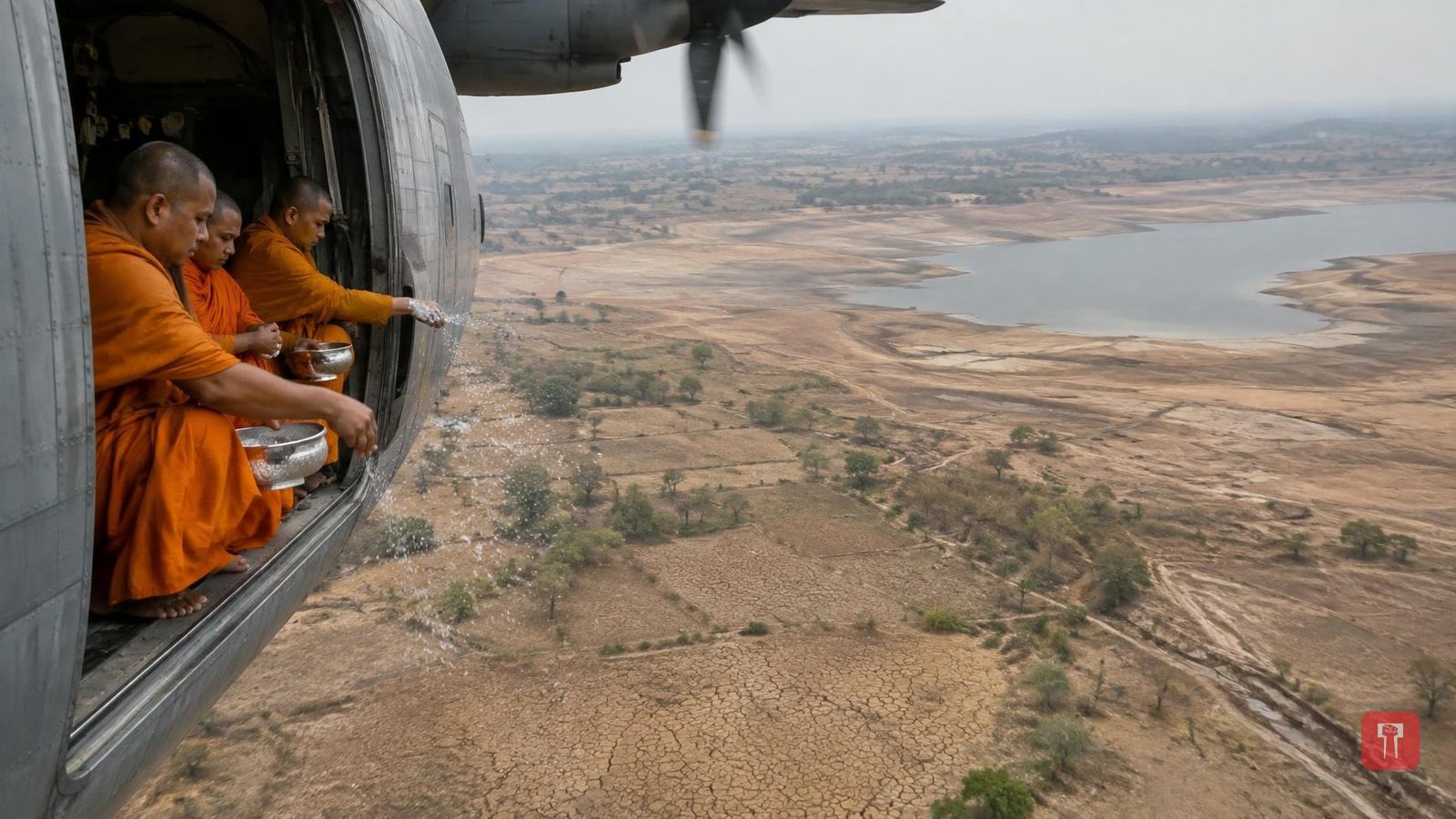
Sri Lanka is facing its worst water crisis in several decades. Rain has failed in many parts of the country, leaving rivers, wells and irrigation reservoirs completely dry. People are struggling with an acute shortage of drinking water. In this hour of human and natural crisis, religious tradition and faith are being invoked to bring rain.
The Sri Lanka Air Force took an unusual step amid the crisis. Three Buddhist monks in saffron robes were flown over drought-affected areas on board a special Y-12 military aircraft. As the aircraft flew overhead, the monks chanted special prayers, known as pirith, for rain to fall and the drought to ease. Holy water was also sprinkled from the aircraft onto the dry land, parched fields and empty reservoirs below.
Sharing pictures and details of the effort on social media, the Sri Lanka Air Force wrote, "As the whole country is under the shadow of dry weather and severe famine, this aircraft flies in the sky as a symbol of compassion and hope."
The drought has hit Sri Lanka's Northern, Eastern and Southern provinces the hardest. Reports say many of the country's agricultural areas have recorded 85 to 100 percent less rainfall than normal. This has caused fields to crack and crops to wither completely. Wells and reservoirs, both small and large, in villages and towns have run dry to the bottom. Some major reservoirs are left with just 10 to 50 percent of their total capacity, making the situation extremely serious.
To meet drinking water needs, the government has had to send water by tanker to remote areas. The situation is so bad that in some very remote and rural areas, people have had to wait up to 23 days for a water tanker. The severe water shortage has not only disrupted human life but has also caused livestock and pets to die of thirst.
Sri Lanka's crisis is not limited to drinking water or agriculture alone -- it is directly affecting the country's entire economy. The water level in major reservoirs used for power generation has fallen below half, putting heavy pressure on electricity generation. Experts warn that if there is no heavy rainfall soon, the country could face large-scale power cuts and an energy crisis.
The drought has also badly affected nature and wildlife. At Yala National Park, considered Sri Lanka's most famous and largest sanctuary, water sources have dried up, creating a serious problem for animals' drinking water. As a result, authorities have had to completely close 2 of the park's 6 divisions to tourists.
According to weather experts, the severe conditions in Sri Lanka are being driven by global climate change and an intense El Nino effect. El Nino raises the temperature of the Pacific Ocean's waters, which changes wind patterns and rainfall across the world. This year's El Nino has been especially intense, sharply reducing rainfall in Sri Lanka.
Sri Lanka's meteorological department has given a mixed outlook for the months ahead. Heavy rain is expected in some parts of the country from late September through December. However, experts have also warned that severe drought-like conditions could return once again after this rain. Sri Lankans are thus facing a double crisis: unseasonal heavy rain on one hand and severe drought on the other.
