

Sonia Gandhi's memoir says she understands Modi's unease with Delhi's elite despite ideological divide
 Images are not validated/verified
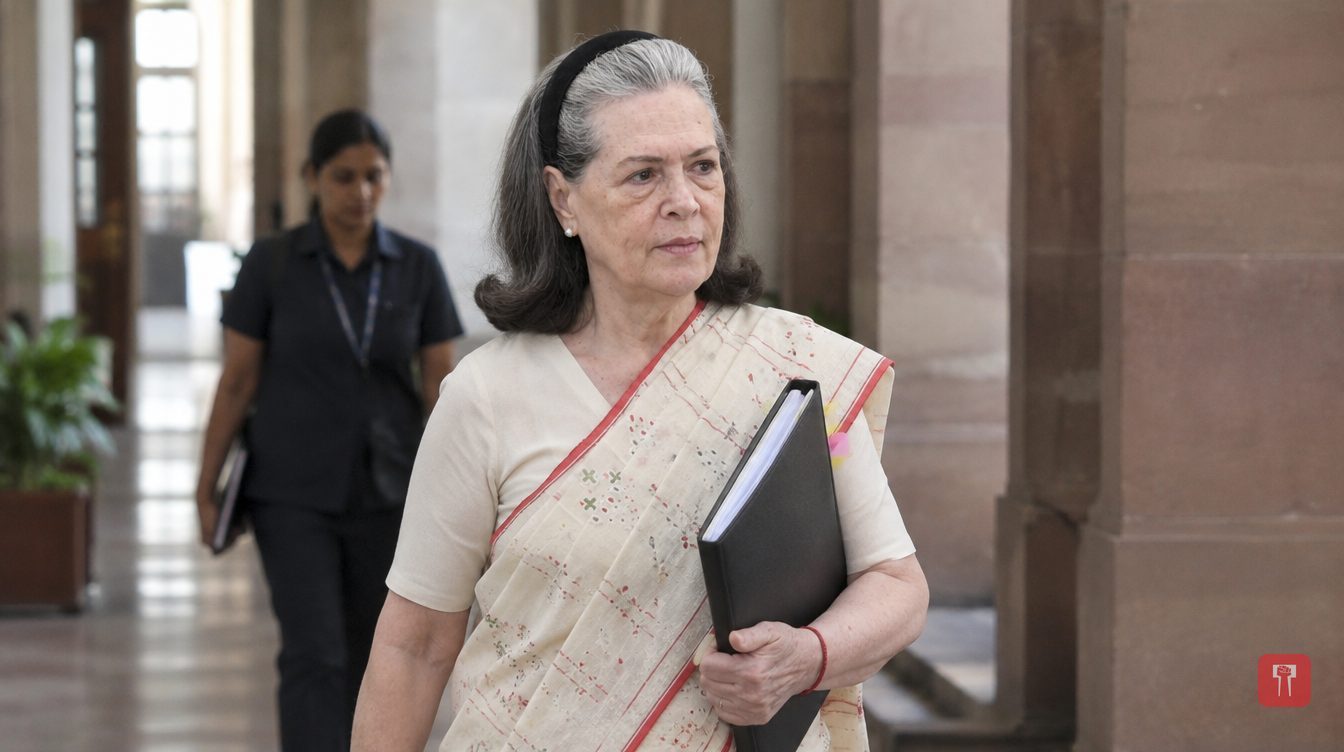
In her memoir "Belonging: A Journey of Love", Sonia Gandhi writes that her opposition to Narendra Modi is ideological, not personal, even as she says she can relate to his discomfort with Delhi's elite.
Congress leader Sonia Gandhi's memoir "Belonging: A Journey of Love" went on sale across the country on November 10, 2026. Published by HarperCollins India, the 544-page book is not only an account of her journey from Italy to the centre of Indian politics. It also records her frank views on the country's political system, the clash of ideologies and the leaders who shaped politics.
Among the most significant parts of the book is her assessment of Prime Minister Narendra Modi, who has been her main political opponent for over a decade. Sonia writes that their political thinking is entirely different, yet she can understand to some extent Modi's discomfort with Delhi's influential political class, because she herself has felt such alienation.
According to Sonia, Modi has been Prime Minister for more than 12 years, but she has had no real contact with him. They meet mostly on semi-official occasions, especially in the Lok Sabha Speaker's chamber after parliamentary sessions, where leaders of the larger parties gather. She writes that when they meet, the two exchange a formal namaste, but Modi looks away and avoids eye contact. She contrasts this with the earlier political culture, in which leaders of different parties shared more warmth despite their differences.
Sonia also recalls a few brief exchanges. After she returned from hospital, Modi enquired about her health. Birthday and New Year greetings have also come. Even so, she says, these never turned into any substantial personal relationship.
Her fundamental objection to Modi is ideological, not personal. She links his thinking to his upbringing and association with the Rashtriya Swayamsevak Sangh (RSS), and says these influences have shaped a fundamentally different understanding of India. In her assessment, Modi's vision places greater emphasis on hierarchy, order and control, and she believes his ideology privileges his own faith and cultural identity over those of others. Against this, Sonia's India rests on religious and cultural diversity, individual freedom, equality and taking different communities along.
She writes: "He was fighting for his idea of India and I for mine: an India that stands against domination, that stands with inclusion, secularism and social justice. It was not personal." In this way she describes the Congress-BJP clash as a battle between two different ideas of the country.
The book also recounts Sonia's own experience of Delhi's influential set. She writes that she felt uneasy in conversations in the capital's elite drawing rooms, because the discussion seemed cut off from the daily struggles of ordinary Indians. The poverty, hardship and struggle to survive that she saw on visits to her constituency and travels across the country were often missing from the talk at such gatherings. In this context, she says she can understand to some extent Modi's unease with the ruling elite.
Even so, she does not regard this similarity as political agreement. She remains a strong opponent of the ideological direction Modi represents.
Sonia also questions the story of Modi's humble background. She accepts that he rose from a modest background within the RSS to power, but asks whether his beginnings were as ordinary as his public relations team has portrayed them.
Another theme in the book is Modi's repeated criticism of former Prime Minister Jawaharlal Nehru. Sonia argues that Nehru has become a particular target of the BJP's resentment because of the democratic and secular foundations on which he worked in independent India. She also objects to Modi's language against the Opposition in Parliament, saying his speeches at times sound like election rally rhetoric. She also objects to the BJP's goal of a "Congress-mukt Bharat". In her view, it is not merely about defeating an opposition party in an election but an attempt to wipe out the ideology, policies and historical legacy associated with the Congress.
The book is not limited to Modi. It records her childhood in Italy, her years at Cambridge, her first meeting with Rajiv Gandhi in 1965 and their marriage in 1968. She also recalls her relationship with her mother-in-law, former Prime Minister Indira Gandhi, and her gradual adaptation to Indian family life and culture. It mentions the most painful moments, including the assassinations of Indira Gandhi in 1984 and Rajiv Gandhi in 1991. She also writes about losing her first child and her battle with breast cancer.
On the political front, she writes about joining the Congress leadership, the party's electoral victories and the formation of the United Progressive Alliance (UPA) government in 2004. She explains her decision to decline the Prime Minister's post and to back Manmohan Singh for it. She also writes about her relationships with senior Congress leaders, including Pranab Mukherjee.
Reach readers on the ward they actually live in.
Advertise with Prime Time 24Reach readers on the ward they actually live in.
Advertise with Prime Time 24Reach readers on the ward they actually live in.
Advertise with Prime Time 24Choose primetime24.com as a preferred source on Google Google shows more stories from your preferred sources in Top Stories.
Reach readers on the ward they actually live in.
Advertise with Prime Time 24
Comments
No comments yet. Be the first.