

Solar panels keep working in winter; cold is no obstacle, shorter days cut output
 Images are not validated/verified
Panels run on sunlight, not heat, and cold weather helps them; the winter dip in output comes from shorter days, not the temperature.
To get relief from electricity bills in an age of high prices, many people are installing solar panels near their homes or on rooftops. But as the cold of November and December sets in, many wonder whether panels stop working in winter, when the sun is not strong and fog settles. This misconception leads many people to avoid installing solar systems in winter.
The common belief is that panels generate electricity from the intense heat of the sun. The truth is quite the opposite. Panels carry photovoltaic cells, which generate electricity not from the heat of the sun but from sunlight and the photon particles in it.
Just as a mobile phone or laptop starts to hang when it gets too hot, panels become very hot in the harsh 40 to 45 degree Celsius sun of May and June, and their efficiency and voltage drop slightly. Cold weather and clear skies in winter, by contrast, are considered very beneficial for panels. In cold temperatures, electrons flow quickly and without obstruction inside the panel, so when the sun is strong they generate power at full capacity.
Electricity generation does fall a little in winter, but the main reason is not the cold but shorter days. Summer brings 10 to 12 hours of sunlight, while in winter the peak sunlight period shrinks to 5 to 6 hours.
By one estimate, a 1 kW solar system generates 4 to 5 units of electricity a day on normal days, which falls to about 3 to 3.5 units a day in winter. On that basis, a 3 kW plant at home can easily generate 9 to 10 units a day in winter. Panels do not shut down on days of dense fog or cloud either. They absorb diffused light and keep generating 20 to 30 per cent of their total capacity.
To get plenty of power in winter and fog, it is essential to adopt modern technology. Mono PERC Half-Cut and Bifacial panels have now replaced the older polycrystalline plates in the market. Bifacial panels, which generate electricity from both sides, perform well even in low light.
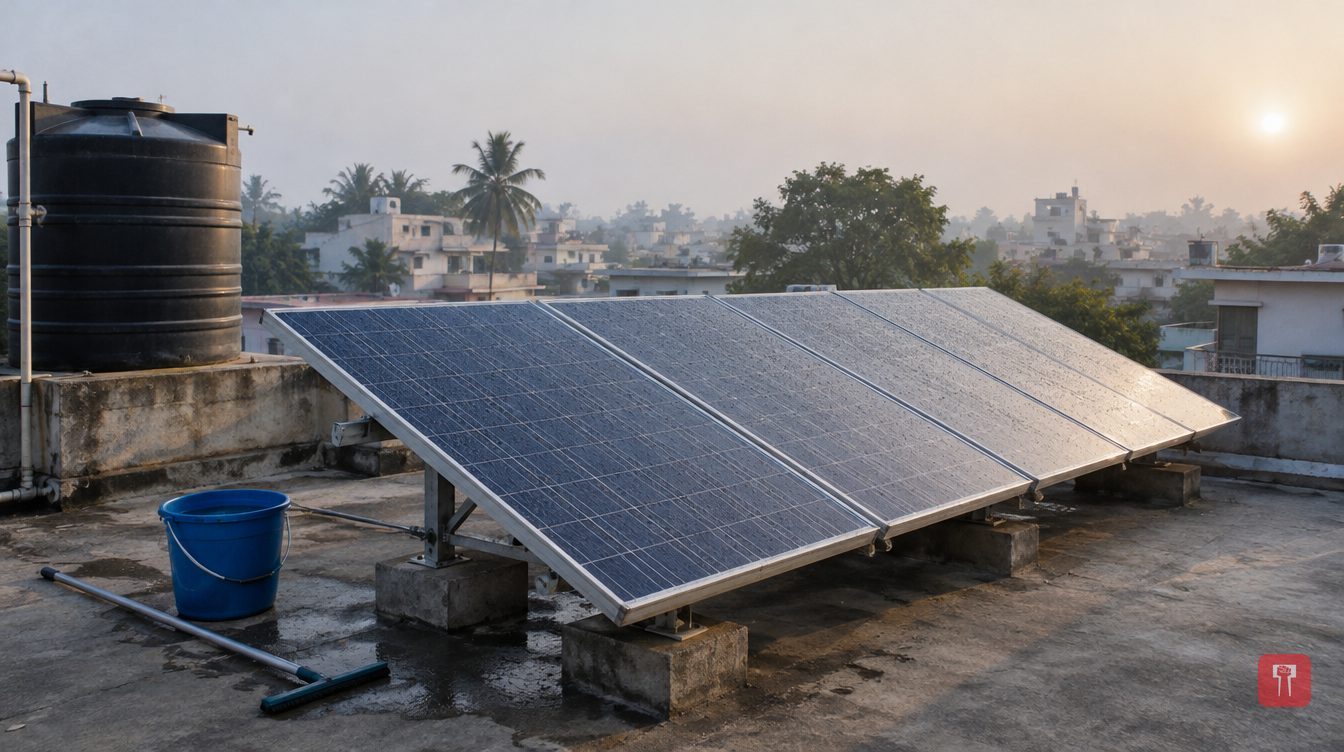
In winter the sun also sits lower toward the south, so increasing the panel's tilt angle slightly is beneficial. The most important thing is keeping panels clean. Dew falling in the cold leaves a layer of dust and pollution on the panels, which blocks the sun's rays. Panels should therefore be cleaned with clean water and a wiper in the morning at least twice a week.
Reach readers on the ward they actually live in.
Advertise with Prime Time 24Reach readers on the ward they actually live in.
Advertise with Prime Time 24Reach readers on the ward they actually live in.
Advertise with Prime Time 24Choose primetime24.com as a preferred source on Google Google shows more stories from your preferred sources in Top Stories.
Reach readers on the ward they actually live in.
Advertise with Prime Time 24
Comments
No comments yet. Be the first.