

MERC drafts new rooftop solar rules on banking and charges, seeks views by Oct 12
MERC's new rooftop solar draft eases the net metering cap but adds banking charges and storage rules that experts say could hurt consumers.
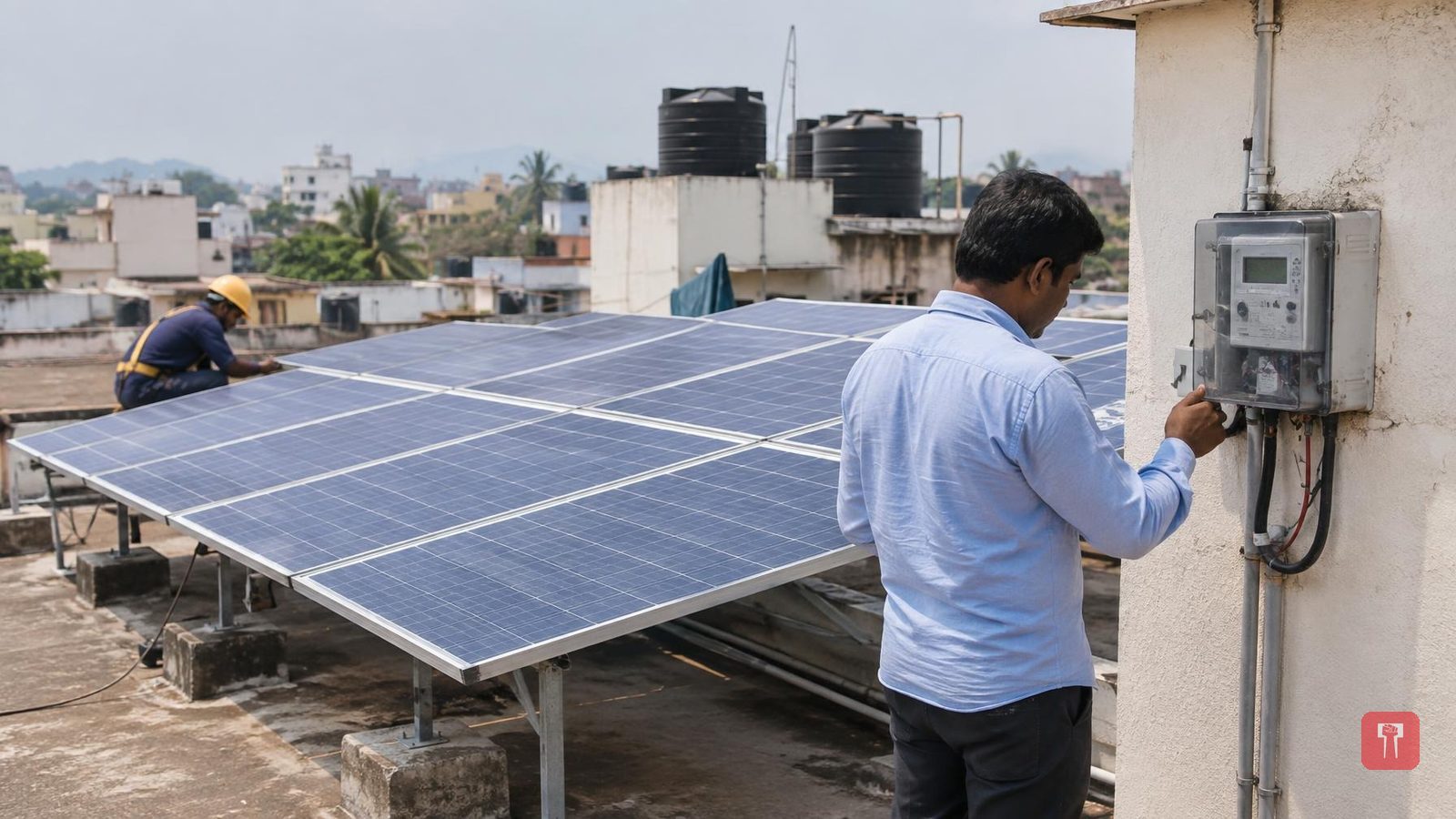
The Maharashtra Electricity Regulatory Commission (MERC) has released a new draft, the Grid Interactive Rooftop Renewable Energy Systems Regulations 2026. It will directly affect households, housing societies, shops, offices and factories across the state, in other words every consumer who generates electricity from rooftop solar panels. Consumers and consumer bodies can submit objections or suggestions on the draft until October 12.
Some parts of the draft offer relief. It proposes removing the earlier 5 megawatt cap on net metering, which will allow larger factories and companies to install bigger solar plants in line with their sanctioned capacity. Those who use solar power for their own consumption have also been given more flexibility under behind-the-meter (BTM) systems. The scope of virtual net metering has also been widened to include government bodies such as local authorities and water boards.
But solar expert Sudhir Budhia said the aim should not be to oppose the new rules but to strike a balance that keeps the grid secure while also protecting the money consumers have invested. He said the commission should frame a policy that is technically sound for the grid, does not burden consumers financially, and also helps Maharashtra meet its renewable energy targets.
Under the proposed rules, for systems above 3 kilowatts, any surplus electricity left over once the fixed banking period ends will automatically lapse, meaning it will be treated as forfeited. This has drawn criticism on the grounds that it is not right to take away electricity generated with a consumer's own money without any compensation. The commission has also proposed a Fixed Banking Charge (FBC) and a Variable Banking Charge (VBC), which will directly affect the savings consumers make from solar power. There is also no clarity yet on the GSC charge currently levied.
Smaller housing societies could also face difficulties, since the minimum capacity being set for virtual net metering is 100 kilowatts, which will require at least 34 members. Societies with fewer members than this will be excluded from the facility. There is also confusion over the provisions for shifting existing consumers to the new framework, with calls for existing consumers to be protected for the full term of their original agreements. Factories that use open access or captive renewable power could unfairly land in a higher banking category if their total capacity is combined with their rooftop solar capacity.
Some other rules could add to the difficulties. There is a proposal to make an energy storage system, or battery, mandatory for solar systems larger than 100 kilowatts, which would significantly raise the upfront cost for factories and large commercial consumers. The rules for banking surplus solar power in the grid have also been made fairly complex. Systems up to 3 kilowatts will have annual banking, 3 to 10 kilowatt systems will be settled every month, 10 to 100 kilowatt systems will get four banking slots, and systems between 100 kilowatts and 5 megawatts will have 8 to 12 slots fixed.
