

Silt land in lakes of 304 drought-hit talukas to be leased out for fodder crops
 Images are not validated/verified
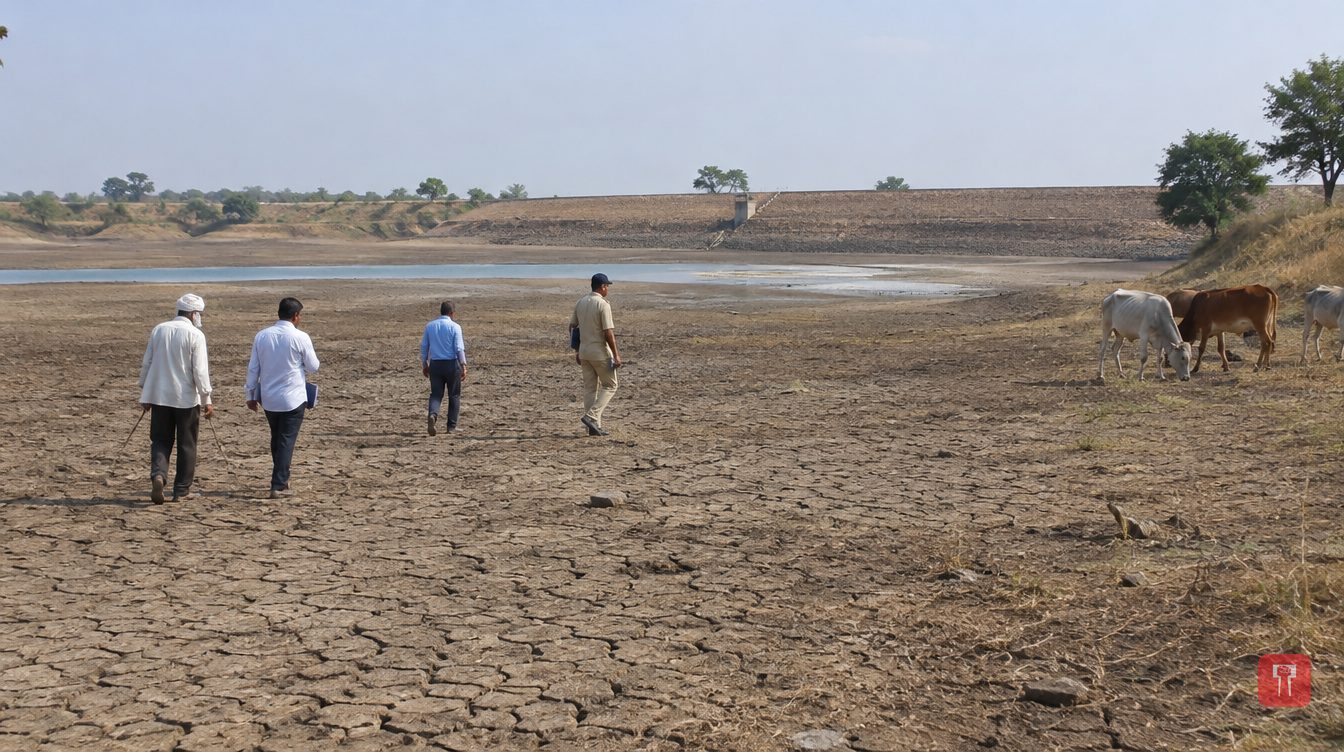
Farmers and livestock keepers can lease cultivable silt land in water bodies under the Soil and Water Conservation Department to grow short-duration fodder crops, Minister Sanjay Rathod said.
Farmers and livestock keepers in the 304 talukas declared drought-hit by the state government will be able to lease cultivable silt land (gaalpera) in reservoirs and lakes under the Soil and Water Conservation Department. The land will be given for growing short-duration fodder crops. Soil and Water Conservation Minister Sanjay Rathod gave the information, and a government resolution has been issued.
Fodder crops such as maize, jowar, bajra, NutriFeed, berseem and oats can be grown on the land. Maize and jowar have been given priority for silage. Sugarcane, fruit crops, multi-year crops, foodgrains and cash crops will not be allowed.
Mr Rathod said the 304 talukas were declared drought-hit on the basis of the rainfall deficit in the kharif season of 2026 and other factors. To ensure fodder for livestock in these areas, the department issued technical guidelines on November 5, 2026. The guidelines will apply to minor irrigation lakes, storage lakes, percolation tanks, village tanks and former malguzari tanks.
In water bodies reserved for water supply schemes or used to fill tankers, reservation of drinking water will have first priority. Areas where repair, desilting or restoration work is under way or proposed will not be given out for silt-land cultivation.
Only the cultivable area exposed between the full reservoir level and the actual water level will be fixed as silt land. A stretch of at least 50 metres from the toe of the earthen dam wall on the reservoir side, at least 30 metres from the spillway and its approach, and at least 30 metres around the outlet, intake well, jackwell, gauge pole and benchmark will be out of bounds. Cultivation using chemical fertilisers and pesticides will not be permitted within 200 metres of a drinking water source well or jackwell.
Officials of the revenue, agriculture, animal husbandry and soil and water conservation departments will conduct a joint survey and prepare a silt-land availability report. The executive engineer concerned will submit the report to the district-level committee within 15 days of the date of the government resolution. The committee, headed by the district collector, will review the available area project by project, approve allotment, select beneficiaries and fix the maximum area to be given to each beneficiary.
The fodder crops will have to be grown mainly on the moisture available in the soil. Protective irrigation will be allowed, with the written permission of the executive engineer, only if there is surplus water after drinking water and livestock water needs are set aside. Drip or sprinkler irrigation will be preferred. Once the water level in a reservoir falls to dead storage or to the level reserved for drinking water, water cannot be drawn for irrigation.
Beneficiaries will have to complete the harvest and return the land to the department before May 31, 2027. No compensation will be paid if rising water submerges a standing crop. The land can be tilled to a depth of no more than 20 centimetres. Excavation and transport of silt, soil, murum or sand, digging of new wells, borewells, farm ponds, pits or trenches, and construction, fencing, roads, huts or tree planting will be prohibited. Taking tractors or heavy vehicles over the dam wall and burning crop residue will also not be allowed.
Mr Rathod said that if the conditions are violated, the executive engineer will cancel the permission immediately, and the cost of any damage to structures or the water body will be recovered from the beneficiary concerned.
He also explained the application process. The tahsildar will announce the available area, the lease period, the rent and a deadline of at least 15 days for applications at the village chavadi, gram panchayat, tahsil office and by beat of drum. Interested individuals or cooperative societies should apply to the tahsildar concerned with a residence certificate, land-holding records or a landless certificate and, where applicable, documents relating to caste, project-affected status, society registration and livestock, Mr Rathod appealed.
Reach readers on the ward they actually live in.
Advertise with Prime Time 24Reach readers on the ward they actually live in.
Advertise with Prime Time 24Reach readers on the ward they actually live in.
Advertise with Prime Time 24Reach readers on the ward they actually live in.
Advertise with Prime Time 24
Comments
No comments yet. Be the first.