

Report: About 59% of Class 12 students unhappy with school life, survey of 8,542 finds
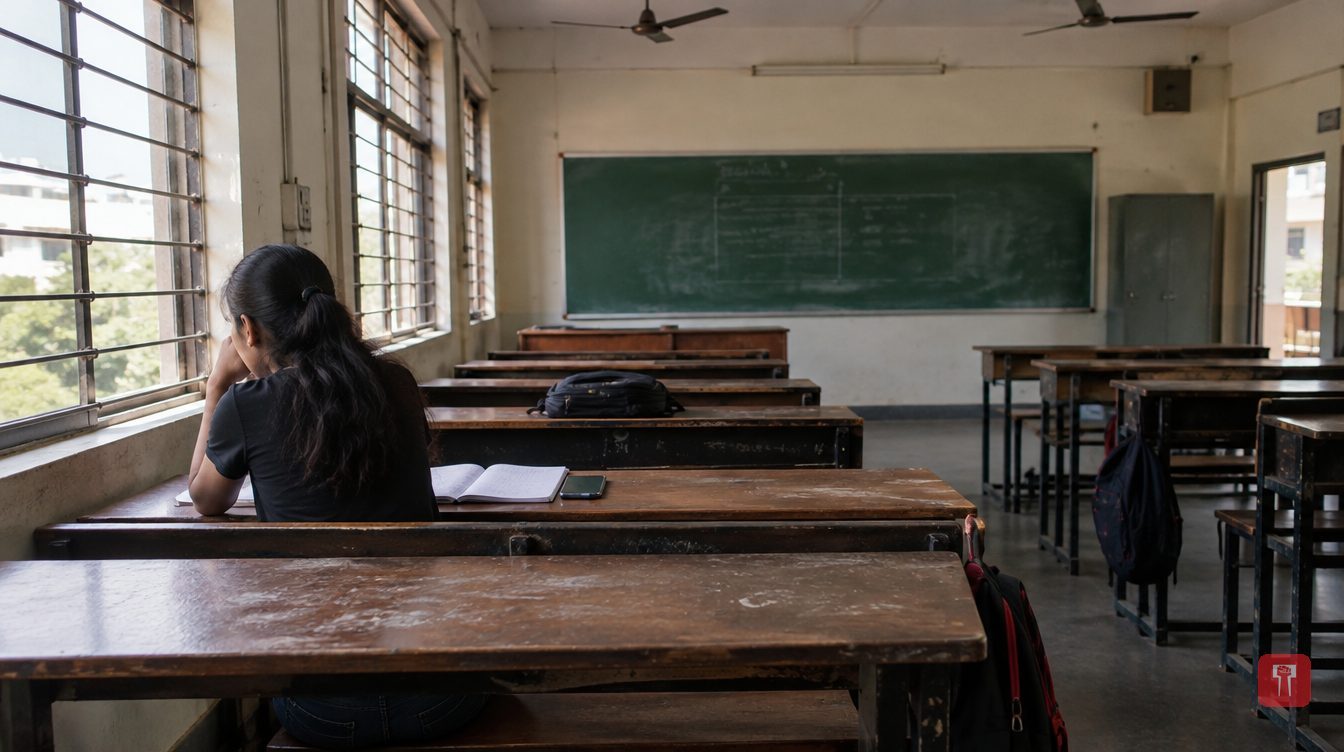 Images are not validated/verified
A Mumbai institute's Student Well-being Pulse report finds widespread stress, poor sleep and little access to counselling among students.
Children's lives today are no longer limited to books, homework and results. Mental stress, fear of the future and uncertainty now weigh on them too. The IC3 Institute in Mumbai has released a report titled "Student Well-being Pulse", and its figures are startling.
More than 8,542 students from across the country took part in the survey. According to the report, about 59% of Class 12 students are not satisfied with their school life and have begun to find going to school a burden. The joy of going to school in the morning has become a mere formality for them.
The survey also found that one in every five students rarely feels peace, motivation or enthusiasm in life. The proportion of girls reporting persistent deep sadness and depression is nearly double that of boys. The report says adolescent girls keep their stress bottled up inside.
More than 40% of children do not even know where mental health support or counselling is available in their own school. A heavy exam syllabus, parental expectations and competition among peers are wearing children down mentally. School increasingly seems to them less a place to learn and be happy, and more a factory that produces stress.
The second biggest cause of stress is confusion about the future. According to the report, nearly half (50%) of students never received proper career counselling at school level. When children are not clear about what they want to become or which career suits them, fear of the future takes hold. This uncertainty is taking away both their sleep and their peace of mind.
Sleep is also in poor shape. According to the survey, three out of four (75%) senior students do not get 7 to 8 hours of sleep, which is the minimum they need. The main reasons cited are academic overload and heavy use of mobile screens in the bedroom before sleep. Lack of sleep is increasing irritability, lethargy and difficulty concentrating among children.
The report found the mental health of non-binary students to be the most fragile and the worst. They need special care both in society and in school.
Among the measures the report suggests, it says that merely hiring counsellors in schools is not enough. Teachers and staff must be trained to act as "gatekeepers", that is, to recognise while teaching in class which child is under stress, and when to talk to that child kindly and point them in the right direction.
In difficult times, children first turn to their friends. But friends are of the same immature age and cannot handle panic or anxiety properly. It is therefore necessary to create a safe environment in schools where children can approach trained counsellors and speak openly, without hesitation or fear.
The report calls this a "silent crisis" and says that if it is not stopped in time, the future of the new generation will be in serious danger. Schools, parents and policymakers should together build a practical system in which children's mental peace, happiness and balanced lifestyle are prioritised along with studies.
Reach readers on the ward they actually live in.
Advertise with Prime Time 24Reach readers on the ward they actually live in.
Advertise with Prime Time 24Reach readers on the ward they actually live in.
Advertise with Prime Time 24
Comments
No comments yet. Be the first.