

Rain gap in Yavatmal turns soybean crop yellow, pest attacks add to woes
Soybean and cotton crops across Yavatmal district are wilting as prolonged dry spells and pest attacks threaten yields during the crucial pod-filling stage.
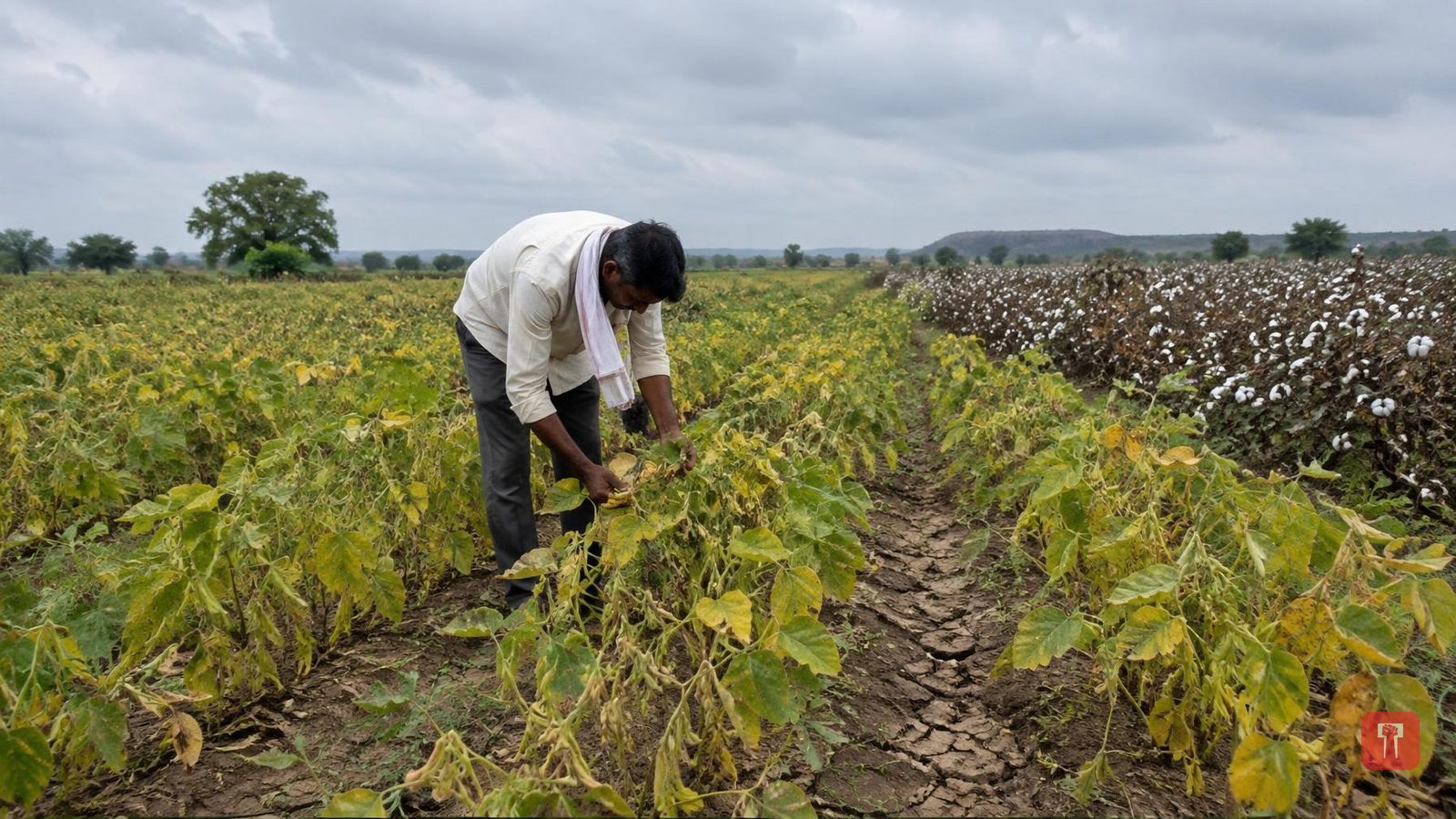
Clouds gather but do not break. This prolonged gap in rainfall in Yavatmal district has taken a heavy toll on the kharif season soybean crop. Just as plants needed water most, at the pod-filling stage, soil moisture has been dropping rapidly. As a result, soybean leaves have started turning yellow in many areas and plants are wilting. On top of this, the cloudy, humid weather has increased pest infestation, leaving farmers facing a double blow.
This kharif season, soybean has been sown across about 2 lakh 72 thousand 498 hectares in the district. This large area is now bearing the brunt of the rainfall gap. The irregular and prolonged gaps in rainfall since August have begun directly affecting crop condition.
Across Yavatmal taluka and the wider district, soybean has turned yellow and crops have wilted. Farmers fear falling yields due to lack of moisture at the pod-filling stage. There are also concerns that disease could spread on soybean in the humid weather. In some areas, farmers can clearly see spots, yellowing and pest damage on the leaves. Cotton crops are facing a similar situation. Cotton plants that depended on rainfall are wilting, while farmers who have irrigation facilities are working in their fields to save their crops.
This time cotton was sown across more than 4 lakh hectares, of which growth has stalled in 50 percent of the sown area. Farmers in many places are complaining that plant growth has stopped even after flowering. Deepak Tayade, a small farmer with 3 acres of land in Chikni Kasba village in Yavatmal taluka, lost his crop last year due to excess moisture, which meant his daughter of marriageable age could not be married off.
With no rain, soil moisture is steadily declining, hitting soybean on lighter soils the hardest. Symptoms such as yellowing leaves, stunted growth, drying leaves and wilting plants are visible in many fields. There are particular fears that lack of moisture at the pod-filling stage will directly affect grain filling.
This period is considered critical for soybean production. Adequate moisture at this stage helps grain fill in the pods. But if the rainfall gap widens further, the risk grows of pods filling less, grains staying smaller, and yields falling as a result. This is why farmers are now watching the sky. If this rainfall gap stretches on, soybean production this year is feared to take a major hit.
