

Rain deficit and falling groundwater leave Nashik farmers looking to government for aid
A long dry spell has withered the kharif crop in Nashik district, and groundwater has fallen in most talukas, raising fears of scarcity.
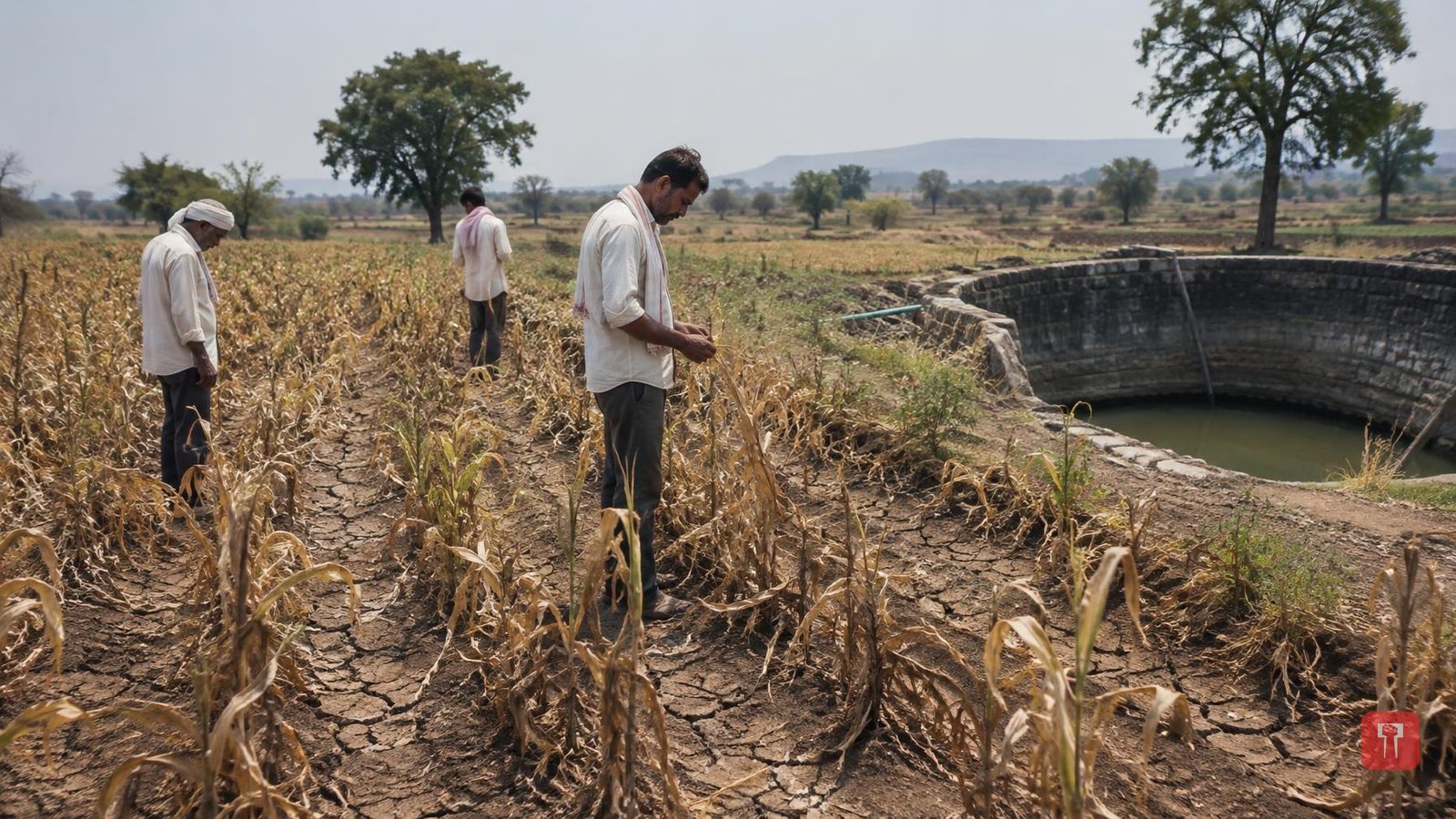
Nashik district saw a long break in rainfall this year. The kharif crop has been completely scorched, and farmers will not even recover what they spent on production. They are now looking to financial assistance from the government. With below-average rain this year, the shadow of scarcity has fallen over the district.
A report of the Groundwater Surveys and Development Agency gives figures for June to September 2025. According to it, Nashik district recorded a rainfall deficit of 23.96 per cent against the average. The district's annual average rainfall is 1,000.32 mm, but only 765.55 mm fell by the end of September. That is 234.67 mm less, and the report also puts the deficit at 23.46 per cent. The effect has been felt on crops and also heavily on groundwater levels.
Two to three observation wells have been fixed for each watershed area. Water levels in these wells were recorded at the end of September. The readings were compared with the average static groundwater level for September over the past five years, to check where this year's level stands against the previous five years.
In this comparison, Yeola taluka showed a fall of more than 3 metres. In Chandwad, Deola, Malegaon, Nandgaon and Sinnar talukas, water levels have dropped by 2 to 3 metres. In Nashik and Trimbakeshwar, the fall is 0 to 1 metre. Only in Dindori and Niphad talukas did water levels appear to have risen slightly.
The rainfall deficit and the sharp fall in groundwater are likely to put heavy pressure on the district's water sources. The situation is deeply worrying for farmers who depend on wells, borewells and other groundwater sources because of the erratic rain. In talukas where the rainfall deficit has been recorded at more than 25 per cent, there could be a serious question of whether water will be available for the coming rabi season, besides the damage to kharif crops.
According to the report, the rainfall deficit in Nashik and Baglan talukas is 1 to 10 per cent. Water levels in wells and tubewells are falling rapidly because groundwater extraction has increased and the rain has stayed away. In the coming period, there is a strong likelihood of shortages for both farm irrigation and drinking water.
