

Rain break scorches kharif crops in Loha, farmers face debt and fodder and water worries
Standing kharif crops have withered in Loha for want of rain, leaving farmers in debt and anxious about fodder and drinking water.
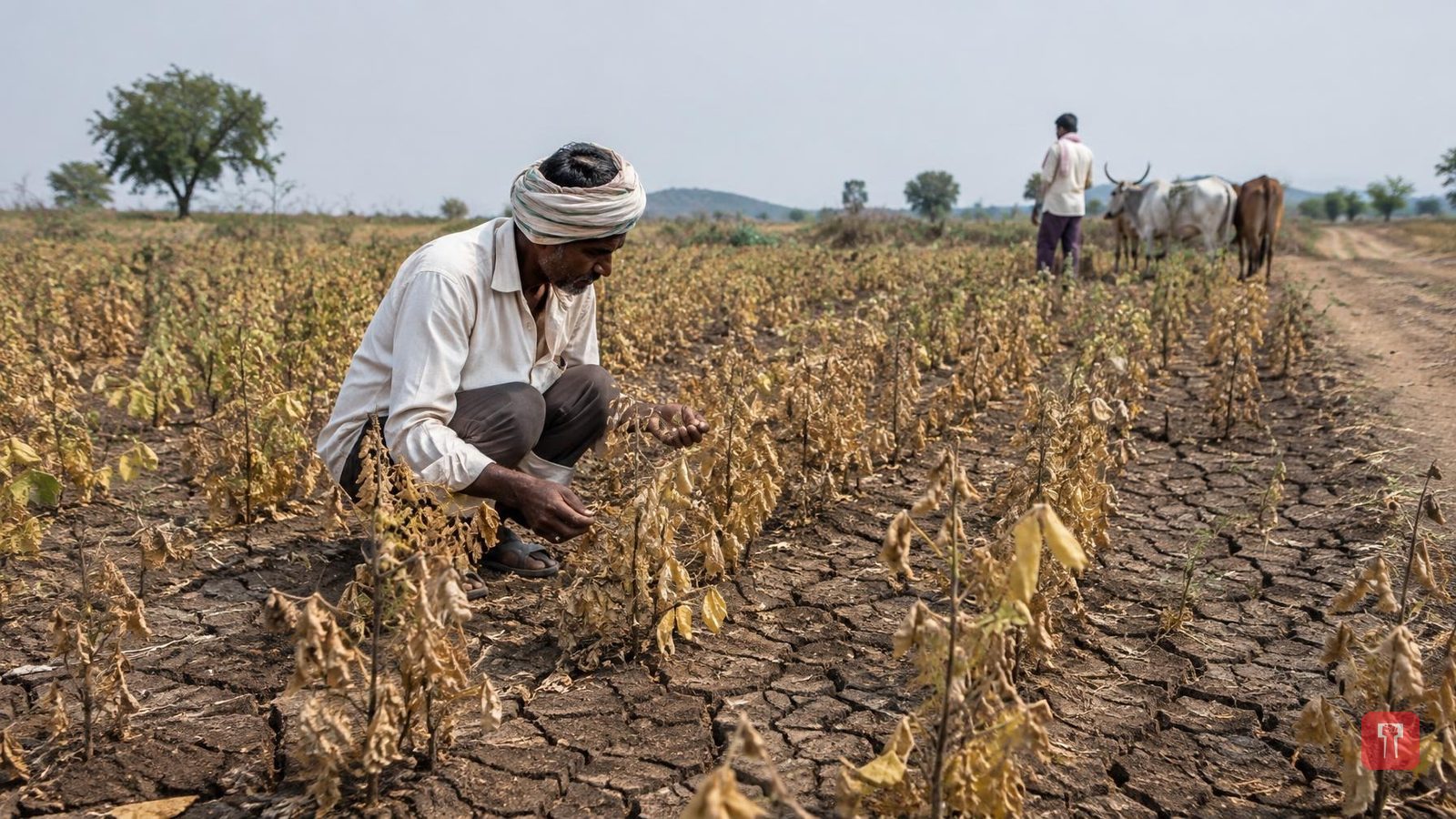
Standing kharif crops have withered this year for want of rain in Loha, creating an unprecedented financial crisis for farmers. They had spent lakhs of rupees on sowing, fertiliser, pesticide spraying and tilling, but were left with great disappointment in the end.
Maharashtra went through a severe dry drought in 1972. According to the recollections of people who knew that time, rain after Pola brought some areas a little relief. The severity of the dry drought of 2026, however, is of a different order.
In 2025, farmers suffered heavy losses from excessive rain and a wet drought. While still recovering, many borrowed informally, took loans at interest and raised money from private moneylenders to sow kharif crops again in June. Rain fell at the start this year, but then there was a long break. Soybean, moong, urad, cotton, tur and other kharif crops were hit. In many places the crops have literally withered and hope of any yield is gone.
Last year the wet drought took away the crop that was almost in hand. This year the dry drought has struck the standing crops themselves. The mountain of debt is growing, farmers cannot recover their production costs and have no capital for the next season. Serious effects on the rural economy are therefore likely. With the financial and mental strain on farmers increasing, there is a call for the administration to take up effective relief work urgently. Not just promises, but actual financial assistance, crop loss compensation, relief on loans and the support needed for the next season should be provided.
After the crop losses, the biggest challenge now is fodder and water for livestock. With no fodder in the fields, livestock owners are asking how they will keep their animals alive, where the fodder will come from and how drinking water will be arranged. The water stocks in many dams and lakes in Marathwada are in a worrying state. The Limboti dam in Loha taluka is said to hold about 36 per cent water at present. Drinking water for Loha and many surrounding villages depends on this dam, so the available water will have to be planned strictly.
Some lakes still hold a little water, but it is being drawn in large quantities by motor pumps. There is a fear that if water is pumped without restraint for farming, drinking water and water for livestock will also run short later. There is therefore a demand for a decision to reserve two months of water for livestock to drink.
A water supply scheme from the Limboti dam to Loha town is under way through the Maharashtra Jeevan Pradhikaran. Chief Officer Sandeep Bhole said efforts are on to get it running at the earliest. Loha town has about 10,000 property owners, while there are about 1,800 authorised tap connections. Many of the remaining families depend on borewells at home for water. Bhole also said the Sunegaon lake currently holds enough water to last two to three months.
