

Pneucons to stop accepting UPI payments from October 10, citing hit to profit from new MDR
The industrial goods marketplace says the new merchant discount rate on UPI will sharply cut its profit, ahead of the charge taking effect on October 15, 2026.
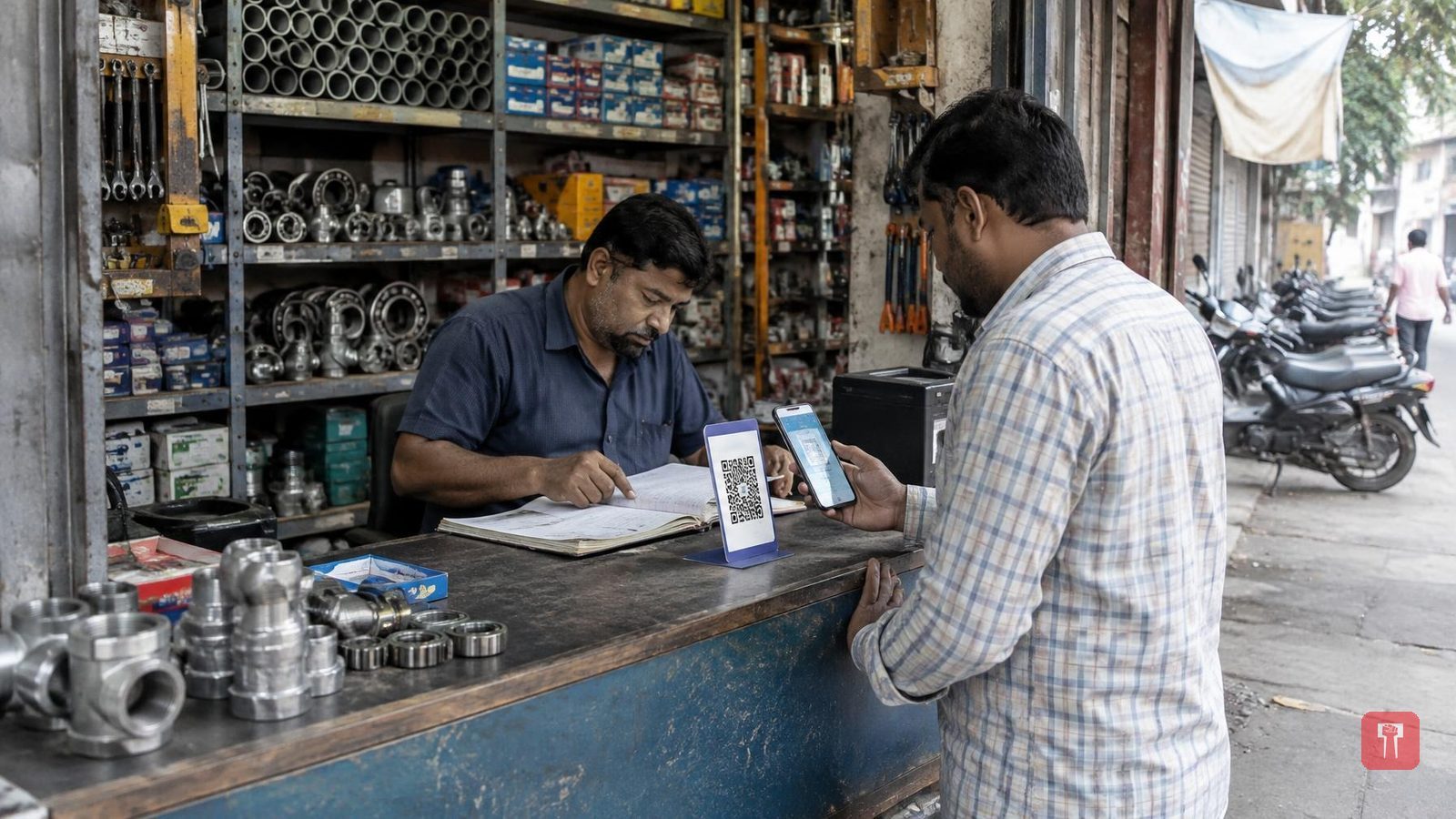
Pneucons, a company that runs an online marketplace for industrial goods, has announced that it will stop accepting UPI payments on its platform from October 10, 2026. The company says the new merchant discount rate (MDR) applicable to UPI will cause a sharp fall in its profit.
Questions are now being raised about what lies ahead for the Government of India's decision to levy MDR on UPI. Traders were angry when the decision was announced, and its effect is now showing up in actual business. Pneucons' move is an example.
The decision comes as a 0.4% MDR is due to apply from October 15, 2026, to select person-to-merchant UPI transactions above Rs 2,000. The charge will be levied on the merchant, not the customer.
According to Pneucons co-founder Pritesh Lakhani, the company earns a commission of about 0.5% on an order before tax. If a large part of the order amount goes to UPI MDR, accepting the payment is no longer profitable for the company and could even be costlier.
The company gave an example. Suppose a customer buys goods worth Rs 10,000. The company's 0.5% commission comes to Rs 50. After 18% GST is added, the customer pays a total of Rs 11,800. A 0.4% MDR works out to about Rs 47.20. That means about Rs 47.20 of the Rs 50 commission goes to MDR. According to the company, this cuts about 94% of its profit.
Pneucons also said its commission is fixed on the base price of Rs 10,000, while MDR is levied on the total amount the customer pays, including GST. This raises the cost of payment further. GST also has to be paid on the MDR. For instance, at 18%, the GST on an MDR of Rs 47.20 would be about Rs 8.50. The company says this GST can later be claimed as input tax credit, but the payment has to be made first, which puts pressure on working capital.
Under the new rules, merchant UPI payments up to Rs 2,000 will remain free of MDR. Select P2M transactions above Rs 2,000 will attract 0.4% MDR. For transactions of Rs 75,000 or more, the MDR is capped at Rs 300. P2P UPI payments will attract no MDR. In some essential, low-margin sectors such as fuel, railways, telecom, insurance and agricultural inputs, a flat MDR of Rs 5 has been set for transactions above Rs 2,000.
Customers will pay no charge. That is, a UPI payment of Rs 10,000 will not attract a separate 0.4%. The merchant will bear the cost, and banks have been directed not to pass the burden on to customers.
Pneucons' decision shows that businesses already working on very thin margins may be hit harder by the new rule. Where the commission on each order is small, even a small percentage of MDR can eat up a large share of earnings.
For now, Pneucons' decision is an exception, and there is no report of any other company stopping UPI. But concern among traders over MDR has grown. Some trade bodies have recently urged the government to postpone the implementation of MDR and raise the threshold for small businesses.
