

Nobel in Medicine goes to three scientists for light-controlled brain cell technique
Carl Deisseroth of the US and Peter Hegemann and Georg Nagel of Germany are honoured for identifying light-gated ion channels and laying the base of optogenetics.
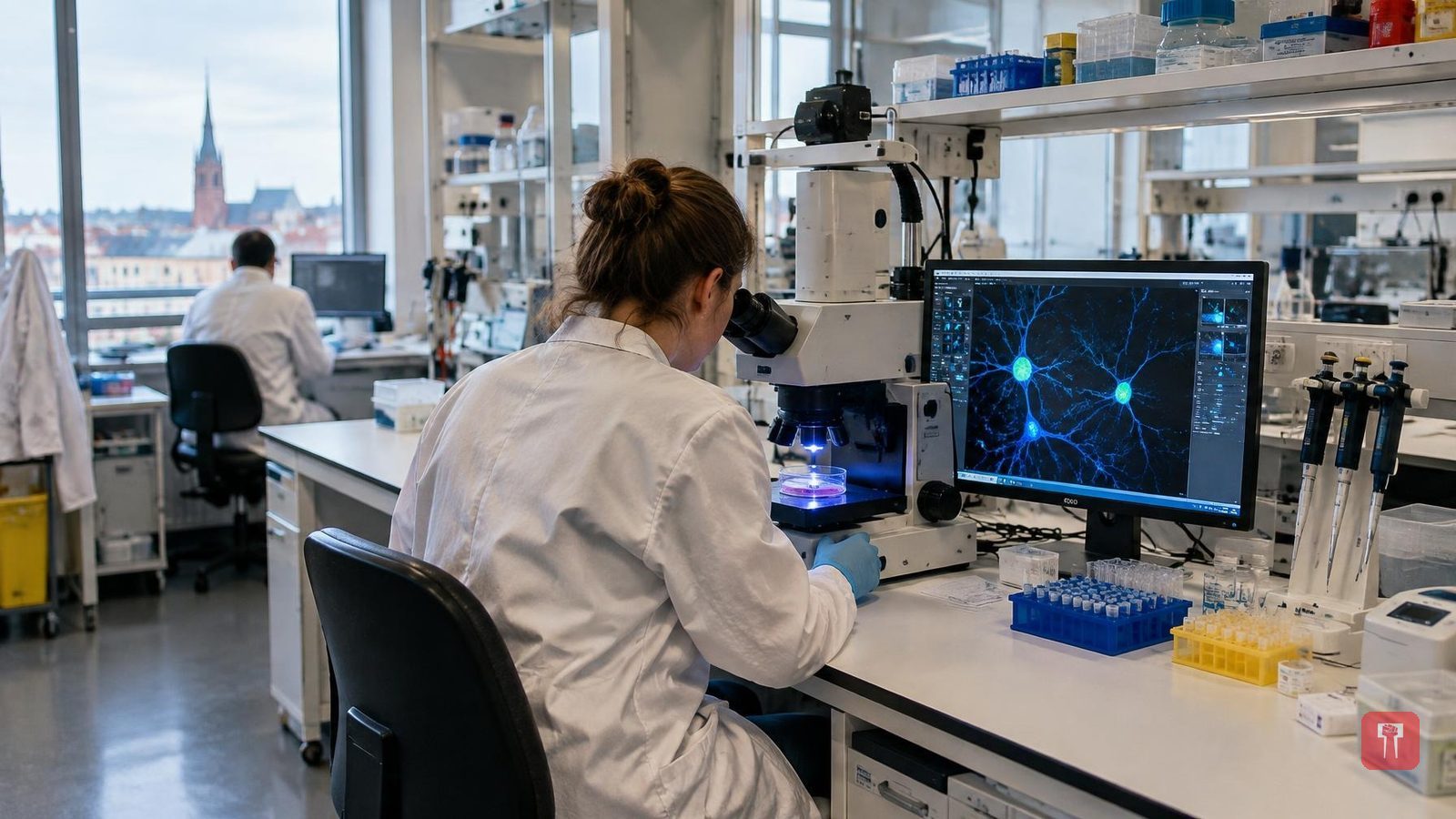
The Nobel Assembly at the Karolinska Institute in Stockholm, Sweden, has announced the 2026 Nobel Prize in Physiology or Medicine. The prize has been shared by three scientists: Dr Carl Deisseroth of the United States, and Peter Hegemann and Georg Nagel of Germany.
The three were chosen for identifying "light-gated ion channels" and, through them, laying the foundation of an advanced technique called optogenetics.
The brain is a complex system made up of billions of nerve cells, or neurons, which communicate through electrical signals. Understanding how a particular nerve cell works and how it controls different parts of the brain has been a major challenge for science. The technique developed by the three scientists now makes it possible to switch specific neurons on or off using beams of light.
The story of the discovery is an interesting one. Hegemann was doing basic research on algae, tiny aquatic plants, studying how they swim or move towards light. During this research, he and Nagel found a special protein in algae called channelrhodopsin. The protein works as a natural light sensor for the cell.
The scientists then tested the protein in the laboratory on cells of other organisms. When they introduced channelrhodopsin into other cells and shone light of a particular colour on them, those cells also began producing electrical signals at once. Dr Deisseroth applied the discovery to the complex nerves of the brain and was the first in the world to successfully demonstrate the real use of optogenetics.
Explaining the importance of the discovery, the Nobel Committee said it is not limited to the laboratory. According to the committee, it is a revolutionary step for human health and treatment. The committee said the technique has become the most important tool for medical researchers around the world seeking treatments for brain disorders such as Parkinson's, Alzheimer's, severe depression, epilepsy and drug addiction.
Earlier, studying brain diseases meant applying drugs or electric shocks to the whole brain, which caused many side effects. With optogenetics, only the affected neurons can be controlled precisely with light, and healthy cells are not harmed.
The announcement of the medicine prize marks the start of Nobel week 2026. According to official information from the Nobel Committee, the physics prize will be announced on Tuesday, October 6, chemistry on Wednesday, October 7, literature on Thursday, October 8 and peace on Friday, October 9. The economics prize will be announced on October 10.
The three scientists are being warmly welcomed and congratulated by the scientific community around the world.
