

NMC to speed up stalled works after poll code ends, plans water roadmap to 2047
 Images are not validated/verified
With the model code of conduct for the Legislative Council polls over, the Nagpur Municipal Corporation is reviving stalled works and studying three options to meet the city's water needs till 2047.
With the model code of conduct for the Maharashtra Legislative Council elections over, the Nagpur Municipal Corporation (NMC) has begun preparing to push ahead with stalled development works. It has also taken up a long-term plan to meet the city's water needs till 2047.
Mayor Neeta Thakre said on Friday that all projects announced in the civic body's Rs 6,200-crore budget will be completed. According to a letter issued on October 29 by the office of the Chief Electoral Officer of Maharashtra, the code of conduct in all five constituencies has ended after the declaration of results.
Thakre said the administration would now focus on implementing the projects planned for the current financial year without further delay. She also indicated that the budgets of the Nehru Nagar, Mangalwari, Gandhibagh and Satranjipura zones would be approved soon so that local-level works can begin.
Many works had slowed because of the code of conduct, delays in administrative approval and the inability to start tendering. In September, it emerged that only six of the corporation's 10 zones had submitted budgets for approval. As a result, development works worth about Rs 200 crore were at risk of being stalled.
Four zones, Nehru Nagar, Gandhibagh, Satranjipura and Mangalwari, were yet to submit. The budgets of Gandhibagh, Satranjipura and Mangalwari later reached the agenda of the standing committee. However, Nehru Nagar's proposal remained pending because of questions over liabilities carried over from the previous financial year.
With the restrictions lifted, the required approvals and tendering are now expected to move forward. The real challenge will be to turn budget provisions into actual work and not let projects remain mere announcements.
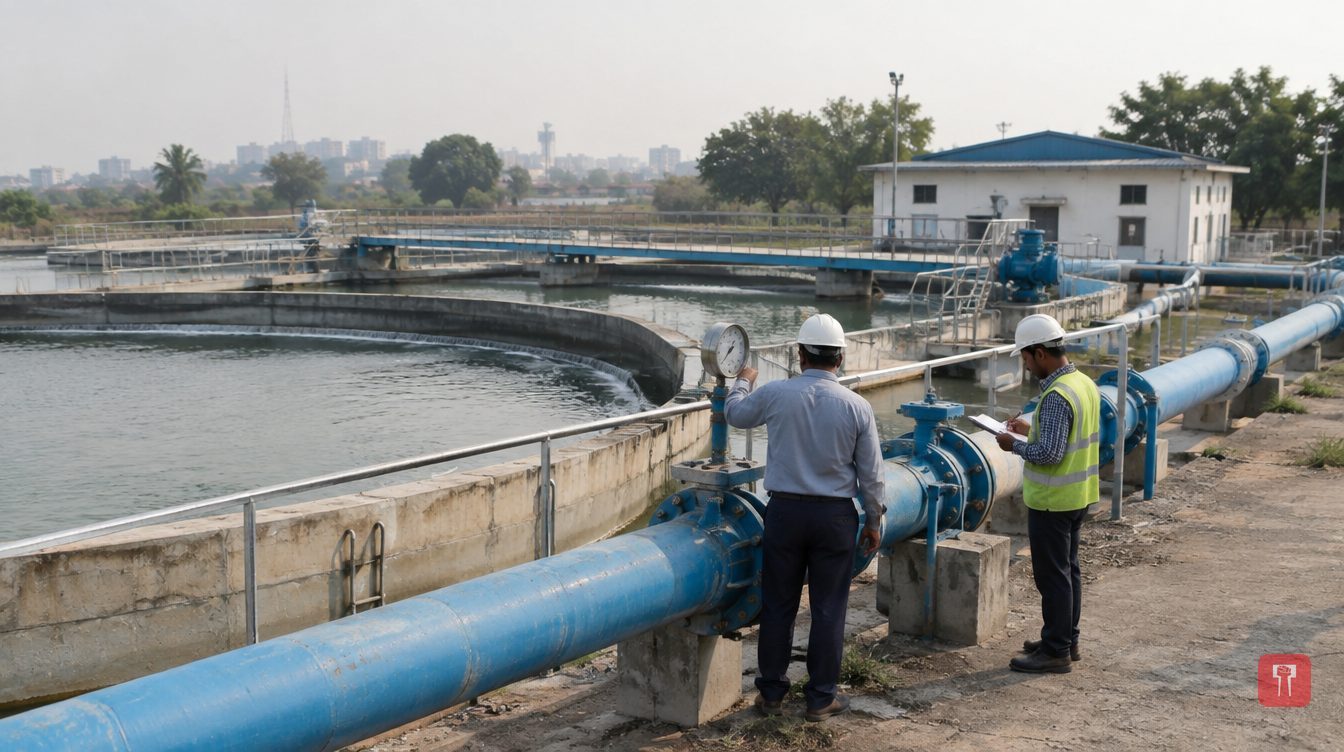
Meanwhile, considering the city's growing population and the increasing strain on the existing water system, the corporation has begun reviewing water needs till 2047. A detailed project report (DPR) is being prepared for the purpose. The current planning assumes a population of 3 million by 2031 and a requirement of 135 litres per person per day. The new study will look at another 16 years, and three options will be examined.
Standing committee chairperson Shivani Dani-Wakhare said the options under consideration are setting up water grids along the proposed third outer ring road in the Nagpur Metropolitan Region Development Authority (NMRDA) area, drawing water during the monsoon from the proposed Wainganga-Nalganga river-linking project, and increasing the reuse of wastewater along with the proposed barrage on the Kanhan river.
"The current planning assumes a population of 3 million by 2031 and a requirement of 135 litres per person. We are now working on water demand till 2047, keeping in mind future population growth, and we are examining three options to ensure adequate supply," Dani said.
Under this norm, a population of 3 million needs 405 million litres per day (MLD) of water. However, Dani pointed out that the corporation currently supplies about 770 MLD. This gap of about 365 MLD shows the need for a thorough check of actual consumption, distribution efficiency, supply to different consumer groups and leakage in pipelines. Even so, the gap cannot automatically be treated as wasted or unaccounted-for water.
The first option is the proposed Rs 94,912-crore Wainganga-Nalganga river-linking project. The scheme is to divert surplus water from the Wainganga basin to the Nalganga in the Tapi basin. The corporation is looking at whether water can be drawn from the project during the monsoon. But it can be considered a dependable source only once it is decided how much water will actually be available for urban use, what infrastructure will be needed to bring it to Nagpur and what the sharing arrangement will be.
The second option is to greatly increase the reuse of wastewater and to examine arrangements for water swapping. Nagpur currently treats about 423.5 MLD of wastewater. About 390 MLD of it is supplied to the Koradi and Khaparkheda thermal power stations. If the use of treated water for suitable non-drinking purposes increases, dependence on fresh water for industry could fall and more water could be reserved for domestic use.
The third proposal is to build a Rs 952.32-crore Kolar-Kanhan barrage near Bina village in Kamptee taluka. The proposed 438-metre-long structure will have a live storage capacity of 67.81 million cubic metres (MCM). The Central Designs Organisation in Nashik has prepared the detailed project report and design of the barrage, and the proposal has been sent to the state government for administrative approval. However, funding arrangements and land-related procedures are yet to be decided.
Both initiatives highlight the corporation's immediate and long-term priorities: clearing the backlog of stalled works and building the city's basic infrastructure for future population growth. Although the end of the code of conduct has removed one obstacle, the success of the development programme will depend on timely approvals, effective implementation and financial planning. The proposed water security measures too will need coordination with state agencies, assured funds and clear timelines.
Reach readers on the ward they actually live in.
Advertise with Prime Time 24Reach readers on the ward they actually live in.
Advertise with Prime Time 24Reach readers on the ward they actually live in.
Advertise with Prime Time 24
Comments
No comments yet. Be the first.