

Nirvana Shatakam: the six-verse hymn on self-identity and when to recite it
The hymn attributed to Adi Shankaracharya leads the seeker from outer identities to the pure self, and can be recited at dawn, dusk or before meditation.
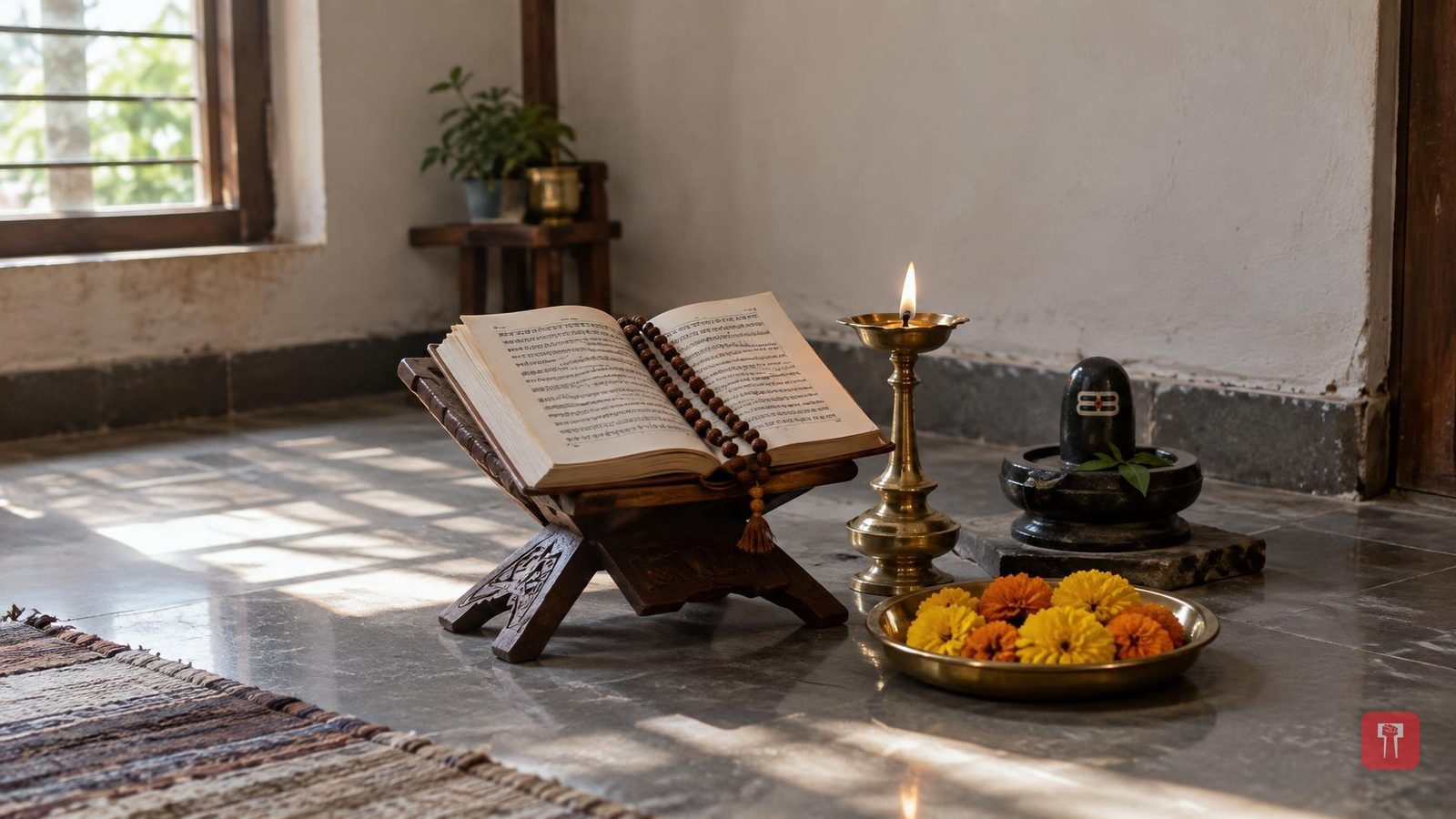
In the Indian spiritual tradition, the question "Who am I?" is considered fundamental. The Upanishads and Advaita Vedanta teach that beyond all identities lies a pure, conscious and imperishable self. One effective hymn for realising this self is the 'Nirvana Shatakam'. Each of its verses ends with a profound realisation.
'Chidananda roopah Shivoham Shivoham.'
That is, 'I am Shiva, of the nature of consciousness and bliss; I am Shiva.'
The hymn is believed to have been composed by Adi Shankaracharya. 'Nirvana Shatakam' means a hymn of six verses. Through these six verses the seeker is taken from outer identities inward, and is finally shown the path to realising the pure self.
The word 'Shiva' is not limited to the form of Lord Shankar with attributes. Its wider spiritual meaning is also auspiciousness, benevolence and pure consciousness. 'Shivoham' is therefore not to be taken in an egoistic sense as 'I am Lord Shankar himself'. In the context of Advaita Vedanta, it means that one's true self is pure consciousness, and that the supreme form of that consciousness is one with Brahman. This realisation belongs not to the body or ego but to the self.
From the start, the hymn turns the seeker inward. 'Mano buddhyahankara chittani naham' means I am not the mind, not the intellect, not the ego and not the chitta. Thoughts come and go in the mind, the intellect decides, the ego creates the sense of 'I' and 'mine', and memories and impressions are stored in the chitta. The consciousness that experiences all these is separate from them, and that is the direction of this verse.
Similarly, 'Na cha shrotra jihve na cha ghrana netre' means I am not the ears, the tongue, the nose or the eyes either. Here Shankaracharya does not disparage the body but explains the difference between body and self. The body is an instrument, but the self is not limited to the body.
No single time for reciting the Nirvana Shatakam is prescribed in any universally accepted scriptural statement. Even so, recitation with a calm, clean and focused mind is considered more beneficial. Morning, meaning Brahma Muhurta or the pre-dawn hours, is considered especially favourable for spiritual practice, because the surroundings are quiet and the mind is not yet burdened by the day's work. It can be read calmly before a bath, worship of the deity or meditation.
Reciting it after worship of Lord Shiva, abhishek or chanting of Shiva's name gives devotion the company of self-reflection. Sitting quietly for a few minutes in the evening, after the day's rush is over, to read it is also good. It can be recited along with meditation to ease mental stress, restlessness and the crowd of thoughts.
The hymn holds particular significance before meditation. With each verse, an inwardness of 'I am not the body, I am not the mind, I am not the ego' builds up. After the hymn is complete, one can sit quietly for a few minutes, focus only on the breath and try to remain in the feeling of 'Shivoham'.
Devotees of Shiva can recite it on Mondays, during Pradosh Kaal, on Mondays of Shravan and on special occasions of Shiva worship such as Maha Shivaratri. But it matters more to make it part of regular self-reflection than to confine it to special days. While reciting, keeping the meaning of each line in mind is considered more fruitful than rapid rote repetition.
According to tradition, the Nirvana Shatakam is a hymn of Adi Shankaracharya and is believed to have been composed in his lifetime, but its exact date or year is not firmly known. A well-known traditional story is told. While Shankaracharya was searching for his guru, he met Govinda Bhagavatpada, who asked him, 'Who are you?' In answer, Shankaracharya is said to have spoken six verses describing the nature of the self. These became known as the 'Nirvana Shatakam'.
Na me dvesha-ragau na me lobha-mohau
Mado naiva me naiva matsarya-bhavah.
Na dharmo na chartho na kamo na mokshah
Chidananda roopah Shivoham Shivoham.
That is, I am of the nature of consciousness and bliss. My true nature is Shiva, Shivoham, Shivoham!
