

Navratri 2026: From Gujarat's garba to Kanyakumari, how the festival varies across India
Shardiya Navratri begins on October 11 and ends on Mahanavami on October 19, with distinct traditions from Kashmir to Kanyakumari.
 Images are not validated/verified
According to the almanac, Shardiya Navratri will begin on Sunday, October 11. The nine-day festival will end on Mahanavami on October 19. Dussehra, marking victory, is celebrated the day after.
The festival looks quite different across the country's states. In some places Goddess Durga is worshipped with grand rituals, while in others there is a special ritual of applying kumkum on Vijayadashami. As a result, Navratri has its own identity from Kashmir to Kanyakumari and from Gujarat to West Bengal.
In Kashmir, Navratri is observed with great devotion. The region has the well-known temple of Mata Kheer Bhawani. During Navratri, devotees worship the goddess and keep fasts. The temple, dedicated to Mata Kheer Bhawani, is deeply tied to Kashmir's religious traditions.
Navratri brings to mind first the garba and dandiya of Gujarat. There, the nine nights of Navratri are filled with music, dance and revelry. People wear traditional attire and take part in garba and dandiya. The dance, which begins with the worship of Goddess Amba, gradually turns the whole atmosphere into a celebration.
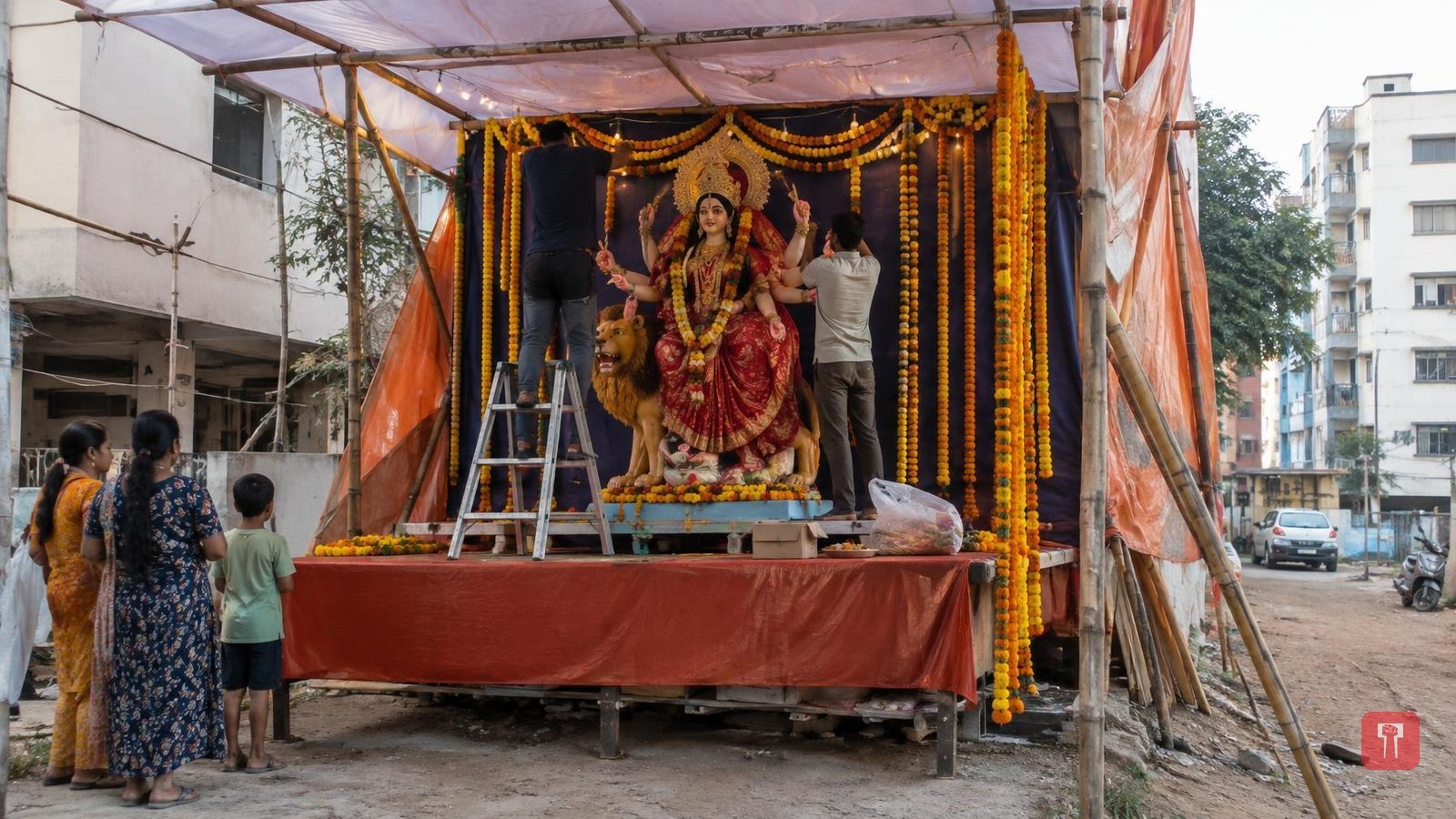
In West Bengal, Durga Puja is celebrated with great fanfare during Navratri. Grand idols of Goddess Durga, elaborate pandals and special pujas lend a festive air. Sindoor Khela, held on Vijayadashami, is a special attraction. In this ritual, married women first offer kumkum to Goddess Durga and then apply it to one another. The tradition is believed to be linked to prayers to the goddess for marital happiness and the well-being of the family.
The Kullu Dussehra of Himachal Pradesh is also a distinctive part of the Navratri tradition. Dussehra is celebrated there somewhat differently from the rest of the country. In Kullu, the grand Dussehra festival begins after Navratri ends. A grand rath yatra of Lord Raghunath is taken out, and processions of deities from different areas also arrive. Decorated chariots from the Kullu valleys, palanquins of gods and goddesses, and traditional instruments make the festival special.
Kanyakumari, at the southernmost tip of the country, also has its own Navratri traditions. During the festival, traditional processions of grand idols and images of deities are taken out from the major temples. These religious processions reflect local traditions and South Indian culture. The decoration of temples, the rituals and the processions each have their own appeal, which sets Kanyakumari's Navratri apart from festivals celebrated in other parts of the country.
