

NASA's Voyager 1 to reach one light-day from Earth on November 18, a first for a human-made object
 Images are not validated/verified
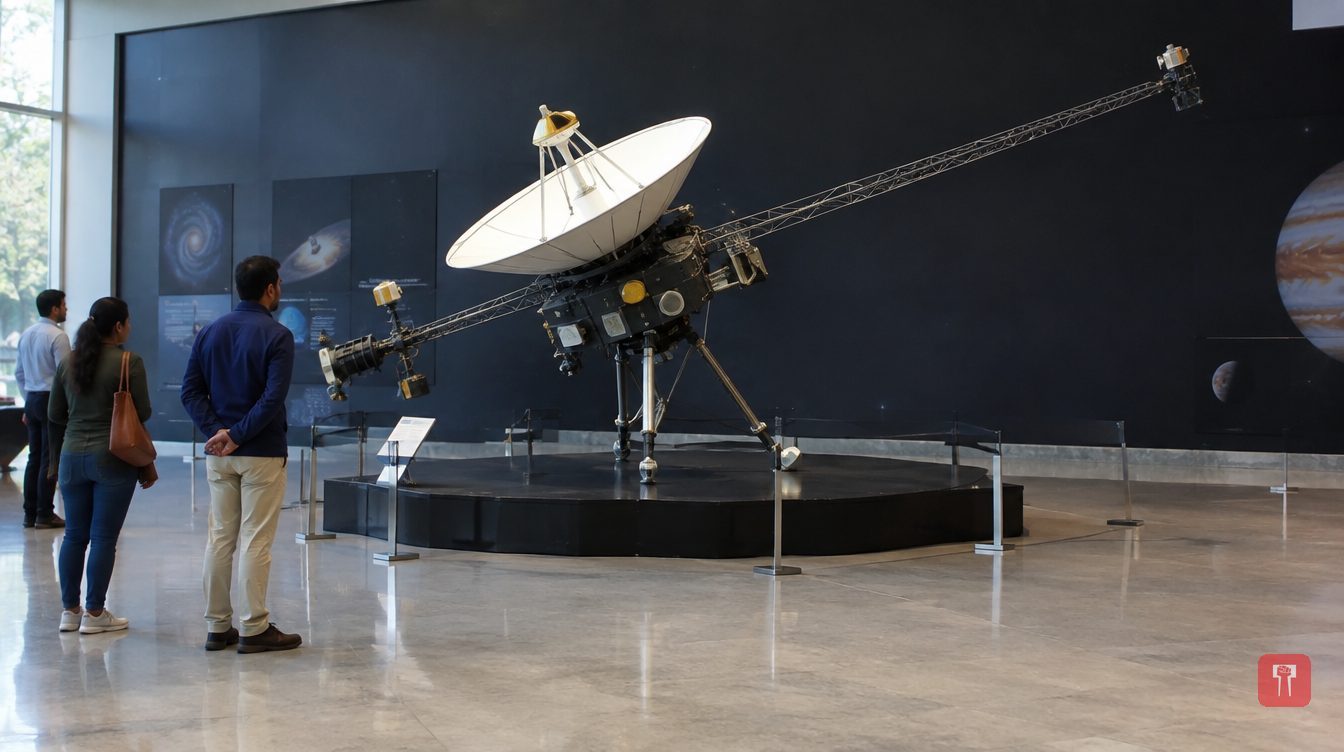
Voyager 1 will be about 25.9 billion km from Earth on November 18, 2026, the first human-made object to be a light-day away.
NASA's Voyager 1 spacecraft is nearing a historic milestone. In a journey of 49 years, the probe has travelled far from Earth. On November 18, 2026, it will cross a distance of one light-day from Earth. It is the first time any human-made object has reached this point, and the event is being seen as a major one in the history of space exploration.
On November 18, Voyager 1 will be about 25.9 billion km from Earth. This distance equals one light-day, meaning light takes 24 hours to travel from Earth to the spacecraft. A message sent from Earth therefore reaches the probe in a day, and the reply takes another day to return. Messages between NASA and the spacecraft currently take about 48 hours to go and come back.
NASA launched Voyager 1 on September 5, 1977. The mission's aim was to study the outer planets of the solar system. On its journey the probe observed Jupiter and Saturn at close range, and sent back important information about the atmospheres, moons and rings of these planets.
In August 2012, Voyager 1 crossed the heliopause, the outer boundary of the Sun's zone of influence, and entered the space between the stars. It was the first human-made spacecraft to do so. It continues to move away from Earth and to send back scientific data.
The spacecraft, which has been running for nearly fifty years, is now facing technical problems. The power supply that runs it is weakening. NASA engineers are therefore switching off some scientific instruments that use little power. It has been decided to keep the remaining power for the main instruments. Contact between the spacecraft and Earth was recently lost for a short time but was restored.
Like Voyager 1, its twin Voyager 2 is also working in space. Voyager 2 will have to wait until November 2035 to reach a distance of one light-day. The mission stands as an example of human dedication and scientific progress, and it is still uncovering many secrets of space.
Reach readers on the ward they actually live in.
Advertise with Prime Time 24Reach readers on the ward they actually live in.
Advertise with Prime Time 24Reach readers on the ward they actually live in.
Advertise with Prime Time 24Choose primetime24.com as a preferred source on Google Google shows more stories from your preferred sources in Top Stories.
Reach readers on the ward they actually live in.
Advertise with Prime Time 24
Comments
No comments yet. Be the first.