

Nagpur Central Jail holding 46% more inmates than capacity, RTI reveals
RTI data shows Nagpur Central Jail and prisons across Maharashtra packed well beyond their official capacity.
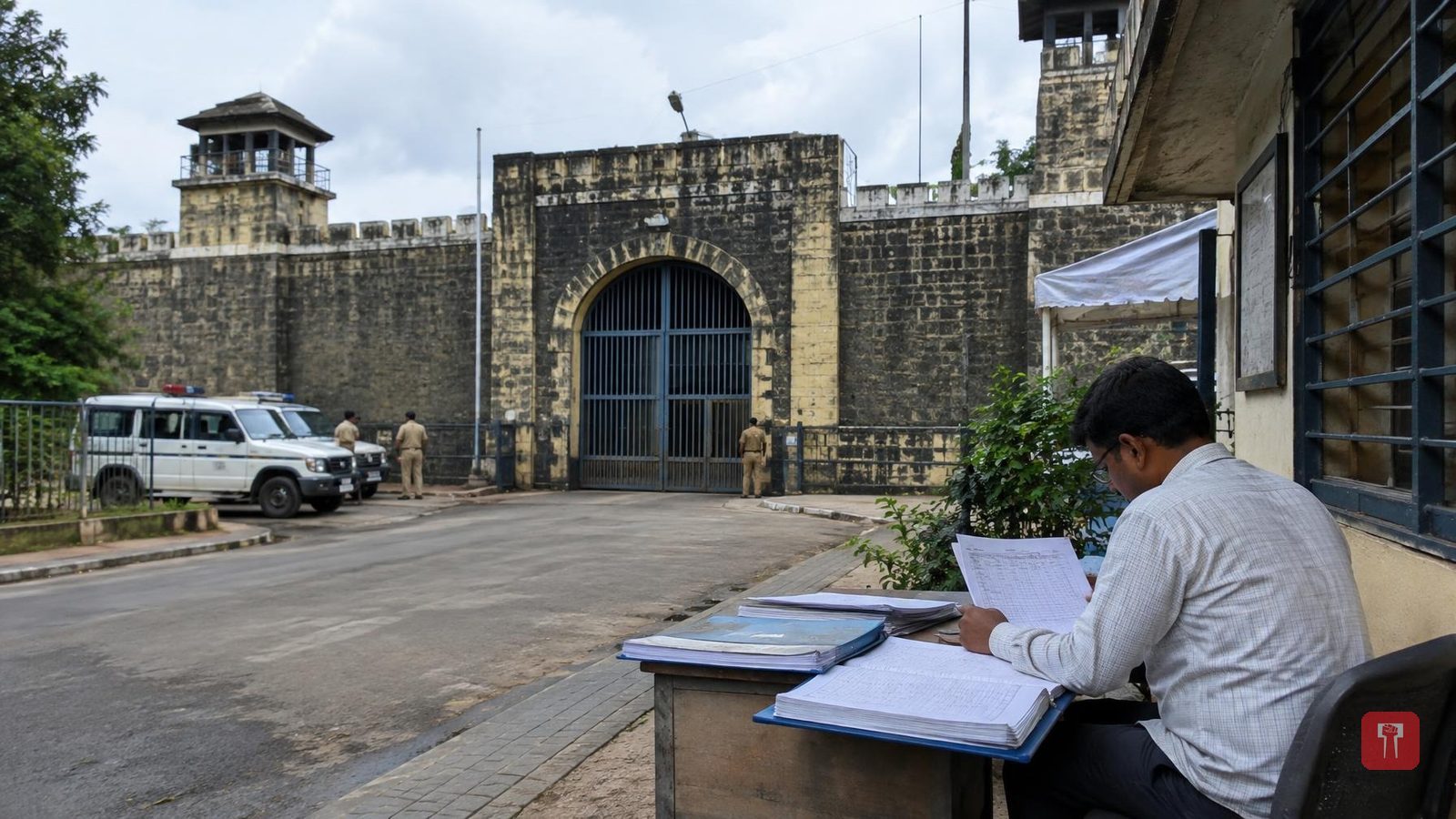
Nagpur Central Jail is currently holding far more inmates than it is built for. Against an official capacity of 1,940 prisoners, the jail actually houses 2,836, nearly 46 percent more than it should.
The figures were disclosed by the Inspector General of Prisons office in response to a Right to Information (RTI) application filed by social activist Abhay Kolarkar. The data, dated August 31, 2026, points to growing pressure on Maharashtra's prisons.
Nagpur's situation is part of a wider problem across the state. The nine central jails in Maharashtra have a combined capacity of 16,045 inmates but actually hold 27,979, nearly 75 percent more than capacity.
The state's 37 district jails are in an even worse state. Against a combined capacity of 7,482, they hold 11,365 inmates, more than one and a half times capacity.
At Nagpur Central Jail, the gap between capacity and actual numbers stands at 896, meaning the jail is holding nearly one and a half times its designed strength. Such overcrowding makes it difficult for the jail administration to manage accommodation, security, healthcare, hygiene and reformation programmes.
Other central jails in the state show a similar pattern. Mumbai Central Jail was found to be the worst affected, holding 3,399 inmates against a capacity of 999, more than three times its capacity.
Thane Central Jail holds 3,330 inmates against a capacity of 1,111. Yerwada Central Jail has the highest number of inmates in absolute terms, with 6,396 against a capacity of 2,767. Nashik Road Central Jail holds 3,938 inmates against a capacity of 3,208, while Taloja Central Jail holds 3,222 against a capacity of 2,324.
According to the RTI data, the main driver of overcrowding is the number of male inmates. Central jails have a capacity of 15,426 for male prisoners but actually hold 27,195. District jails show the same pattern, holding 10,922 male inmates against a capacity of 6,937.
The situation in district jails is even more severe. Kalyan District Jail has a capacity of just 540 but holds 2,054 inmates, nearly four times its capacity. Jalgaon District Jail holds 751 inmates against a capacity of 274, while Osmanabad District Jail holds 261 against a capacity of 109. Yavatmal District Jail is also overcrowded, holding 556 inmates against a capacity of 248.
The figures show the problem is not confined to one place but reflects a systemic shortfall. With inmate numbers consistently exceeding capacity, jail administrations are struggling to provide security, healthcare, hygiene, food, accommodation and reformation programmes, since these facilities were never built for such large numbers.
The extra burden of 896 inmates at Nagpur Central Jail is a clear example of the strain on the city's prison system. It raises a larger question of how long Maharashtra's jails will continue to hold so many more inmates than their designed capacity.
