

Mount Abu's Dilwara Jain temples draw visitors for their marble carvings
Built between the 11th and 13th centuries, Mount Abu's Dilwara Jain temple complex is known for some of the finest marble carving in the world.
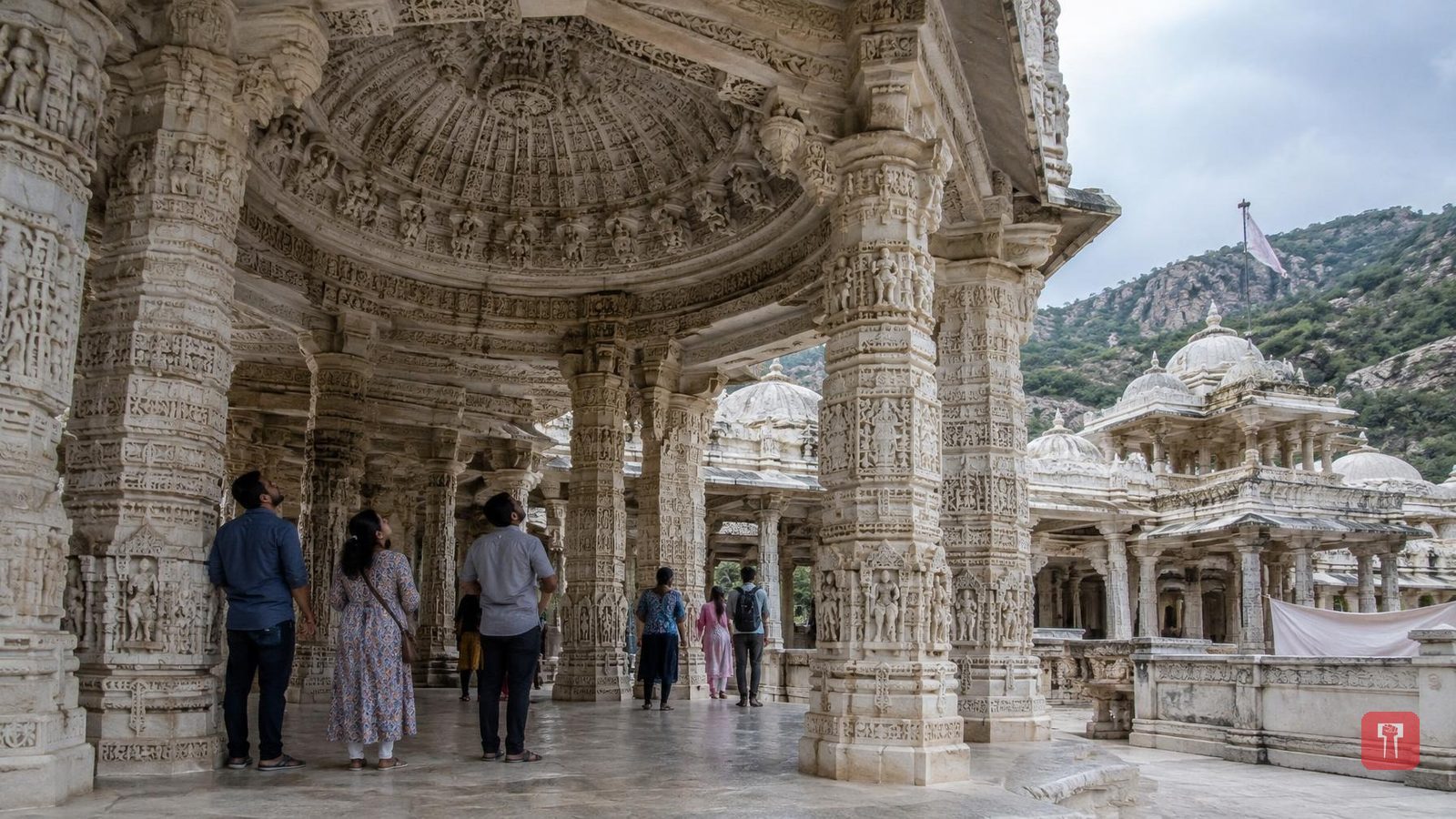
Mount Abu, a hill station set among the Aravalli hills in Rajasthan, is home to the Dilwara Jain temple, one of the world's most renowned temples. The site is known not only as a place of worship but also for its beauty, which has long drawn tourists. The entire structure is built of white marble.
The history of the Dilwara Jain temple goes back to the period of the Chalukya, or Solanki, dynasty of Gujarat, between the 11th and 13th centuries. It is said to have been built in 1031 by Vimal Shah, a minister of the Solanki ruler Bhimdev I of Gujarat. The architecture of the temple, considered among the most beautiful in India, draws many visitors. The marble carving here is extremely fine and elaborate, and is said to be among the most intricate stone carving in the world.
Seen from outside, the temple looks like an ordinary temple, but stepping inside reveals the beautiful marble craftsmanship. The atmosphere and the carving are so striking that once seen, the eye stays fixed on them.
The Dilwara Jain temple complex has five main temples, belonging to the Shwetambar sect of Jainism.
The first temple is Vimal Vasahi, said to have been built around the year 1031. It is dedicated to the Tirthankara Rishabhdev, also known as Adinath. It is considered the main part of the complex and is also known as Rang Mandap. Its ceiling carvings, the large mandap and the pillars particularly draw visitors.
The second temple is Luna Vasahi. It is said to have been built in 1230 by Vastupal and Tejpal, ministers of the Gujarat rulers. It is dedicated to the 22nd Tirthankara, Neminath. It features a marble Kalpavriksha and an elephant mandap.
The third temple is Pittalhar, dedicated to Rishabhdev, or Adinath. It is the third in order among the five temples.
The fourth temple is the Parshvanath temple, dedicated to the 23rd Tirthankara, Parshvanath. Its structure is the tallest among the five and is built over three storeys.
The fifth and final temple is the Mahavir Swami temple, dedicated to the 24th Tirthankara, Bhagwan Mahavir Swami. It is somewhat smaller in size compared to the other temples, but the carving on its walls is exceptionally beautiful and draws visitors to it.
