

Matsya Purana tale: Vastupurusha was born of Shiva's sweat and was first an asura
 Images are not validated/verified
According to Hindu mythology, Vastupurusha was born during Shiva's battle with the asura Andhaka, and Brahma later gave him a place on earth.
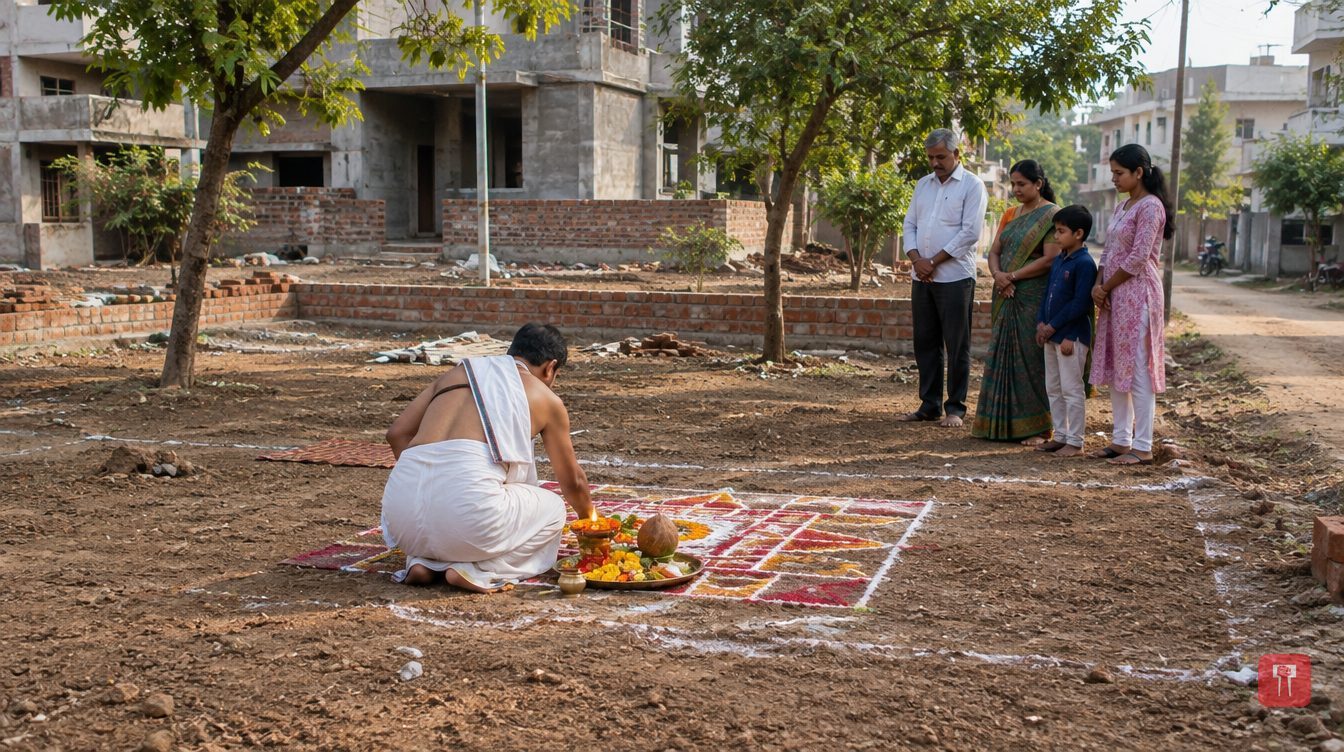
Worship of Vastupurusha has special significance when a house is built, according to Vastu Shastra. Hindu mythology holds that Vastupurusha was originally an asura. He was born during the battle between Lord Shiva and the asura Andhaka. Brahma later gave him a place on earth, and the gods took their own positions on his body. This story is believed to be the source of the ideas of Vastu Shastra and the Vastu Mandala.
In the tale current in the Matsya Purana, a fierce battle was under way between Shiva and Andhakasura. In the midst of it, a drop of sweat fell from Shiva's forehead to the ground. From that drop arose a huge and exceptionally powerful being. His hunger was so great that he began trying to devour the whole of creation.
His power spread worry among the gods. On Brahma's orders, several gods came together and pinned the giant asura face down on the ground. The gods took their own positions on different parts of his body. Brahma then named him Vastupurusha.
The story goes on to say that although Vastupurusha is called an asura, he is not regarded as an evil force in the ordinary sense. In the tale he is seen as a symbol of the vast and uncontrollable power of nature. Once the gods had given him a place on the ground, he asked Brahma for a boon concerning his worship. According to the story, he was granted the boon that he would be worshipped when a house, temple or building is constructed.
In Vastu Shastra, the body of Vastupurusha is shown in a square form, known as the Vastupurusha Mandala or Vastu Mandala. The mandala shows the places of different gods in different directions. In the traditional depiction, the head lies in the north-east (Ishanya) and the feet in the south-west (Nairitya).
The tradition of performing bhoomi pujan and Vastu puja before work on a new house begins is linked to this belief. Vastu Shastra offers guidance on the proper use of space in a house, and on direction, light and ventilation. The story of Vastupurusha is an interesting cultural idea in Indian religious tradition and architecture.
Reach readers on the ward they actually live in.
Advertise with Prime Time 24Reach readers on the ward they actually live in.
Advertise with Prime Time 24Reach readers on the ward they actually live in.
Advertise with Prime Time 24Choose primetime24.com as a preferred source on Google Google shows more stories from your preferred sources in Top Stories.
Reach readers on the ward they actually live in.
Advertise with Prime Time 24
Comments
No comments yet. Be the first.