

Maharashtra to set aside at least 5% of district plan funds for fodder during drought
 Images are not validated/verified
With rain deficient due to El Nino, the state has issued a government resolution on fodder production, fodder banks and camps, Animal Husbandry Minister Pankaja Munde said.
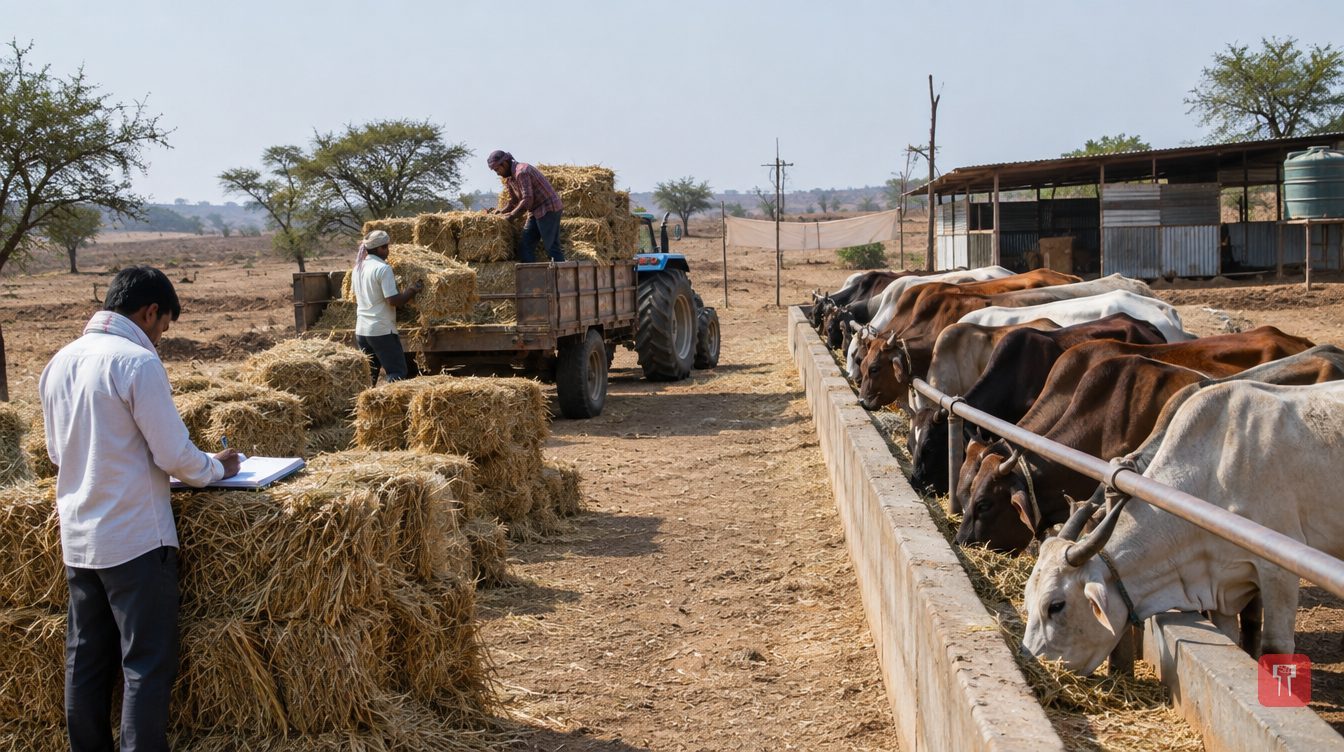
Mumbai, October 30: Rainfall has been lower this year because of El Nino, and drought conditions have developed in the state. To ensure a steady supply of fodder for animals, the state government has prepared a major action plan, Animal Husbandry Minister Pankaja Munde said.
According to Munde, at least five per cent of funds under the District Annual Plan will be provided for fodder production, enhancement of existing fodder and development of alternative fodder sources. Several other measures will also be implemented, including fodder banks, growing fodder through hydroponics and the azolla method, transporting fodder from one district to another, and digital management of fodder camps.
A Cabinet sub-committee had been formed under Revenue Minister Chandrashekhar Bawankule to suggest measures on drought. Following its decision, a study group was formed under the Additional Chief Secretary of the Revenue Department. The group made several recommendations to deal with the fodder shortage. The sub-committee approved them at its meeting on October 27, and a Government Resolution was issued on October 30, 2026. The group's recommendations include increasing fodder production, enhancement and value addition of existing fodder, transparent management of fodder camps, and alternative sources.
Pankaja Munde said, "The government has taken considered measures so that farmers, livestock keepers and their animals do not feel a shortage of fodder during the drought. Instead of limiting itself to starting fodder camps, emphasis is being laid on increasing fodder production, properly conserving existing fodder and developing alternative sources. All the departments concerned should work in coordination and implement these measures effectively."
Under the study group's plan, seed will be supplied by Mahabeej and other seed producers so that there is no shortage of fodder seed in the rabi season. Fodder crops that need little water and can be harvested more than once will be promoted. Crops such as maize, Nutrifeed, sugargraze, jowar and bajra will be planted on land belonging to agricultural universities, taluka seed multiplication centres and the Krishi Mahamandal. Fodder will also be grown on the farms of Animal Husbandry Department institutions. Schemes of different departments will be aligned to grow fodder on grazing land, pastures, barren land and fallow land. With the help of the Water Resources Department, silt-laden land in reservoirs will be given to farmers and livestock keepers for fodder. Grass on Forest Department land will be cut in time and stored, and given to livestock keepers when needed.
The recommendations propose district-wise fodder banks, with the help of farmer producer organisations, companies and voluntary organisations. Machines of the Agriculture and Animal Husbandry departments will be provided for cutting fodder and tying bales. In view of the drought, the maximum base price, excluding transport cost, has been set at Rs 12 per kg for dry fodder and Rs 8 per kg for silage.
A "fodder literacy campaign" will be run for livestock keepers, with training and demonstrations on proper cutting and storage of fodder, making silage, urea and enzyme processes, and value addition of paddy straw. Methods such as hydroponics, azolla and cultivation of thornless cactus will also be promoted. There is also a plan to grow fodder through hydroponics and azolla on a pilot basis at the state's veterinary dispensaries.
To ensure that fodder during the shortage is used only to feed animals, its use in packaging, biofuel and power generation will be banned. District Collectors have been given the responsibility of legally preventing the state's fodder from being sent to neighbouring states during the drought. If a district lacks the fodder its animals need, the Divisional Commissioner, the Animal Husbandry Department and the District Collector will coordinate to obtain fodder from a nearby district.
For transparency in fodder camps, an online "Fodder Camp Monitoring and Management System" will be set up at the state level. It will hold information on the registry of animals, daily attendance, arrival and distribution of fodder, water, veterinary services, expenditure and payments. Every camp will be required to have attendance by biometrics or QR code, verification of registry in the Bharat Pashudhan System, and CCTV running 24 hours.
For planning fodder camps, the Guardian Minister will be a member, as chair, of the district-level Drought Management Monitoring and Review Committee. A separate district-level executive committee will be formed under the District Collector. Camps will be started as needed after considering local conditions, the number of animals, fodder availability and the water situation.
Sugar mills, milk producer cooperatives, gaushalas, voluntary organisations and farmer producer companies will also be involved in fodder management. The plan is to obtain sugarcane tops, bagasse and molasses from sugar mills. A recommendation has also been made to give power at concessional rates for fodder production, on which the Energy Department will act. Emphasis has been laid on using CSR funds for camp facilities, fodder-cutting machines, silage making, drinking water and sanitation.
The Animal Husbandry Department will compile district-wise fodder accounts and submit a weekly report. The health of animals in the camps and the quality of fodder and animal feed will also be checked. The departments concerned have been authorised to issue the necessary orders in line with the recommendations. The Government Resolution is available on the state government website, www.maharashtra.gov.in.
Reach readers on the ward they actually live in.
Advertise with Prime Time 24Reach readers on the ward they actually live in.
Advertise with Prime Time 24Reach readers on the ward they actually live in.
Advertise with Prime Time 24
Comments
No comments yet. Be the first.