

Maharashtra draft rules on rooftop solar may cut customer savings, propose banking charges
MERC's draft rooftop solar regulation proposes removing the net metering cap but adds banking charges and mandatory battery storage for larger systems.
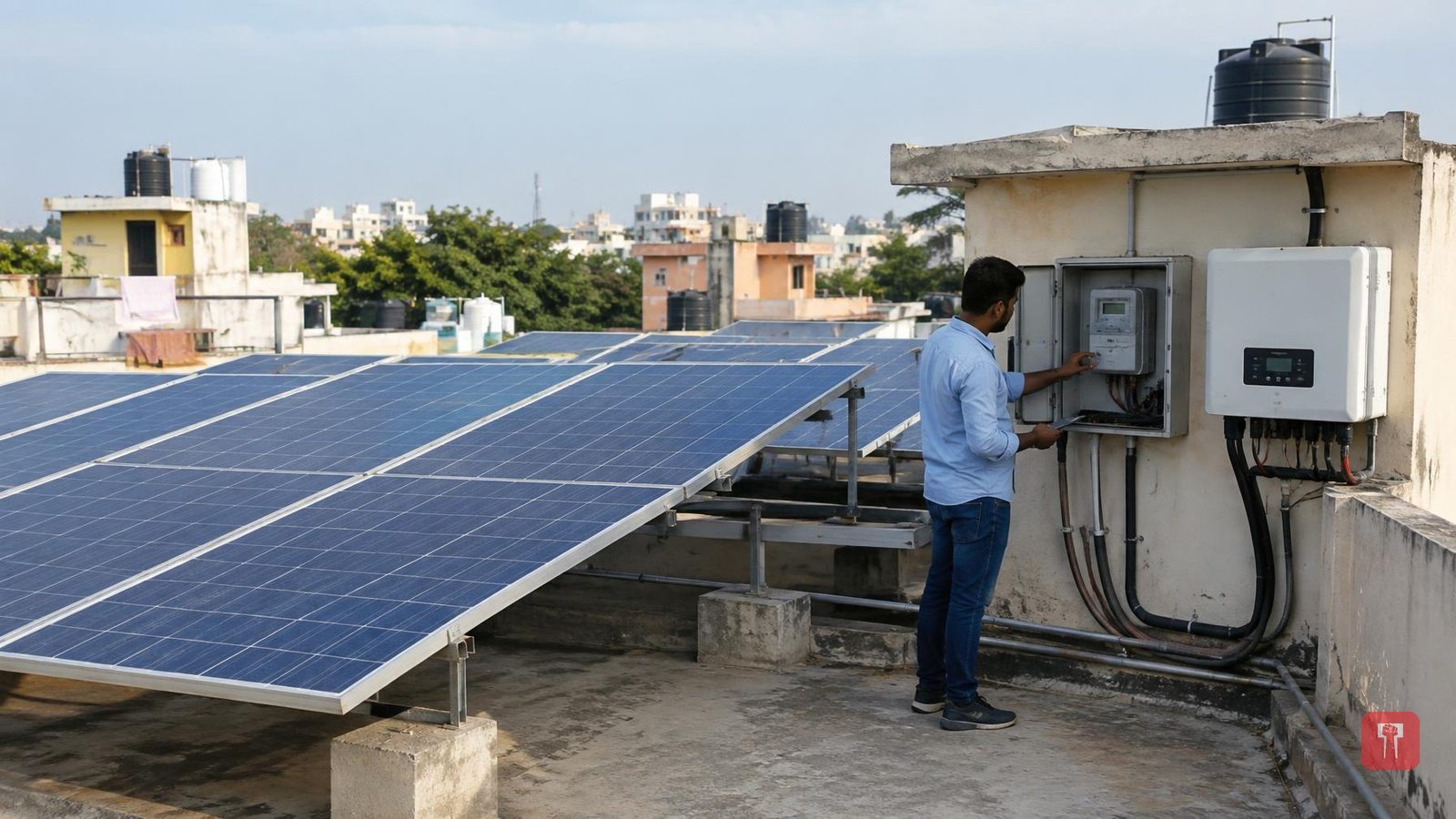
Domestic customers, housing societies, commercial establishments and industries that save on electricity bills through solar power could soon face new challenges. The Maharashtra Electricity Regulatory Commission (MERC) has released the draft of the "Grid Interactive Rooftop Renewable Energy Systems Regulation 2026".
Some changes in the proposal are being described as beneficial for customers, but certain provisions could complicate the cost of solar systems, the banking process and the accounting of dues. Customers and customer organisations can file objections and suggestions on the draft until October 12.
The draft proposes removing the existing 5 MW cap on net metering. This could allow large industries and commercial customers to set up bigger solar projects based on their sanctioned capacity. There is also a provision for greater relaxation for customers generating solar power for self-consumption under behind-the-meter (BTM) systems.
There is a proposal to widen the scope of virtual net metering to include public bodies such as local self-government institutions and water boards. It is also proposed to make an Energy Storage System (ESS), or battery, mandatory for solar projects with capacity above 100 kW. This is expected to raise the initial capital cost for large commercial customers and industries. The banking arrangement for depositing surplus solar power into the grid has also been fixed differently depending on capacity.
According to the draft, for customers with capacity above 3 kW, surplus power remaining after the fixed banking period ends could automatically lapse. It is being argued that it would not be fair to let power that customers paid to generate lapse in this way without any compensation. The draft also proposes levying a Fixed Banking Charge (FBC) and a Variable Banking Charge (VBC).
Provisions that bring existing customers under the ambit of the new rules could raise doubts over the protection of their old contracts. It is also being said that the draft does not clearly specify the aggregate capacity for industries using open access or captive renewable power.
Solar energy expert Sudhir Budhia said that instead of opposing the proposed rules, it is necessary to strike a balance between grid safety and protecting customers' investments. He expressed hope that the commission would frame a policy that is technically sound, affordable for customers, and in line with Maharashtra's renewable energy targets.
