

Long-term exposure to air pollution raises lung cancer risk, says oncologist
 Images are not validated/verified
Fine particles called PM2.5 are a growing lung cancer risk for smokers and non-smokers alike, says Dr Nikhil M. Shirsi of M|O|C Cancer Care.
What we breathe has a direct bearing on health. When lung cancer comes up, attention usually turns first to cigarettes and bidis. But growing scientific evidence points to another important risk: long-term exposure to air pollution. It can affect both smokers and non-smokers, according to Dr Nikhil M. Shirsi, a cancer specialist at M|O|C Cancer Care.
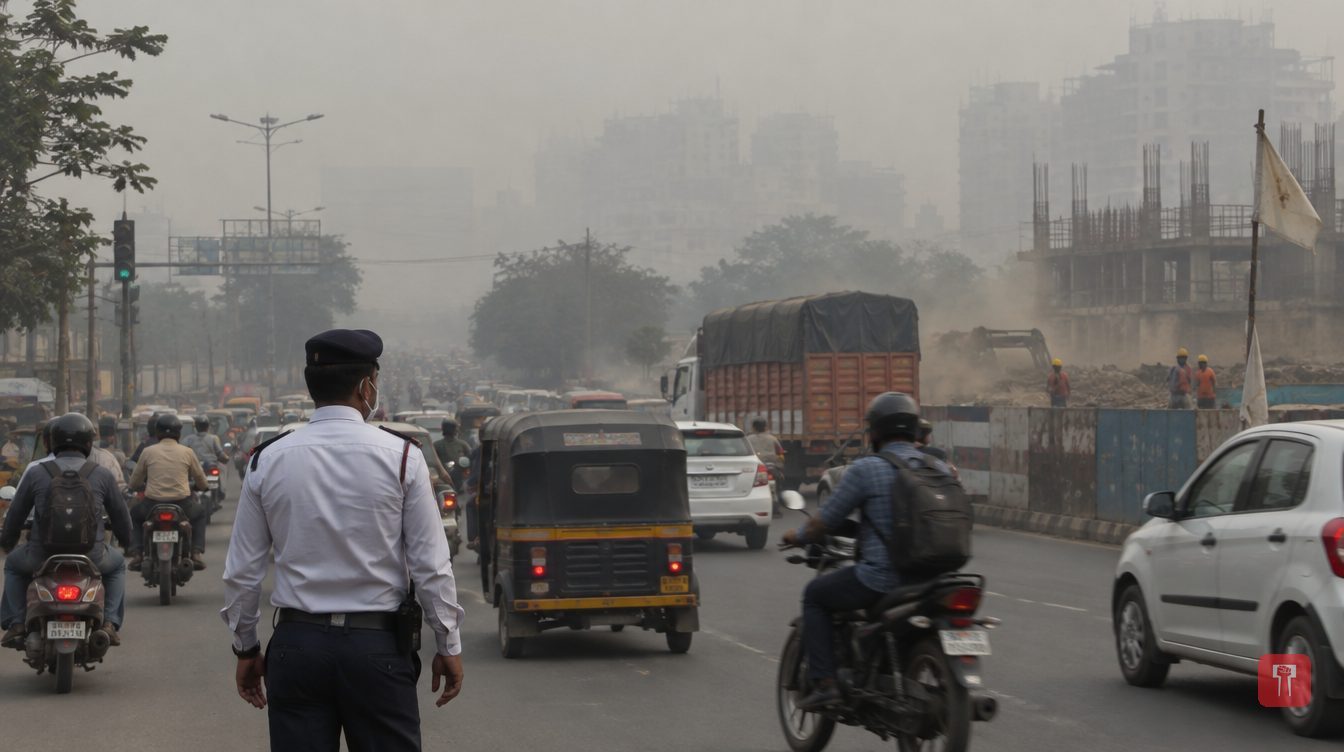
In India, vehicle exhaust, construction dust, factory emissions and seasonal smog affect millions of people. Dirty air does not mean only a cough or breathlessness. Living in such air for a long time can also contribute to cancer.
The greatest concern is PM2.5, extremely fine particles 2.5 micrometres or less in diameter. They can travel deep into the lungs through the airways and carry harmful chemicals into the body. This can lead to prolonged inflammation, oxidative stress on cells and cell damage. Over many years, these processes can create conditions in which cancer develops.
In 2013, the International Agency for Research on Cancer (IARC), which works under the World Health Organization (WHO), placed outdoor air pollution and its fine particles in Group 1 carcinogens. This means there is sufficient scientific evidence that they cause cancer in humans. The cancer most firmly linked to this pollution is lung cancer.
A systematic review and meta-analysis published in 2021 in the journal Environmental Health Perspectives examined 47 studies on long-term exposure to fine particles. It found that for every 10 microgram per cubic metre increase in long-term PM2.5 exposure, the risk of lung cancer was 16 per cent higher.
This is a 16 per cent increase in relative risk. It does not mean that a person's overall chance of getting lung cancer rises by 16 percentage points. It is also not the case that everyone exposed to pollution will develop cancer. The risk depends on several factors, including the intensity of pollution, the duration of exposure, smoking history, workplace hazards and individual susceptibility. Smoking is the main risk factor for lung cancer, but non-smokers can also develop the disease.
People living near congested roads, in industrial areas or in construction zones may face greater exposure. Traffic personnel and labourers who work outdoors may also be at risk. Tobacco smoke at home, the use of solid fuel for cooking and poor ventilation can add to the overall burden of pollution.
Some steps can reduce exposure. Check the Air Quality Index (AQI) for your area regularly. Avoid strenuous exercise outdoors when pollution is severe. Stay away from tobacco smoke. Ensure proper ventilation at home when the outside air is good. Wear a well-fitting N95 mask when needed. Even so, personal measures cannot fully remove all the risks of large-scale air pollution.
The doctor said: "Which air we breathe is not always in our hands. But we must understand that clean air is an important part of cancer prevention."
Lung cancer does not have a single cause in every patient, and exposure to pollution does not necessarily lead to cancer. Still, reducing long-term air pollution exposure across the population can prevent many illnesses and help protect the health of those who have never smoked.
For this, cleaner transport, stricter control of factory emissions, dust management at construction sites and continuous monitoring of air quality must be treated as public health priorities. Preventive measures against lung cancer begin long before symptoms appear, and clean air plays a vital role in these efforts.
Reach readers on the ward they actually live in.
Advertise with Prime Time 24Reach readers on the ward they actually live in.
Advertise with Prime Time 24Reach readers on the ward they actually live in.
Advertise with Prime Time 24
Comments
No comments yet. Be the first.