

Legends behind Chhath Puja: Priyavrat, Ram and Sita, Karna and Draupadi
 Images are not validated/verified
Chhath Puja, devoted to the Sun god and Chhathi Maiya, is linked to tales from the Puranas, the Ramayana and the Mahabharata.
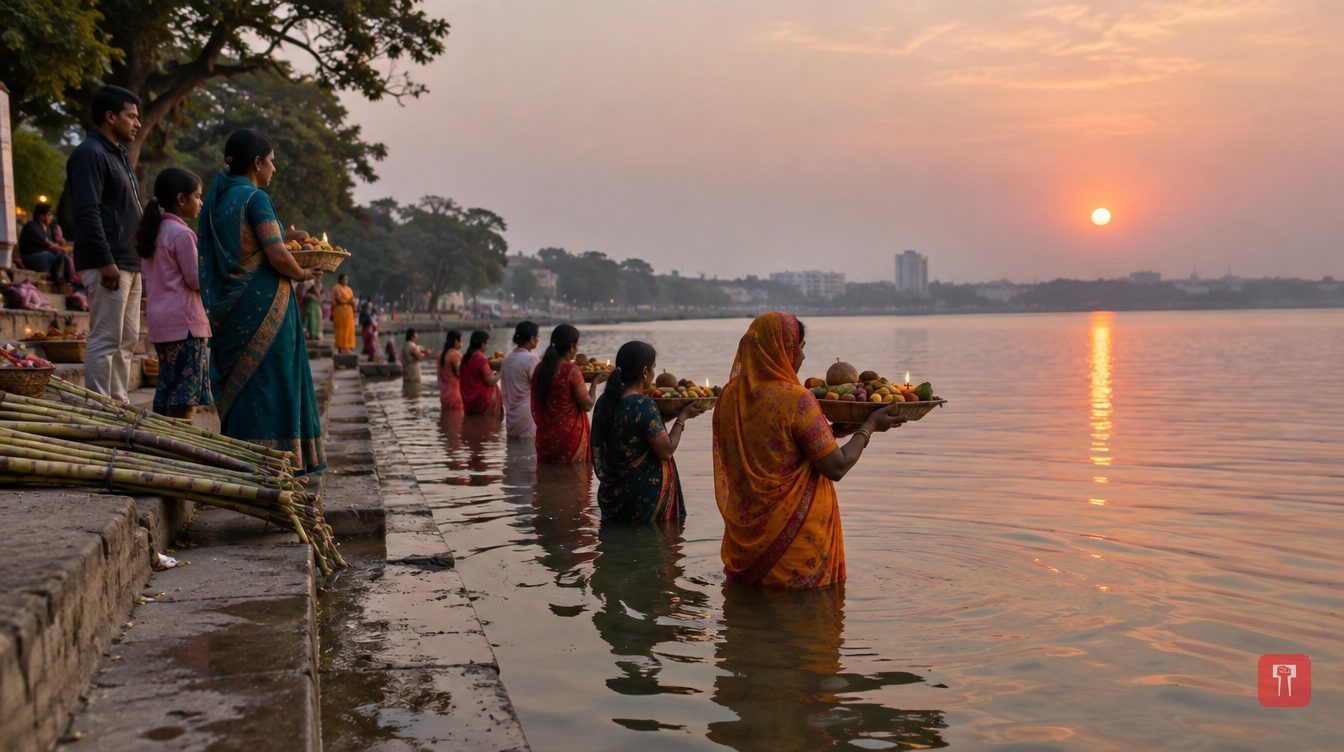
Chhath Puja is an ancient Hindu tradition devoted to the worship of the Sun god and Chhathi Maiya (Goddess Shashthi). The most prominent legend behind it is that of King Priyavrat and Queen Malini. The festival is also linked to several important events from the Ramayana and Mahabharata periods.
According to the Brahmavaivarta Purana and the Devi Bhagavata Purana, Chhath Puja began in the time of King Priyavrat, a son of Swayambhuva Manu. He and his wife, Queen Malini, had no child for many years and were deeply distressed. They were advised to have a yajna performed by Maharishi Kashyap. Under the sage's guidance, the king performed the Putreshti Yajna. After partaking of the yajna's kheer, Queen Malini conceived, but unfortunately gave birth to a stillborn son.
Grief-stricken, King Priyavrat carried the child's body to the cremation ground and prepared to end his own life. At that moment Goddess Shashthi (Devasena), a mind-born daughter of Brahma and born of the sixth part of Prakriti, appeared. With her touch, she brought the boy back to life. She introduced herself to the king as the mother who protects children and told him to worship her on the Shashthi of Kartik Shukla. The king observed the fast with full devotion, and this is how the festival, meant for the welfare of all, began.
According to the Ramayana, when Lord Ram and Mother Sita returned to Ayodhya after 14 years of exile and the victory over Lanka, they observed the Chhath fast. Ram belonged to the Suryavansh (solar dynasty). For the governance of Ayodhya and the prosperity of its people, he fasted on the Shashthi tithi of the Shukla Paksha of Kartik and worshipped the Sun god on the banks of the Sarayu. In Munger, Bihar, it is believed that Sita observed the Chhath fast in the bed of the Ganga. The Sita Charan Mandir is still well known there.
The Mahabharata has two important stories linked to Chhath Puja. The first is that of Karna, the son of the Sun god. Karna, king of Anga, which is the present-day Bhagalpur region of Bihar, was a devoted worshipper of the Sun god. Every morning he stood waist-deep in water and offered arghya to the Sun. It is said that he became a great warrior by the Sun god's grace, and that the tradition of offering arghya while standing in water during Chhath Puja began from this.
The second is the story of the fast kept by Draupadi and the Pandavas. After the Pandavas lost their entire kingdom in a game of dice and were wandering in the forest, Draupadi observed the Chhath fast to be freed from the crisis and regain the lost kingdom. By the effect of this fast, the Pandavas got back their glory. These stories carry great spiritual and cultural significance. They bring out the idea that the Sun is the main source of energy and life. The festival is also a way of thanking nature after the harvest.
Chhathi Maiya is regarded as the sister of the Sun god and the protector of children. The fast is therefore kept with deep devotion for the health and long life of the family. It is said to be the only festival in which arghya is offered not just to the rising sun but also to the setting sun, honouring the ups and downs of life.
Reach readers on the ward they actually live in.
Advertise with Prime Time 24Reach readers on the ward they actually live in.
Advertise with Prime Time 24Reach readers on the ward they actually live in.
Advertise with Prime Time 24Choose primetime24.com as a preferred source on Google Google shows more stories from your preferred sources in Top Stories.
Reach readers on the ward they actually live in.
Advertise with Prime Time 24
Comments
No comments yet. Be the first.