

Kaveri dry engine delivers 48.5 kN thrust in Russia flight test, above 46 kN target
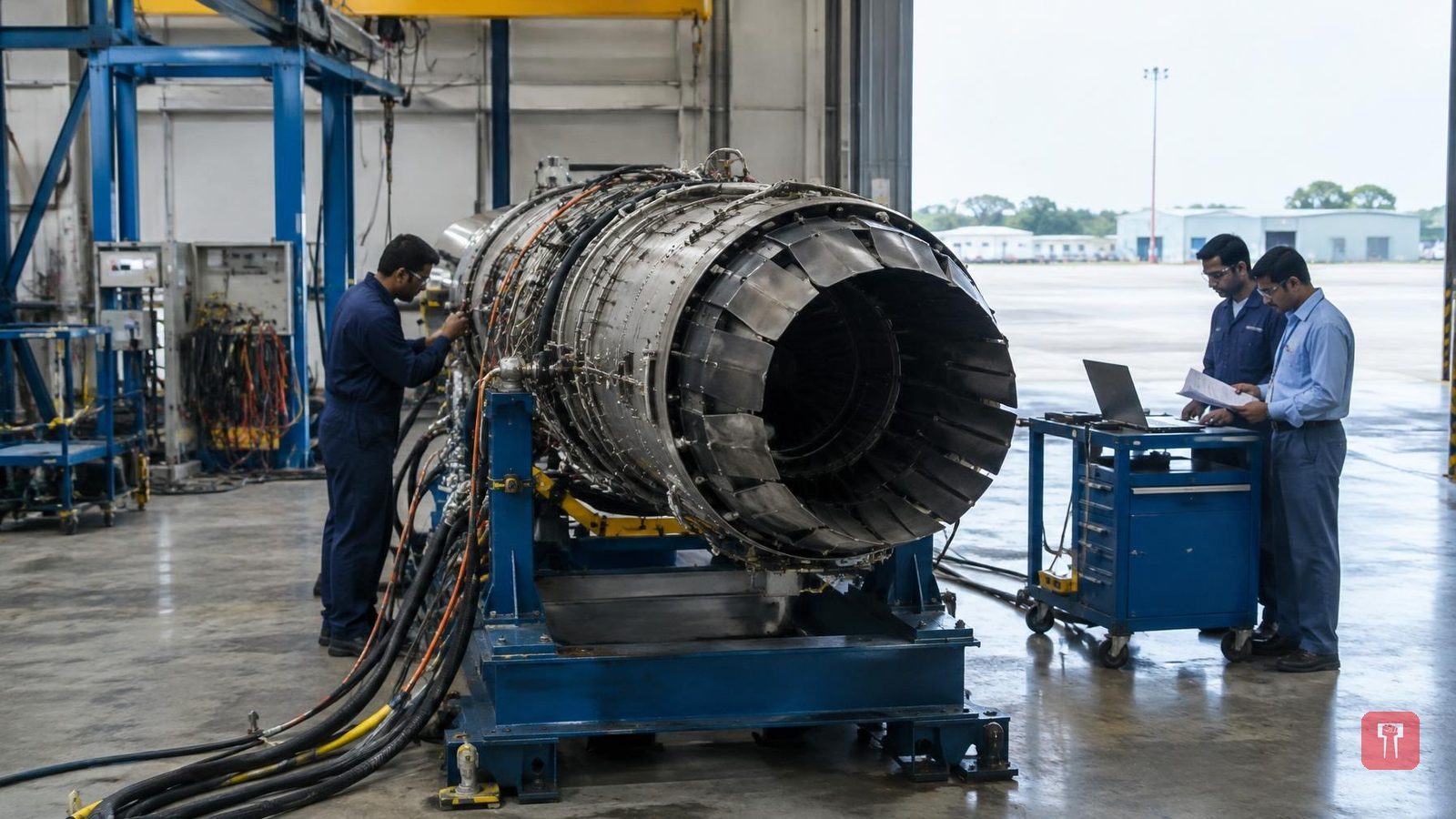
The dry version of India's indigenous Kaveri jet engine produced 48.5 kilonewtons (kN) of thrust in a flight test in Russia. The engine has been developed by the Gas Turbine Research Establishment (GTRE), a laboratory under the DRDO. The result has been described as an important step towards self-reliance in defence.
Scientists had set a thrust target of 46 kN for the test. The Kaveri dry engine performed better than that target. The project, which was once slowed by technical problems, has now been described as ready for the future needs of the Indian Air Force.
The new variant is a dry engine, meaning it runs without an afterburner. An afterburner is a system that burns extra fuel to raise speed for a short time. The engine is being designed especially for India's upcoming unmanned combat aerial vehicle (UCAV), the stealth combat drone programme known as Ghatak. The flight tests were completed at test facilities of the Central Institute of Aviation Motors (CIAM) and the Gromov Flight Research Institute in Russia.
A large Russian-built flying testbed aircraft, the Ilyushin Il-76, was used for the tests. The Kaveri dry engine was fitted in place of one of the aircraft's regular turbofan engines. Its performance at altitude, its ability to withstand heat and its thrust capability were then closely examined.
The history of the Kaveri has not been easy. In the 1980s the engine was being developed as the main powerplant of India's indigenous Light Combat Aircraft, the LCA Tejas. However, technical difficulties arose at the time in achieving the thrust-to-weight ratio and thrust a fighter aircraft needs. International sanctions, limits of metallurgy technology and a lack of the country's own test facilities meant the Kaveri had to be separated from the Tejas programme.
A few years ago, the Kaveri project was widely regarded as a failure and drew criticism. Indian scientists did not give up. They improved the engine core, removed the afterburner and converted it into a dry version. After this, the engine achieved 48.5 kN of thrust.
Several stages remain. The Centre for Military Airworthiness and Certification (CEMILAC) will now review the test data in depth. The engine will then undergo final certification, longer flight tests, and physical and computer integration with a prototype of the Ghatak UCAV. Once all these stages are complete, India will not have to depend on foreign engines for its stealth drones.
Stealth drones have become important in present-day warfare. They can enter enemy territory without being picked up by radar and carry out precise strikes. For such a sensitive weapon, having an indigenous engine is a major matter from the security point of view. The success will not only strengthen the capability of the drone but also ease the path to building powerful jet engines needed for future fifth and sixth generation indigenous fighter aircraft (AMCA).
