

Kavach 5.0 anti-collision system for Mumbai locals could allow 30% more suburban services
After long-distance mail and express trains, the indigenous automatic braking system is being brought to Mumbai suburban trains, with Western Railway trials planned from March 2027.
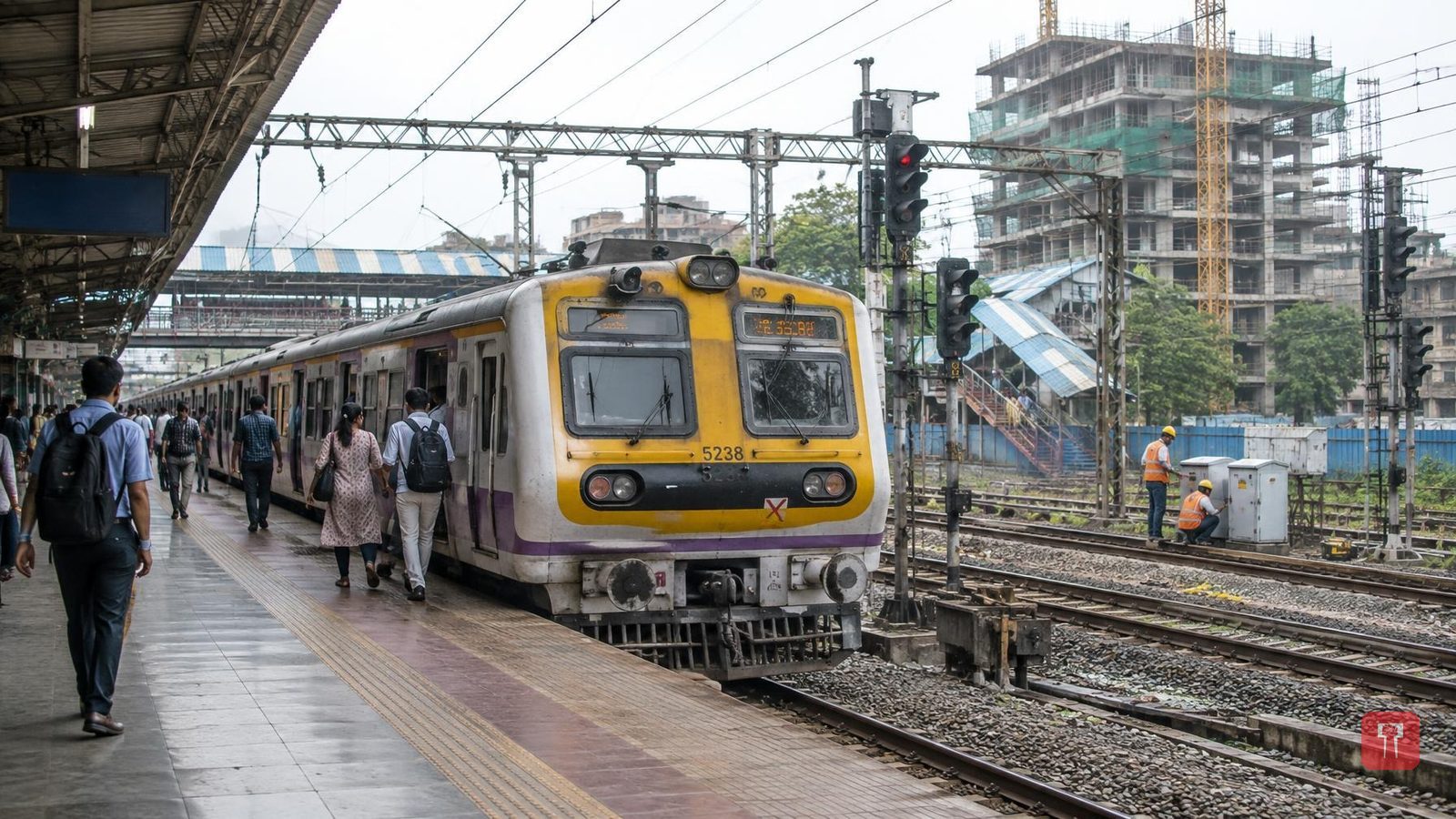
A significant step has been taken to make Mumbai's suburban rail network, the city's lifeline, safer and faster. After long-distance mail and express trains, the indigenous automatic train braking system, Kavach 5.0, is now being brought to Mumbai's local trains. The system will pave the way for a 30 per cent increase in local train services in the coming period.
Currently, the Mumbai suburban network runs on a section-wise signalling system. A following train is allowed into the next section only after the train ahead has fully cleared it. A safe gap must therefore be kept between two trains, which limits how many local services can be added. Removing this constraint is the main aim of the project.
Kavach 5.0 is an advanced indigenous railway protection system developed to overcome this. Using trackside equipment, on-board systems in the locomotive and satellites, it continuously monitors the exact speed and position of trains. If the driver makes a technical error or is inattentive, the system applies the brakes automatically and helps prevent a possible accident.
The railway administration is planning the project quickly. The schedule is as follows.
On the Western Railway, the aim is to complete the infrastructure needed for the system by the end of December 2026. Technical integration work will be carried out in the two months after that.
From March 2027, actual trials of the system will begin on a section covering four stations between Borivali and Virar. The plan is to complete the trials successfully in various phases by June 2027.
The interlocking building at Borivali will also play an important role. A modern electronic interlocking building is being built at Borivali under the fifth and sixth line project. It will be crucial for integrating the existing conventional signalling system with the new Kavach 5.0 system.
Railway officials have expressed confidence that once the system is fully operational, trains can be run faster and more safely on the same infrastructure.
