

Jayaprakash Narayan remembered on death anniversary; key events of October 8 in history
Lokanayak Jayaprakash Narayan died on October 8, 1979; the date also marks the founding of the Indian Air Force and other milestones.
 Images are not validated/verified
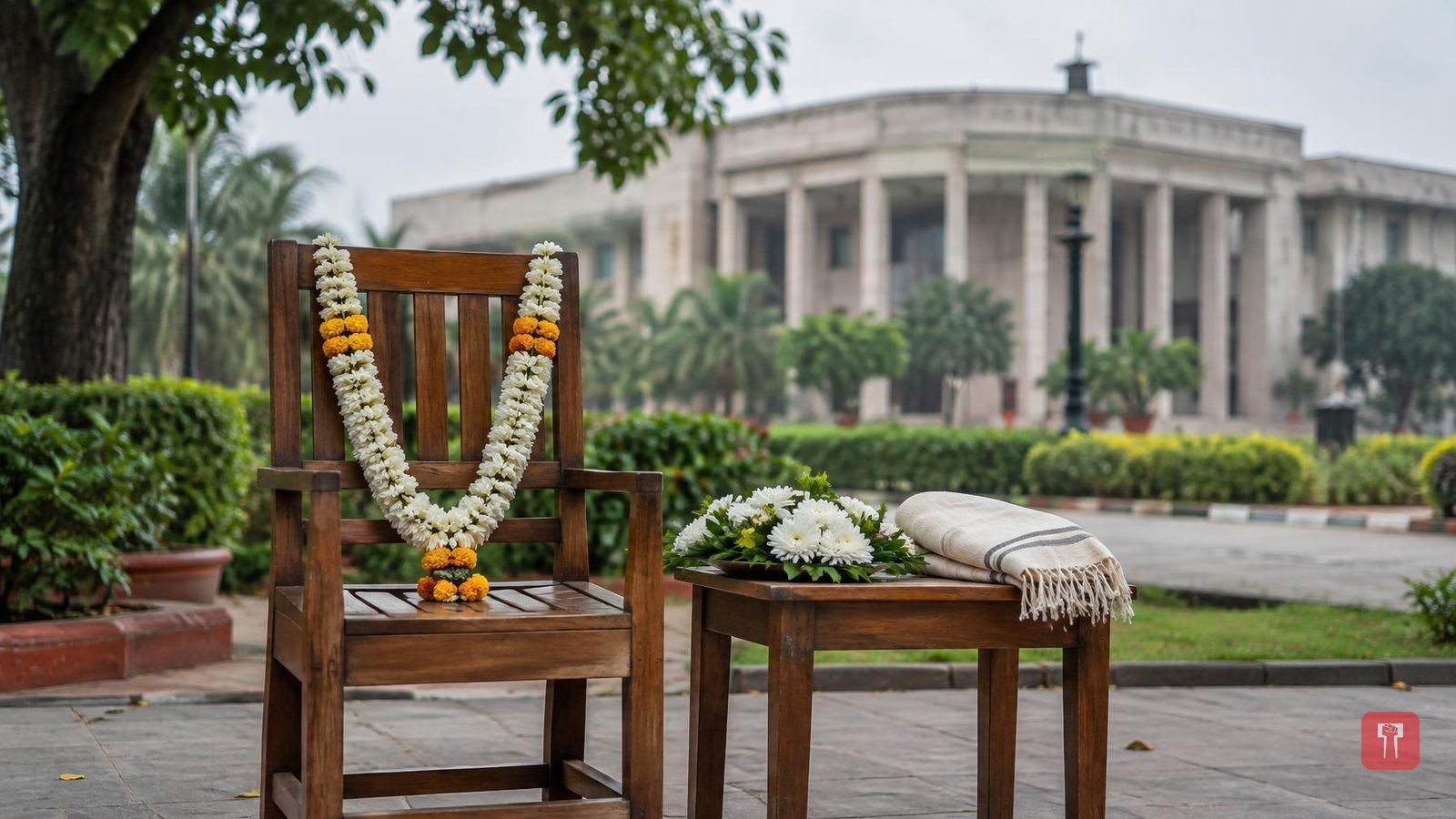
Today is the death anniversary of Jayaprakash Narayan, the freedom fighter, socialist leader and thinker, whom people respectfully call "Lokanayak". History also records him as a freedom fighter and a Sarvodaya leader. He was born on October 11, 1902, and died on October 8, 1979.
During the 1942 Quit India movement, he led the agitation from underground, and emerged as a leading national leader. In the 1970s he launched the "Total Revolution" movement against the government of Indira Gandhi and led it successfully. The aggressive stand he took during the Emergency to save democracy brought a major change in Indian politics. In recognition of his service to the country and to ordinary people, he was posthumously awarded the Bharat Ratna, the country's highest civilian honour, in 1999.
Several important events took place on October 8 in the history of India and the world. In 1932, the Indian Air Force was established through the Indian Air Force Act. In 1939, during the Second World War, Germany occupied the western part of Poland. In 1959, Pune University conferred an honorary D.Litt on Swatantryaveer Savarkar at his residence. In 1962, Algeria joined the United Nations. The same year, the play "To Mee Navhech", written by Acharya Atre and directed by Prabhakar Panshikar, was first staged by Natya Niketan at the AIFACS theatre in Delhi. Wildlife Week is recorded against this date in 1972.
In 1978, Ken Warby of Australia set a water speed record of 317.60 mph. In 1982, Poland banned Solidarity and all other trade unions. In 2001, in the wake of the September 11 terror attacks, US President George Bush created the Department of Homeland Security. In 2005, an earthquake of magnitude 7.6 in Kashmir killed about 86,000 to 87,500 people, injured 69,000 to 72,500 and left 2.8 million homeless. In 2014, Thomas Eric Duncan, the first person in the United States to be diagnosed with Ebola, died. In 2023, a day after the Hamas attack, Israel declared the Israel-Hamas war.
Many well-known people were born on this date. French chemist Henry Louis Le Chatelier was born in 1850 (died September 17, 1936); Collett E. Woolman, co-founder of Delta Air Lines, in 1889 (died September 11, 1966); and Shankarrao Vasudev Kirloskar, industrialist, writer and painter, in 1891 (died January 1, 1975). Biophysicist Gopalasamudram Narayana Iyer Ramachandran, of international renown, was born in 1922 (died April 7, 2001, Chennai, Tamil Nadu). Indian poet and scholar Thirunalloor Karunakaran was born in 1924 (died July 5, 2006). Hindi film actor Kulbhushan Pandit, known as Raaj Kumar, who won over audiences with his powerful delivery of dialogue, was born in 1926 (died July 3, 1996). Australian cricketer Neil Harvey was born in 1928; Indian English-language director and producer Alasdair Milne in 1930 (died January 8, 2013); and "The Flying Sikh" Milkha Singh in 1935. Reed Hastings, co-founder of Netflix, was born in 1960, veterinarian Dr Kajal Tambe in 1993 and American actress Bella Thorne in 1997.
Several notable people also died on this date. Emperor Fushimi of Japan died in 1317 (born May 10, 1265), and poet and Sanskrit professor Mahadev Moreshwar Kunte in 1888 (born August 1, 1835, Mahuli, Sangli, Maharashtra). Hindi writer Dhanpat Rai Srivastava, known as Premchand (born July 31, 1880), died in 1936, and British Prime Minister Clement Attlee (born January 3, 1883) in 1967. Godavari Parulekar, a leader of the Communist Party of India (Marxist), social activist and writer (born August 14, 1907), died in 1996. Indirabai Halbe, founder of the Matrumandir institution in Deorukh, who was called the Mother Teresa of the Konkan, died in 1998. In 2012, Union minister and Gujarat Governor Nawal Kishore Sharma (born July 5, 1925) and journalist and playback singer Varsha Bhosale died.
