

Japanese monk begins 12 years of solitary ritual practice on Mount Hiei
Sogaku Taguchi, 31, has cut off all contact with the outside world until September 11, 2038, at Enryakuji temple near Kyoto.
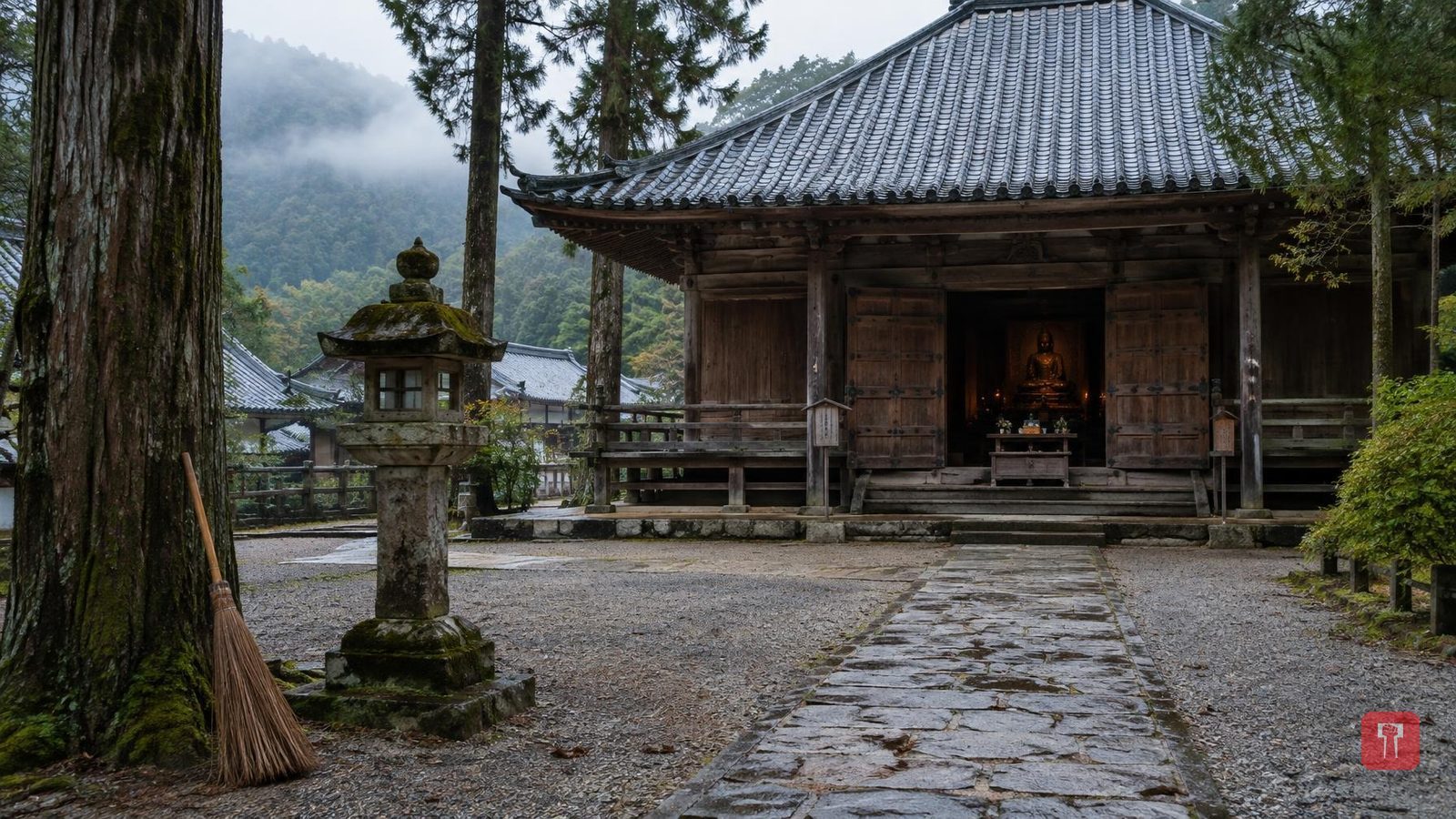
At a time when people cannot stay away from smartphones, the internet and social media for a moment, a rare example of spiritual discipline has emerged from Japan. Sogaku Taguchi, a 31-year-old Buddhist monk, has taken the stern decision to cut off all contact with the world and live in seclusion for the next 12 years.
Taguchi has shut himself away in the mausoleum complex of the historic Enryakuji temple on the sacred Mount Hiei, north-east of Kyoto. Until September 11, 2038, he will have no contact with the outside world or with any human being.
The ordeal is meant to make him a "Jishin" in the Tendai Buddhist tradition. "Jishin" is said to mean "true observer" or ascetic. The title goes to the monk who serves and tends the sacred mausoleum of Saicho (Dengyo Daishi), founder of Tendai Buddhism. It is not easy to earn, because the monk must spend 12 years of his life away from human habitation in extremely harsh conditions.
Over these 12 years Taguchi must follow a strict, fixed routine every day. His first duty will be to rise before sunrise, cook food himself and offer it before the mausoleums of the Buddha and Saicho. He must then chant Buddhist mantras for several hours at a stretch. Hardest of all, performing 3,000 full prostrations every day before the statue of the Buddha is the main part of his practice.
Along with this gruelling physical labour, he will get only two to three hours of sleep each night. It is believed that in such sleep deprivation and bodily exhaustion, the monk receives direct and clear visions of the Buddha. He is also responsible for cleaning the mausoleum complex and the surrounding garden, where not a single dry leaf from a tree is allowed to remain.
The sharp, freezing winter cold on Mount Hiei makes the penance even more fearsome. The practice is so punishing that, over the centuries, many monks have died of serious illness or exhaustion before completing the 12 years. Official records of the tradition have been kept since 1699. Taguchi is set to become the 118th "Jishin" since then. Notably, he is only the eighth person in the last 80 years to begin this 12-year mountain practice.
Mount Hiei is known not only for this 12-year seclusion but also for a famous and arduous practice called "Kaihogyo". In it, monks must circle the mountain for a total of 1,000 days over seven years. In the first three years they must walk 19 miles (about 30 km) a day. The fifth year is considered the hardest, with 19 miles to be walked daily for 200 days in a row. In the seventh year, the requirement is to walk 52 miles (about 83 km) a day for 100 days.
During this practice comes a difficult period called "Doiri". For these nine days, the monk neither eats, drinks, sleeps nor lies down. Monks who complete the practice are regarded as living Buddhas in the Buddhist world. Taguchi's 12-year mountain practice is part of the same lofty spirituality and self-surrender.
