

International Day of Non-Violence: Gandhi's ideas of truth and ahimsa still guide the world
On October 2, Mahatma Gandhi's birth anniversary, the world marks the International Day of Non-Violence, as war, hatred and rising violence threaten peace.
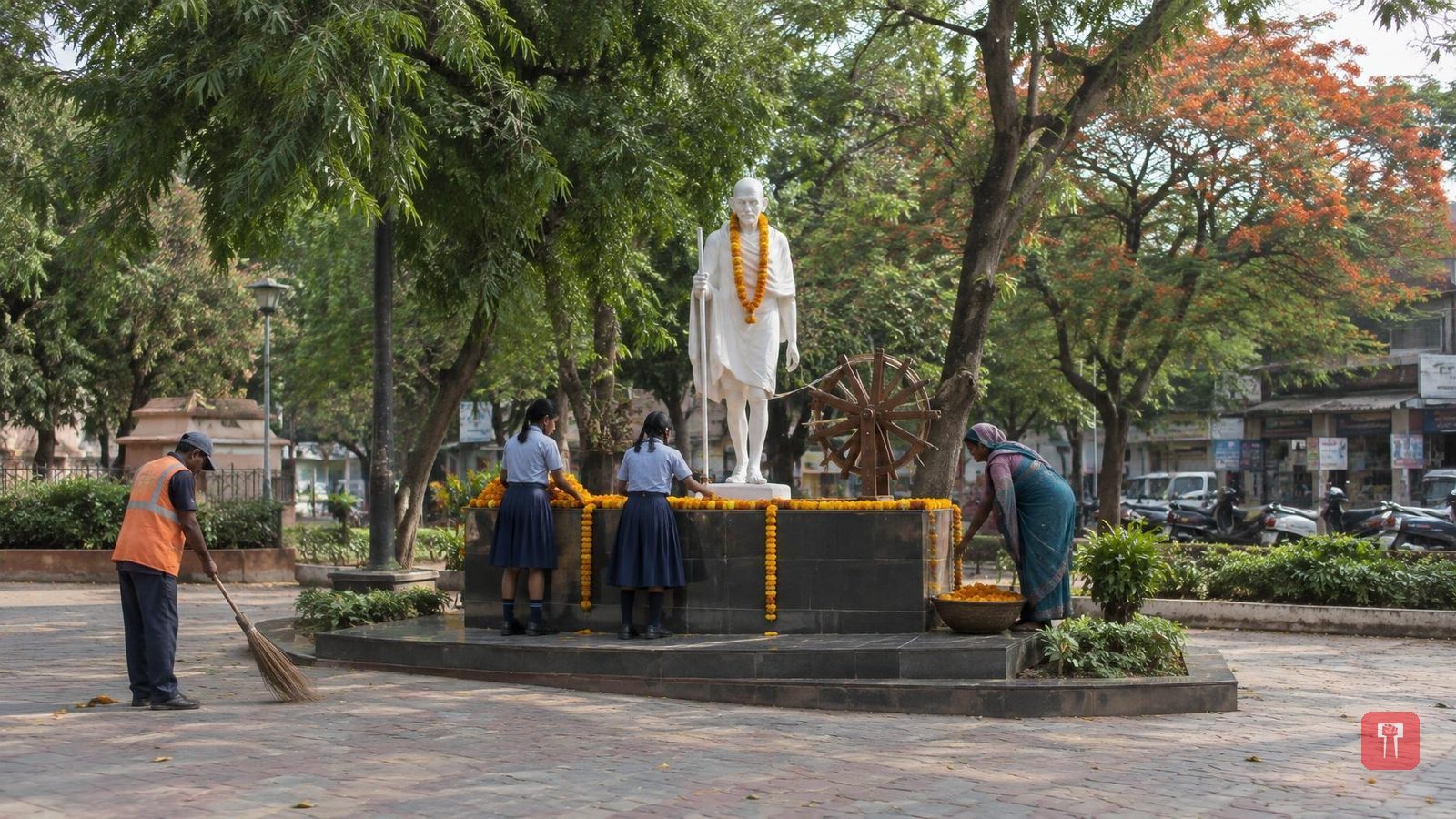
The world today has reached great heights of progress, but the shadow of war, hatred and growing violence threatens human peace. In this tense climate, Mahatma Gandhi's ideas of truth and non-violence are serving as a beacon for people across the world. The International Day of Non-Violence is observed around the world every year on October 2, the birth anniversary of Mahatma Gandhi, the Father of the Nation.
The main aim of the day is to connect the world with the ideas of peace, love, mutual respect and tolerance, and to encourage people to give up violence and choose dialogue.
In this age of information and technology, it has become very important to preserve human values. Gandhi gave a new direction not only to India's freedom struggle but to human rights movements across the world. Through his life he showed that the hardest battles do not need violence to be won. A victory won through non-violence in the fight against injustice and oppression is lasting and the strongest morally.
To spread the idea of non-violence across the world, the UN General Assembly passed a special resolution on June 15, 2007. Through it, October 2, the birthday of Mahatma Gandhi, the Father of the Nation, was declared the International Day of Non-Violence. This gave Gandhi's philosophy of non-violence the highest recognition at the global level. More than 190 countries supported the resolution, which shows that Gandhi's ideas are relevant in every era and for the whole world.
Gandhi's teachings are not confined to history. They remain just as effective in tackling today's new problems. World leaders such as Martin Luther King Jr, Nelson Mandela and the Dalai Lama adopted Gandhi's principles of non-violence and brought about major social and political change in their own countries.
On October 2, many social and educational events are held across India and around the world. Schools, colleges and universities hold speech and essay competitions, debates and art exhibitions on the values of non-violence. Many social organisations and young people hold peace rallies and morning processions (prabhat pheris) to take the message of non-violence to every home.
Seminars and brainstorming workshops are also held on international platforms. These discussions look closely at how non-violence can be adopted to establish peace in the world, avert war-like situations and improve harmony in society. The events carry the message that hatred and violence bring only destruction, loss of life and discontent, while true development and prosperity of human society are possible only through non-violence, friendship and dialogue.
Non-violence does not mean merely not taking up arms or not committing physical violence. Non-violence in thought, gentleness in speech and tolerance in behaviour are also forms of it. In today's digital age, Gandhi's principles are greatly needed to curb hate speech and mental stress on social media. If people give tolerance, restraint and dialogue a place in everyday conduct, lasting peace can be established in the family, in society and finally in the whole world.
The International Day of Non-Violence inspires us to take pride in our cultural and moral heritage. It is not merely a formal ceremony but a resolute step by every person towards a future free of violence and full of peace.
