

India's crude oil imports hit record 5.26 mbpd in September amid global fuel crunch
India's crude imports reached an annual high of 5.26 million barrels per day in September, even as prices stayed above $100 a barrel and fuel supplies tightened worldwide.
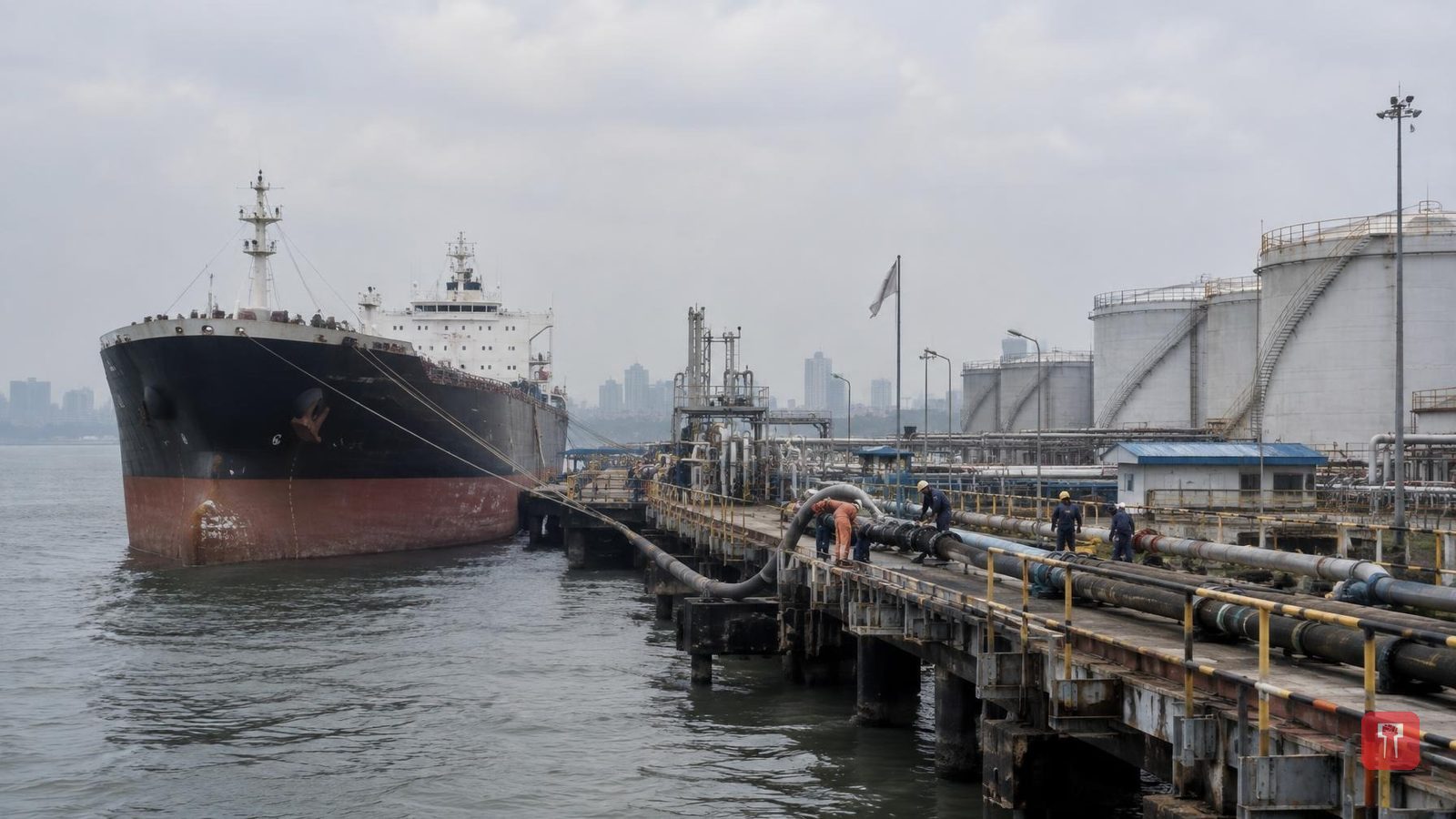
The world is battling a severe fuel and energy crisis, but India's oil inflow has set a record. In September 2026, the country's crude oil imports reached a new high. The month's imports were the highest of the year, at 5.26 million barrels per day (mbpd).
The global situation is difficult. Fuel prices in the United States are at record levels. US President Donald Trump has directed Europe to release its reserve stocks. China has completely banned its fuel exports. Because of the geopolitical turmoil and the US-Iran conflict, crude prices have again moved above $100 to $102 a barrel.
The question is how India managed to secure so much oil. According to the data, Gulf countries accounted for about 39% of India's total crude imports in September. These include Saudi Arabia, Iraq, the UAE, Kuwait, Oman and Qatar.
Russia remains at the top. Despite the pressure of a possible 100% tariff under the US "Graham Bill", Russia continued to be India's largest supplier. In September, India bought 1,872,000 barrels of crude a day from Russia.
Iraq's story is different. Its exports had been disrupted after the US-Iran conflict began in February. In September, Iraq made a strong comeback and became India's second-largest supplier after Russia, sending 525,000 barrels a day.
Saudi Arabia's supplies had stopped for a time because Houthi rebels attacked its main East-West pipeline. Loading has now resumed from Yanbu port on the Red Sea, and Saudi Arabia sent 517,000 barrels a day. The UAE supplied 438,000 barrels. Kuwait sent 335,000 barrels, its highest in the past year. Regular supplies also continued from Venezuela, Nigeria, Oman, the US and Qatar.
In thousand barrels per day, the September figures were: Russia 1,872, Iraq 525, Saudi Arabia 517, UAE 438, Kuwait 335, Venezuela 196, Nigeria 137, Oman 132, the US 125 and Qatar 105.
Indian and global oil traders took some strategic steps behind these imports. Iran has considerable influence over the Strait of Hormuz, the key Middle East waterway, and tension prevails there. There was a fear that the movement of oil would be stopped. A way out was found. Dozens of large crude carriers switch off their Automatic Identification System (AIS) transponders and pass through Hormuz. The vessels then reach the maritime areas of the UAE and Oman, where oil is transferred from one ship to another through ship-to-ship (STS) transfer. The first vessel returns to terminals in the Gulf countries for a fresh consignment, and the second delivers the oil to customers, especially countries such as India.
India's challenge had also grown because Trump stepped up discussion of the "Graham Bill", which provides for tariffs of up to 100% on countries buying Russian oil. Even so, India kept energy security as its first priority. It continued buying cheaper oil from Russia while restoring supplies from the Gulf countries to strike a balance.
Concern remains. Crude prices are holding above $100, and if this level persists for long, a rise in petrol and diesel prices in the domestic market cannot be ruled out. The burden could fall on ordinary people in the form of inflation.
India has shown the same resilience in other areas. Critical minerals are essential for electric vehicles, renewable energy, batteries and high-tech equipment. Their supply chains are in the hands of a few countries or companies, so there is a risk of disruption. To deal with this, India has set up the National Critical Minerals Mission, through which the country's capacity for mineral exploration, processing and recycling is being expanded rapidly. India has also joined hands with major countries such as the US, France, Germany and the Netherlands to be able to face any future crisis.
