

Hourly hotel rooms gain ground with business travellers, transit passengers and tourists
 Images are not validated/verified
As travel patterns change, short-stay hotels that rent rooms for a few hours are drawing business travellers, transit passengers, tourists and couples.
The way people travel in India is changing, and with it the demand for rooms available for a few hours rather than a whole night. For business meetings, long waits at airports, a little rest during the day or a short trip into the city, travellers want a comfortable space but not an overnight booking. Short-stay hotels offer a practical route, letting guests pick a room to suit their schedule, needs and budget.
Hourly booking options are drawing attention, and hourly rooms are becoming important for business travellers, tourists, couples, transit passengers and young professionals. They want the facility without paying for time they will not use.
Traditional hotel bookings are mostly built around an overnight stay. But travel today rarely runs on a fixed timetable. Early arrivals, delayed departures, the gap between two appointments and long layovers between connections can all leave a traveller needing a room for only a few hours. An hourly hotel meets this need. It offers a room for a fixed time slot, depending on the property's policy and availability. Instead of a full night, guests can choose a duration to suit their plans.
This flexibility is particularly useful in large cities such as Mumbai, Delhi, Bengaluru and Pune, where business travel, tourism and transit journeys often overlap. Platforms such as Qwiksta help travellers find short-stay options for these varied needs.
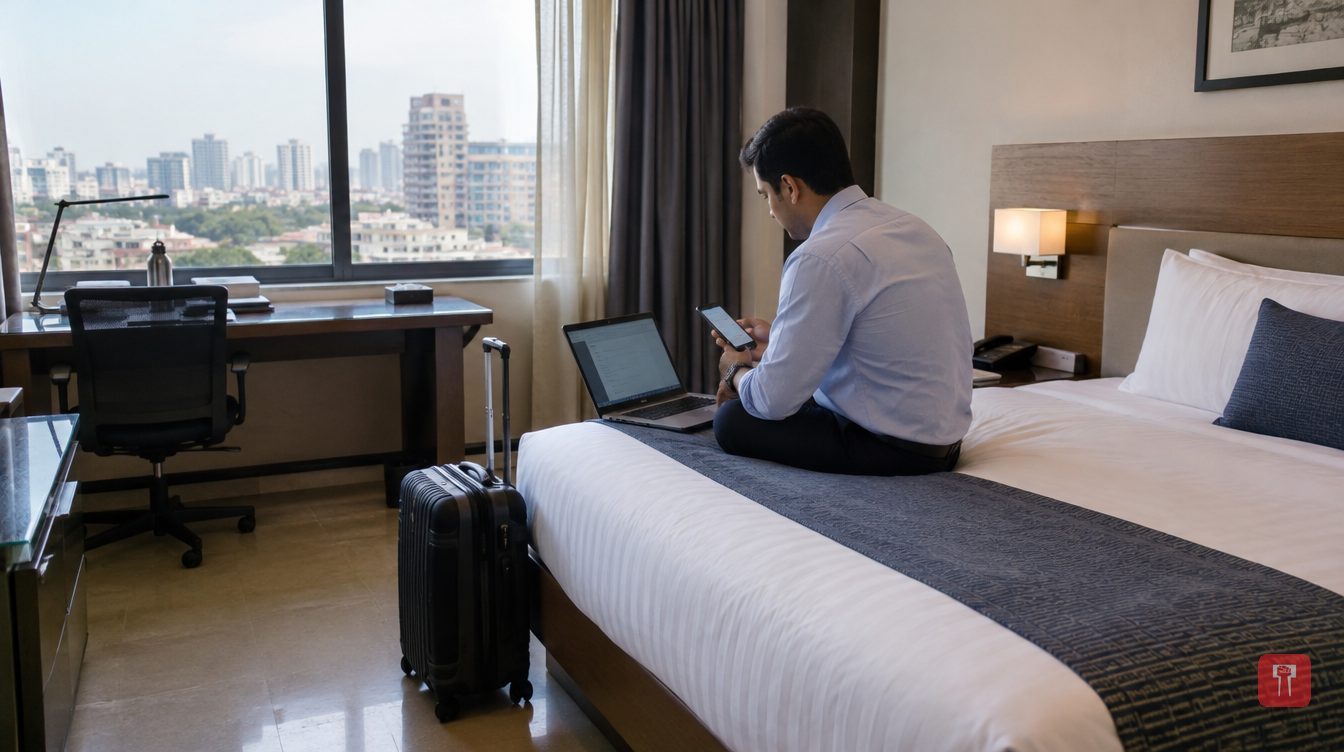
The first situation is the break between business meetings and work. Several hours can lie empty between client meetings, conferences and the return journey. A crowded cafe or waiting area offers no privacy for calls, presentations or focused work. Booking a hotel by the hour gives travellers their own space to freshen up, prepare for a meeting, reply to emails or rest before the next appointment. For a professional travelling to another city for a single meeting, a short booking may suit better than an overnight stay.
The second is a long wait at an airport or a railway connection. Those with a long gap between flights or an awkward train timing need a comfortable place to spend the time between two journeys. A well-located hotel offers a chance to rest, have a bath or shake off fatigue before leaving. A day-use room is especially handy when the gap between arriving and departing does not justify an overnight booking. Before booking, travellers should check the distance to the airport or railway station, the booking window available, and whether the property can accommodate the planned check-in time.
The third is getting around a city like Mumbai without an overnight booking. Mumbai receives business visitors, tourists and people who come for appointments, shopping, events or family work, but not every visit needs a room for the whole night. A search for hourly rooms in Mumbai can turn up options for a few hours of rest between daytime breaks or activities. A day-use hotel can suit those who arrive early in the morning, leave in the evening or need a base between appointments. Location matters. Comparing properties near the destination cuts unnecessary travel and makes a short visit easier.
The fourth is privacy for couples. Some couples may prefer a private, comfortable space for a few hours without booking a night. In an hourly hotel, the duration can be set to suit their plans. Before booking, they should check the property's couple-friendly policy, valid ID requirements, check-in process and cancellation terms. These conditions differ from one property to another and should be confirmed before booking.
The fifth is daytime rest and leisure. Not every hotel visit is for sightseeing or business. Sometimes a traveller simply wants a quiet room to rest, freshen up or get some relief from a heavy schedule. This is where the idea of a "daycation" and a "staycation" comes in. A daycation means spending leisure time away from the routine, without necessarily staying overnight. A staycation generally means a holiday spent close to home, often with a night's stay, though usage varies. For those who want a few hours of rest instead of a full holiday, a short-stay hotel is another option.
There are also differences between hourly and overnight bookings. An hourly booking gives a chosen time slot, while an overnight booking generally covers the whole night. Hourly rooms suit layovers, meetings and daytime rest, while overnight bookings suit night journeys and longer trips. In an hourly booking the price is set by the property's duration-based rates, and in an overnight booking by the nightly rate. Availability depends on the property and time slot for hourly bookings, and on the property and dates for overnight ones. It should also be remembered that an hourly booking is not automatically cheaper. Before deciding, travellers should compare the total price, taxes, amenities, extension charges and booking terms.
Choosing the right short-stay hotel takes more than looking at the price. The property should be close to the airport, railway station, office or destination. Travellers should check that the chosen slot covers the entire stay. Among amenities, they should check Wi-Fi, air-conditioning, an attached bathroom and other essentials. On price, they should look at the total payable and any additional charges. On safety and rules, they should look at guest-related conditions, ID rules, property reviews and cancellation terms. A reliable hourly booking process should make all of this clear before confirmation. Qwiksta can be considered an option for those looking for a room that fits a short trip's schedule.
The rise of micro-stay hotels shows that people want accommodation that adapts to the duration of different journeys. Work schedules, transit journeys and city trips all differ, so short stays offer an alternative to the old overnight pattern. For travellers across the country, the decision rests on how long they need the room, where they need it and which amenities they want. By carefully comparing hourly and overnight options, guests can choose a place that fits their programme and avoid paying for a longer stay than they need. Qwiksta is carving out a place in this changing conversation by offering another way to find flexible accommodation for business, transit, leisure and short city trips.

Comments
No comments yet. Be the first.