

Hippos deliver about 400 kg of silicon a day to Kenya's Mara river, study finds
A study in Science Advances says hippos move silicon from savanna grass to the Mara river, feeding the base of its food chain.
 Images are not validated/verified
A study of Kenya's Mara river has turned up a surprising finding about hippopotamuses. Animals often seen merely as bulky or dangerous are playing a major role in sustaining the river's ecosystem and its aquatic food chain.
A research paper titled "Hippopotamus amphibius: The Animal Silicon Pump" has been published in the international journal Science Advances. According to it, hippos deliver about 0.4 metric tonnes, or 400 kg, of silicon to the Mara river every day in the dry season. The silicon enters the river directly from land and, along with the water's microorganisms, strongly supports the whole food chain.
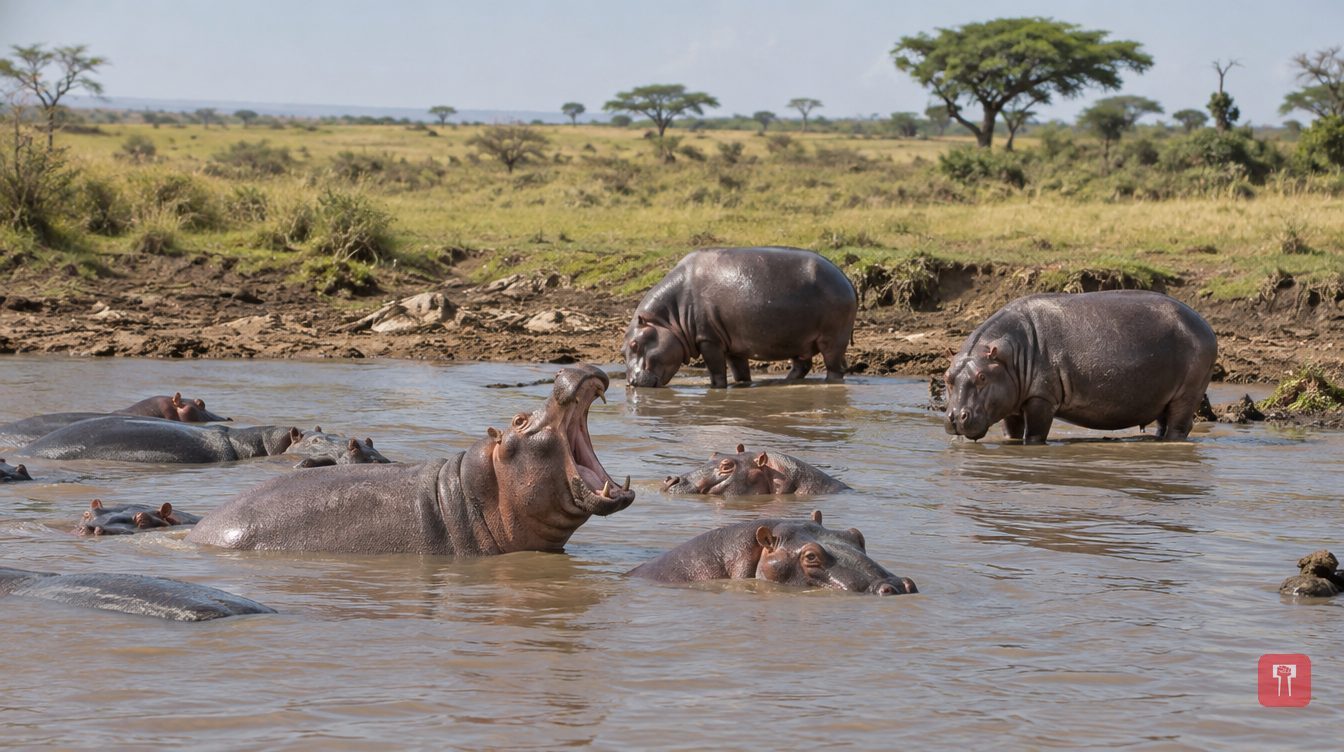
The hippos' daily routine is itself interesting. They rest through the day in the deep, cool water of the river. At nightfall they head out to the open grasslands of the savanna in search of food. After grazing through the night, they return to the river at sunrise. This seemingly simple routine works, in effect, as a large natural transport system.
Savanna grass holds large amounts of silicon taken from the soil. When hippos eat the grass, the silicon passes through their digestive system. When they defecate while resting in the river during the day, the dung mixes straight into the water. Silicon usually stays locked in the soil, or its journey is very slow, but because of hippos it reaches the river's flow without obstruction.
Scientists collected samples from the riverbank in the Maasai Mara area of south-west Kenya in February 2014. The data from the study has drawn the attention of environmental experts worldwide. According to the research, a herd of about 80 hippos in the Maasai Mara eats 42.0 metric tonnes of dry grass a day and releases 11.1 metric tonnes of dry dung into the river daily.
This is why 0.4 metric tonnes of biogenic silicon enters the river every day. When researchers measured the total silicon flow in the Maasai Mara, they found that hippos alone account for 76% of the river's total silicon flux. In the stretch where hippos were present, biogenic silicon was twice the level found upstream. Laboratory tests showed that 2.8% of the biogenic silicon in hippo dung dissolves in water within 24 hours, and that this happens 17.2 times faster than with the decay of ordinary grass.
The question then arises why silicon matters so much in water. The answer lies with aquatic plants and microorganisms. River water contains diatoms, extremely small microalgae. They are regarded as the primary producers of the water and form the foundation of the aquatic food chain.
Diatoms badly need dissolved silicon to build their cell walls and protect themselves. If silicon in the water falls, diatom growth stops. Small fish and insects that live on them then go without food, and the river's entire fishery and food chain could be endangered. In this way, the silicon supplied by hippos keeps diatom numbers in check and preserves the river's biodiversity.
The scientists have not only made a positive discovery but also issued a serious warning. If hippo numbers fall because of climate change, poachers or human encroachment, the supply of silicon to rivers will be disrupted. This could badly affect Lake Victoria and other large lakes of East Africa.
Hippo dung also adds organic matter and other nutrients to the water, which are beneficial up to a point. But if the water flow is low and organic matter rises too much, there is also a risk of falling oxygen levels. Even so, the scientists have affirmed overall that hippos are nature's unmatched and essential engine for carrying nutrients from land to water.
