

Govt cannot be a passive landowner as slum projects stall for years: Bombay High Court
The High Court said the state must not stay a silent spectator when public land is encroached, and must complete slum rehabilitation projects within a fixed time.
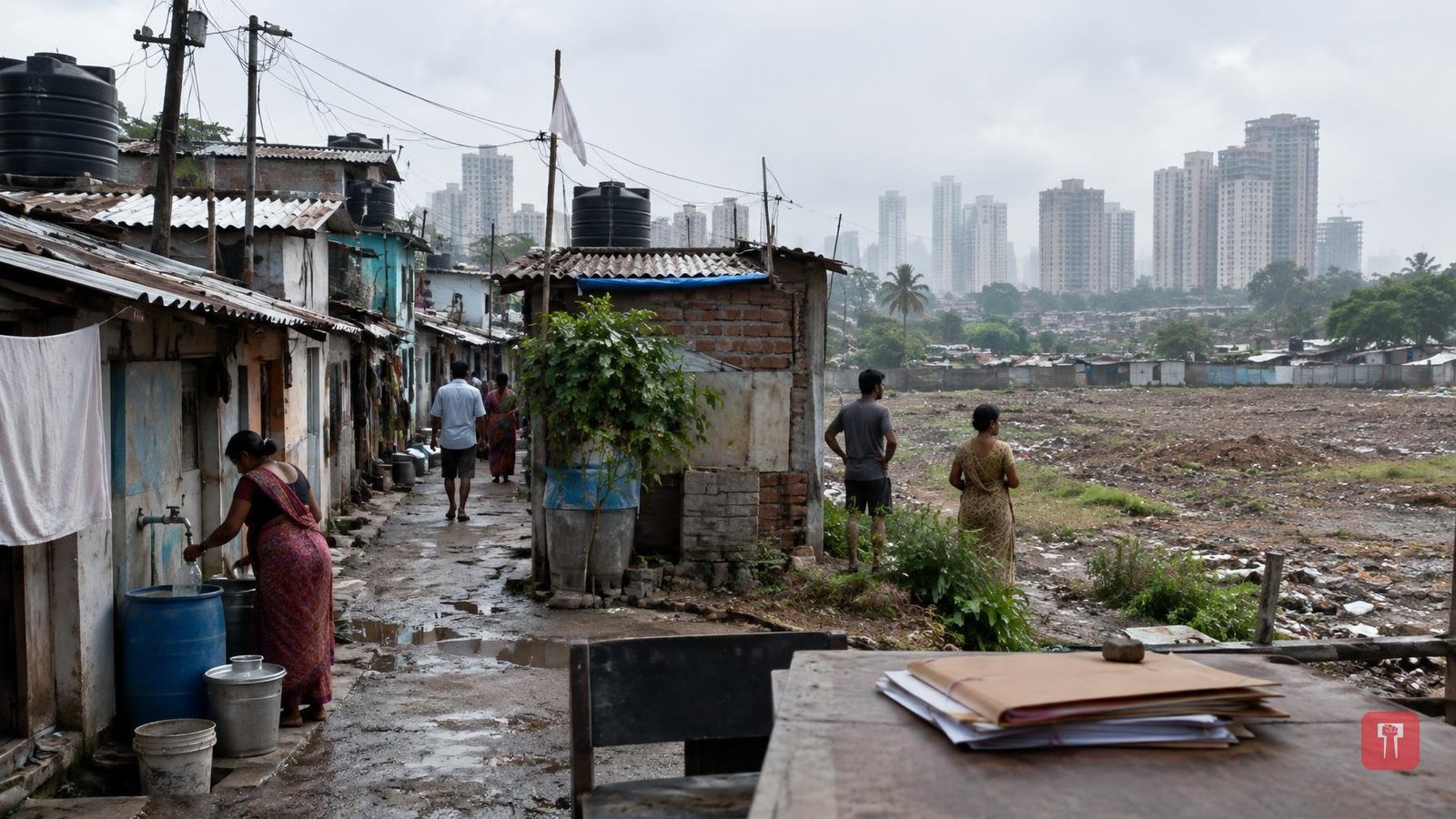
The state government and the authorities concerned cannot be expected to remain silent spectators when government land is encroached upon, the High Court said while hearing stalled Slum Rehabilitation Scheme (SRA) projects. The court said that besides protecting public property, it is the government's responsibility to push its redevelopment in the public interest.
The court directed the government not to play the role of a "passive landowner" and to complete projects within a fixed timeframe. If needed, it said, the option of resettling eligible slum dwellers elsewhere and using the land for public purposes should also be considered.
The observations came from a bench of Justice Girish Kulkarni and Justice Dr Neela Gokhale. The bench was hearing petitions relating to a slum rehabilitation scheme on about 66,000 square metres of government land in Chembur. The court said plainly that it is not right for a project on government land to stay stalled for years because of business disputes between private developers.
The court also said slum dwellers certainly have a right to rehabilitation, but they do not acquire rights akin to ownership over government land. Differences alone are not enough to change a developer; there must be a serious legal irregularity, it said.
Efforts on this project have been under way since August 2006. Even after 20 years, not a single brick of redevelopment has been laid. The court said continuous litigation is defeating the very purpose of the slum rehabilitation scheme.
By way of background, Adishakti Developers was made the developer of the project in 2006. In 2008, Annexure-II covering 2,603 structures was certified, of which 1,564 were found eligible. After several disputes, Rupa Rel Buildcon was appointed the new developer in 2021. It also received a letter of intent and permission to build.
After the developer had invested a large sum, some slum dwellers and organisations challenged the appointment, claiming that the 51 per cent consent was not in place. The court said the developer's investment and the steps it had taken to move the project forward could not be ignored. On that basis it declined to remove Rupa Rel Buildcon immediately.
