

Global data centre spending may top $30 trillion by 2050 as AI push raises return questions
Total capital expenditure on data centres worldwide could exceed $30 trillion by 2050, but whether returns will match the investment is uncertain.
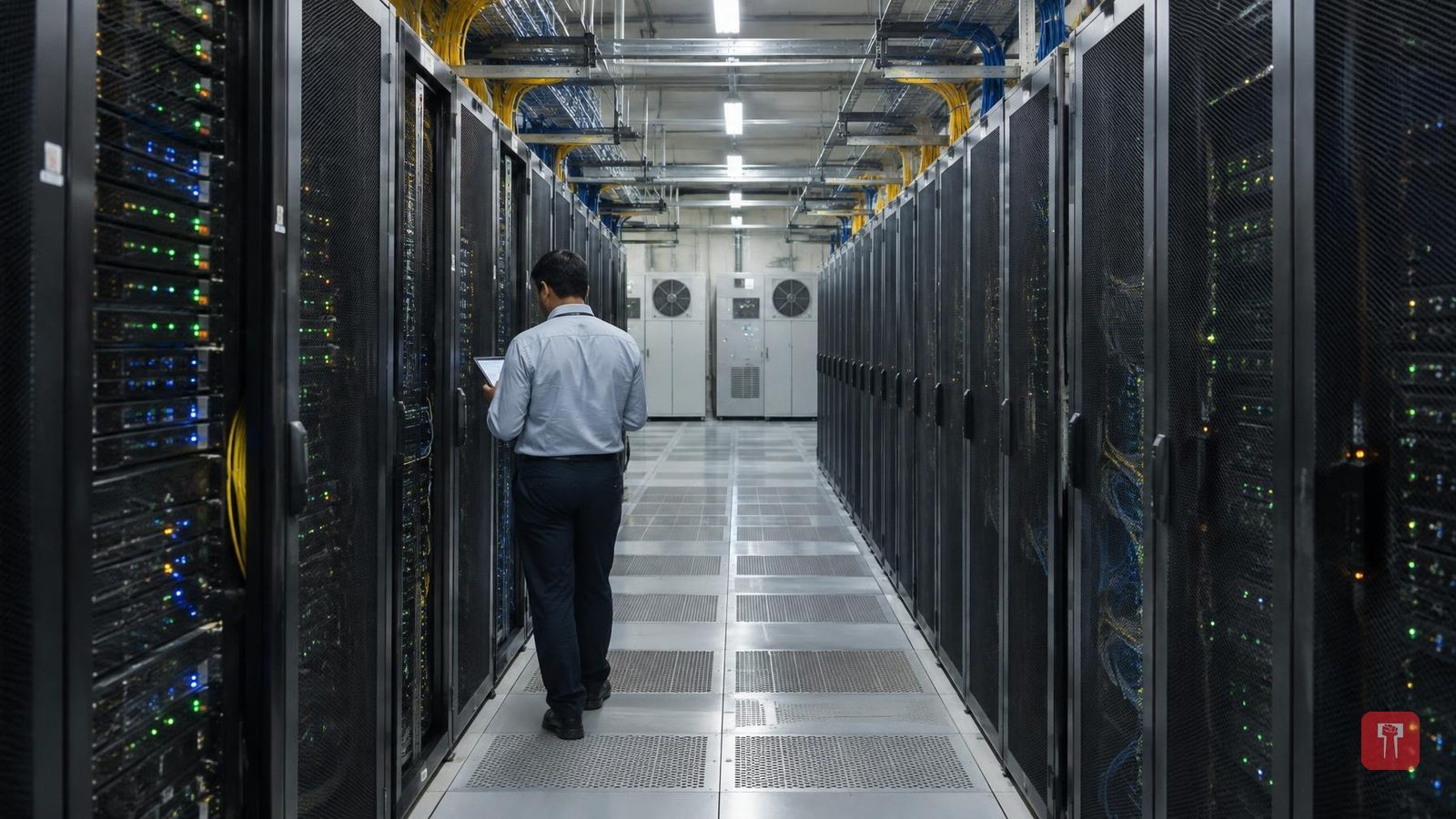
The growing use of artificial intelligence (AI) has set off a large wave of investment across the global technology sector. Running AI models needs servers, advanced chips, data storage and heavy computing capacity, so demand for data centres is rising fast.
Against this backdrop, total capital expenditure on data centres worldwide is estimated to exceed $30 trillion by 2050. But whether such a large investment will bring the expected returns has become a subject of debate among economists and in industry.
AI is spreading from chatbots to industrial automation, software, healthcare, the automobile industry and defence. AI models have to process data on a large scale, which requires powerful GPUs and other computing equipment. For this reason, big technology companies are building new data centres around the world.
Spending on this infrastructure is not only on buildings. Large sums also go into servers, GPUs, memory, networking equipment, storage, cooling systems and power supply. Notably, this equipment has to be upgraded after a few years. Investment in data centres will therefore not be a one-time expense but a long-running process.
If AI continues to expand, the computing capacity needed for data centres could grow many times over in the coming decades. This will require building new data centres as well as fitting modern equipment in older ones.
Demand for electricity will also rise sharply. AI data centres need a continuous, high-capacity power supply. Additional investment will therefore be needed in power generation, the grid, transmission and cooling. As a result, the expansion of AI will not remain confined to the technology sector and may also affect the energy and infrastructure sectors.
Money is being poured into AI, but the economic return is not assured. For now, the investment is being made in the hope that AI will raise companies' productivity considerably, speed up work and create new markets. However, there is still uncertainty over how quickly such a broad productivity gain will show up in the real economy.
If companies do not get the expected earnings and profit from AI, the economics of the heavy spending on data centres could change. The real test for AI will therefore be not only how fast the technology develops, but also how much productivity, earnings and profit it actually generates. The potential $30 trillion spending by 2050 could thus be a big investment for the world economy, and an equally big economic challenge.
